
Plants
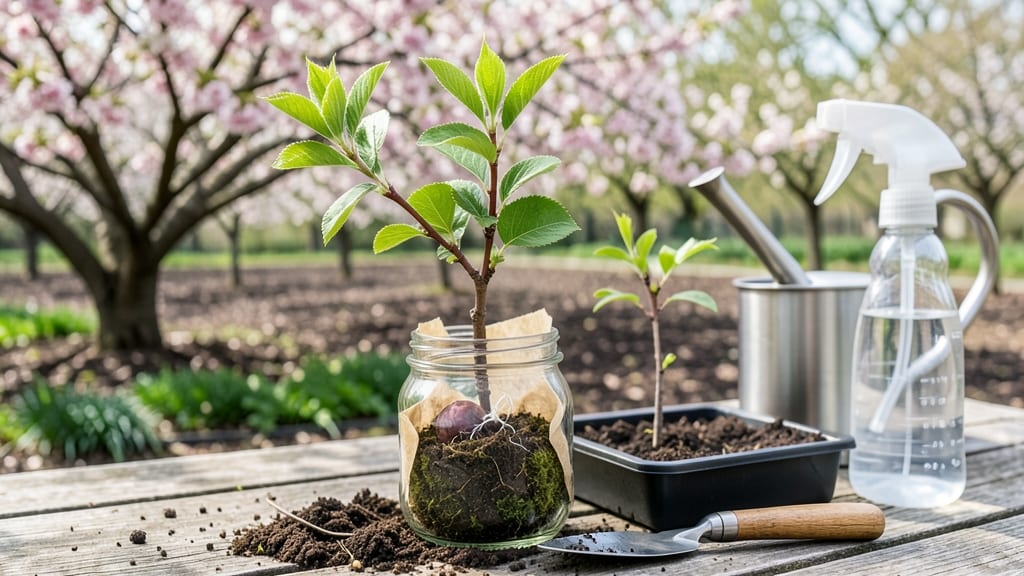
You can plant a cherry tree from a cherry pit, but expect low success rates and a long wait before fruiting. Germination rarely exceeds 5%, and it may take 3-5 years before the tree produces cherries.
Growing a cherry tree from seed is more about curiosity than practicality. 🌱 The pit's hard outer shell and natural dormancy make sprouting difficult without proper preparation—like a cold treatment called stratification. Even with perfect conditions, most pits won't germinate, and those that do grow slowly.
I've tried this myself, and while it's rewarding to watch a seedling emerge, it's far more reliable to buy a grafted tree if you want cherries sooner.
Once you overcome the germination hurdle, the real test begins. Young saplings need consistent moisture and protection from pests, with full sunlight becoming essential as they mature. The wait for fruit is the hardest part—most gardeners give up before reaching that milestone.
But for the patient, there's something magical about watching a tree you grew from a single seed finally bear fruit after years of care.
💡 In This Article
- Cherry Pit Germination Science: Why Success Rates Are So Low
- Step-by-Step Guide to Growing a Cherry Tree from Seed
Cherry pit germination science: why success rates are so low
The hard outer shell of a cherry pit acts as a natural barrier that blocks both water and oxygen from reaching the embryo inside. This impermeable coating, combined with the pit's natural dormancy, creates a double challenge for germination.
Most cherry pits enter a state called physiological dormancy, where even if moisture and warmth are present, the seed won't sprout without breaking this internal resting state. 🔥 The germination rate drops as low as 1-5% because nature designed the pit to survive harsh conditions—only the toughest seeds make it through.
Cold stratification is the secret weapon for overcoming dormancy. This process mimics winter conditions by exposing the pit to 32-40°F temperatures for 6-12 weeks. During this time, natural chemicals called abscisic acid break down, while growth-promoting hormones like gibberellins increase.
I've seen firsthand how a 3-month cold treatment can transform a dormant pit into one ready to sprout—whereas unstratified pits often rot or remain stubbornly inactive.
The science gets even more interesting when you consider genetic variability: sweet cherries and sour cherries have different dormancy requirements, with sweet varieties often needing slightly longer cold exposure.
Even after stratification, the pit's hard shell remains a hurdle. Some gardeners make a small nick with a knife or file to create a tiny opening, which improves water uptake without damaging the embryo. This mechanical scarification mimics how nature would eventually wear down the seed coat through environmental exposure.
Without this step, the pit might absorb too much water and swell unevenly, causing the seed to split open before proper germination occurs. This is why commercial cherry growers often use a combination of cold treatment and controlled scarification to boost success rates.
Another critical factor is the pit's age and freshness. Pits from recently harvested cherries have higher viability because their embryos remain metabolically active. As the pit dries out or ages, the embryo's energy reserves diminish, reducing the chances of successful sprouting.
I've experimented with pits stored for different lengths of time and found that those used within 6 months of harvest had a noticeably better germination rate than older ones.
The natural oils in the pit also play a role—they need to remain stable during stratification, or they can become rancid and toxic to the developing seed.
What most people don't realize is how the pit's internal chemistry changes during germination. Once stratification is complete, the embryo begins producing enzymes that break down stored starches into sugars, providing the energy needed for root growth.
This process requires precise moisture levels—too little and the enzymes can't activate, too much and the pit risks rotting. The ideal moisture content during germination is about 40-50% by weight, which is why planting in well-draining soil is crucial.
This balance explains why some pits germinate within 2-4 weeks after stratification, while others take months or never sprout at all.
The unpredictability extends to the resulting tree. Even if a pit germinates successfully, the resulting plant may not produce fruit true to the parent cherry's characteristics.
This is because cherry trees grown from seed are highly variable—what you get could be a completely different variety with different fruit size, color, or taste. 💫 Commercial cherry orchards use grafting to ensure consistent fruit production, which is why store-bought cherry trees are far more reliable for home growers looking for specific varieties.