
Container Gardens
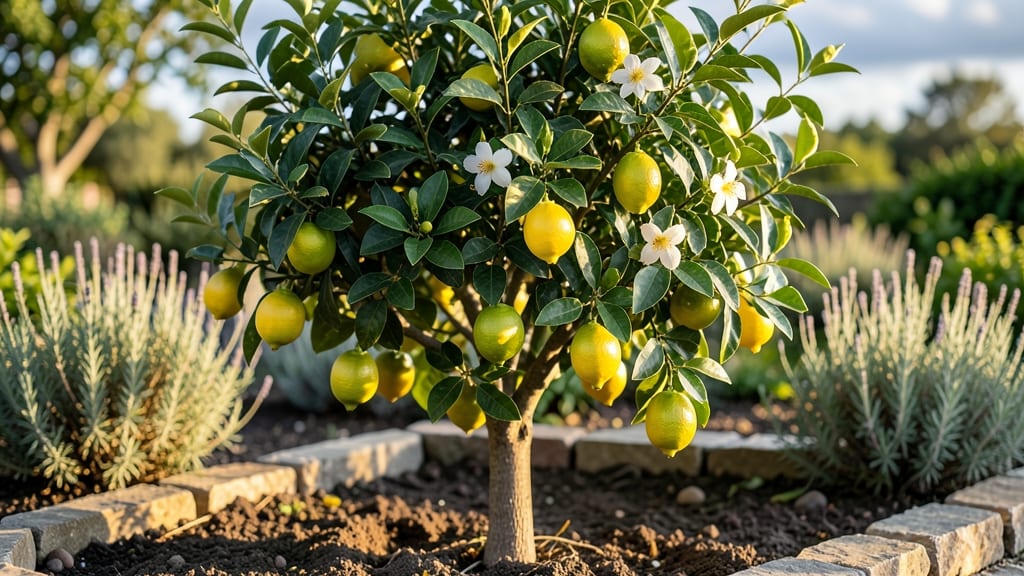
You can grow a lemon tree in Illinois by choosing cold-resistant varieties like 'Meyer' or 'Improved Meyer,' but you'll need winter protection, container growing, or greenhouse conditions to survive the state's freezing temperatures and USDA zones 5-6.
Illinois' cold winters make traditional lemon trees a challenge, but specialized citrus varieties can thrive with the right care. 🌱 The key is selecting hardy types that tolerate brief cold snaps down to 20°F—Meyer lemons are the most popular choice because they produce fruit even in cooler climates.
For outdoor planting, position your tree near a south-facing wall or use thick mulch around the base to insulate roots from temperature swings.
Container growing is another effective strategy, as you can move pots indoors during winter months. Just ensure your container has drainage holes and use a high-quality potting mix designed for citrus. Indoor lighting becomes crucial during shorter winter days, so supplement with grow lights if natural light is insufficient.
With proper winter protection, you can enjoy homegrown lemons even in Illinois' challenging climate.
💡 In This Article
- Illinois Climate Challenges for Lemon Trees
- Best Cold-Hardy Lemon Tree Varieties for Illinois Gardens
Illinois climate challenges for lemon trees
Lemon trees are native to subtropical regions where temperatures rarely drop below 40°F, making Illinois' USDA zones 5-6 a significant challenge. The state's winters often bring prolonged periods below 20°F, which can cause severe frost damage to citrus trees.
Even brief cold snaps below 28°F can kill tender varieties like Eureka or Lisbon lemons, as their cell membranes rupture when ice crystals form in their water content.
The real issue isn't just the cold itself, but how quickly temperatures fluctuate. Illinois experiences rapid temperature swings between day and night, especially in spring and fall. These fluctuations stress the tree's vascular system, disrupting nutrient flow and causing leaf scorch.
Traditional lemon trees also struggle with Illinois' short growing season—only about 160 frost-free days in most areas—compared to their native Mediterranean climate of 240+ frost-free days. 🌡️
Another critical factor is Illinois' wind patterns. The state's prevailing westerlies can carry freezing air masses that desiccate leaves and bark, while strong winds increase heat loss from the tree's surface. Without protection, even cold-hardy varieties may suffer from winter dieback.
The soil composition matters too—Illinois' heavy clay soils in many regions drain poorly, leading to root rot if not amended with organic matter to improve aeration.
What most gardeners don't realize is how light intensity affects cold tolerance. Lemon trees need 6-8 hours of direct sunlight daily for photosynthesis, but Illinois winters provide only 4-6 hours of weak sunlight. This reduced energy production weakens the tree's ability to store carbohydrates for winter survival.
The combination of cold stress, light deprivation, and soil issues creates a perfect storm for lemon tree failure in Illinois without proper intervention.
For those attempting outdoor cultivation, microclimate selection becomes crucial. South-facing slopes or walls can provide 5-10°F of additional warmth through radiant heat absorption. Strategic planting near evergreen windbreaks can reduce wind chill by 30-50%, while thick mulch layers (4-6 inches) insulate roots from ground freezing.
However, even with these measures, most Illinois gardeners find container growing or greenhouse cultivation provides more reliable protection against winter extremes. 🌿