
Diseases
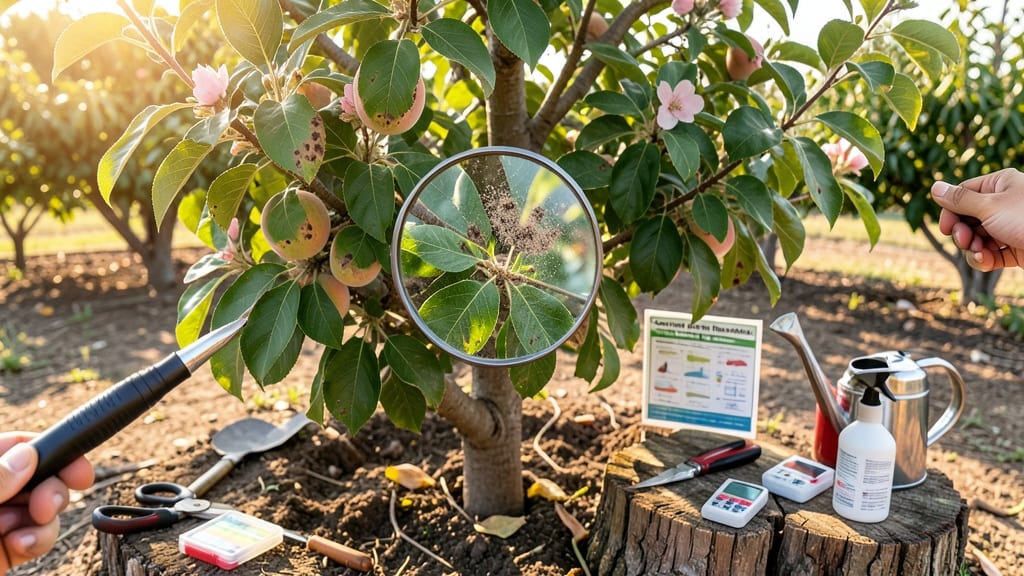
Brown spots on peach tree leaves can turn your summer harvest into a disappointment—unless you act fast. 🌿 I’ve seen this problem ruin entire fruit crops, but the right diagnosis and treatment can save your tree.
The key is identifying whether it’s fungal (like brown rot or bacterial spot) or environmental stress before the damage spreads.
Most brown spots appear in late spring or summer, often with yellow halos or black centers. Fungal spots might look fuzzy or slimy, while environmental stress creates dry, crispy patches.
Prune infected branches immediately and remove fallen leaves—they’re breeding grounds for spores. My trees bounce back every time I catch it early.
For organic solutions, try neem oil or copper fungicide sprays every 10–14 days. Chemical options like chlorothalonil work faster but require careful handling. Either way, consistent treatment is the secret—don’t skip a week, or you’ll be back to square one.
Season matters: treat preventatively in spring before blooms appear, and again after harvest. With the right approach, you’ll protect this year’s fruit and keep your peach tree thriving for seasons to come.
Understanding Leaf Spot Triggers
Peach trees are stunning when healthy, but those mysterious brown spots on leaves can turn your orchard into a puzzle. Before reaching for a fungicide, it’s crucial to identify the root cause—because not all leaf spots are created equal.
Let’s break down the science behind why your peach tree’s leaves are developing these unsightly marks, so you can take targeted action.
Fungi are the most common culprits behind brown spots on peach tree leaves. These microscopic organisms thrive in warm, humid conditions and can spread rapidly if left unchecked. Some of the most notorious fungal diseases affecting peach trees include:
- Brown Rot (Monilinia fructicola) This aggressive fungus causes circular, tan-to-brown spots with a reddish-brown border.
It often appears during wet springs or after rain, as spores splash onto leaves from infected fruit or twigs. Pro tip: If you notice spots with a fuzzy gray mold (the fungus’s fruiting bodies), you’re dealing with brown rot. Remove and destroy infected leaves immediately to prevent spread.
- Leaf Spot (Alternaria or Cercospora spp.) These fungi create small, dark brown or black spots with yellow halos.
Unlike brown rot, they don’t produce mold but can weaken the tree over time by reducing photosynthesis. Why it happens: Poor air circulation (think dense foliage or overwatering) and prolonged leaf wetness create the perfect breeding ground.
- Anthracnose (Gloeosporium spp.) This fungus targets younger leaves, causing irregular brown spots that may merge into larger blotches. It’s especially active in wet, cool weather and can defoliate trees if severe. Key clue: Look for spots with a slightly sunken center—this is anthracnose’s signature.
While less common than fungal infections, bacteria can also cause brown spots on peach leaves. The most notable offender is bacterial leaf spot (Xanthomonas or Pseudomonas spp.), which creates small, water-soaked spots that turn brown and may ooze a yellowish bacterial ooze when wet.
- How it spreads: Bacteria hitchhike on rain splashes, tools, or even insects. They thrive in warm, humid conditions, often appearing after heavy rain or overhead irrigation. - Diagnostic tip: If spots feel slimy or have a greasy texture, bacteria are likely the culprit.
Unlike fungi, bacterial spots rarely develop mold.
Not all brown spots are caused by pathogens—sometimes, your peach tree is sending you a distress signal. Environmental factors can mimic disease symptoms, so rule these out first:
- Sunburn or Scorch Intense sunlight, especially after frost or drought, can cause leaves to develop brown, crispy patches. This is more common on trees with sparse foliage or those recovering from stress. - Why it happens: Direct UV exposure damages leaf cells, leading to necrotic (dead) tissue.
Young, tender leaves are most vulnerable.
- Water Stress (Over/Under-Watering) - Overwatering: Soggy soil leads to root rot, which starves leaves of oxygen. Brown spots may appear alongside yellowing (chlorosis) or wilting. - Underwatering: Leaves curl and develop brown edges as they lose moisture.
This is often seen during heatwaves or drought. - Solution: Water deeply but infrequently (1–2 inches per week) and ensure proper drainage. Mulch helps retain moisture without suffocating roots.
- Nutrient Deficiencies While deficiencies usually cause yellowing (e.g., nitrogen deficiency = pale green leaves), severe lack of magnesium or potassium can lead to brown, dead patches, especially along leaf edges.
- Potassium deficiency: Leaves develop brown, necrotic edges, often with a "scorched" look.
Sometimes, brown spots aren’t a disease at all—they’re battle scars from the great outdoors:
- Hail or Wind Damage Storms can bruise leaves, creating irregular brown patches. Unlike disease spots, these often have a "frostbitten" texture or are accompanied by torn edges.
Use horticultural oil or insecticidal soap for light infestations.
- Chemical Burn Overapplication of herbicides, pesticides, or even well-meaning (but overzealous) fertilizer can cause brown spots. Symptoms often appear as bleached or crispy patches.
If you’re still unsure what’s causing the brown spots, consider these diagnostic steps: - Collect samples: Place a few spotted leaves in a paper bag (not plastic—it traps moisture and accelerates decay).
Take them to your local Cooperative Extension Service for a free or low-cost diagnosis. - Check the reverse side: Flip leaves over—fungal spores or insect eggs might be visible. - Monitor the pattern: Are spots appearing on older leaves first? New growth?
This can help narrow down the cause (e.g., fungal spots often start on lower leaves).
How to Treat and Prevent Leaf Spots
Brown spots on peach tree leaves aren’t just unsightly—they can weaken your tree and reduce fruit yield if left unchecked. The good news? Most causes are treatable with the right approach. Below, we break down practical fixes for each common culprit, plus prevention tips to keep your peach tree thriving.
Fungal diseases like Monilinia fructicola (brown rot) or Cercospora (leaf spot) thrive in warm, humid conditions. Here’s how to tackle them:
🔥 Remove Infected Debris Immediately
- Why? Fungal spores linger on fallen leaves, fruit mummies, and dead branches.
- How?
- Prune away all infected leaves, twigs, and fruit (even if it’s just brown spots).
- Bag and dispose of debris in the trash (don’t compost it!).
- Sterilize pruners with 70% rubbing alcohol or a bleach solution (1 part bleach to 9 parts water) between cuts.
🍳 Apply Fungicide at the Right Time
- Best fungicides for peach trees:
- Copper fungicide (organic, works for leaf spot and anthracnose).
- Neem oil (preventative, disrupts fungal growth).
- Sulfur-based sprays (effective for powdery mildew or early-stage infections).
- When to spray:
- Preventative: Apply before blooming (pink bud stage) and again after harvest.
- Treatment: Spray every 7–14 days during wet or humid periods (or after rain).
- Pro tip: 💡 Water in the morning to let leaves dry quickly—fungi love moisture!
🌡️ Improve Air Circulation
- Why? Crowded branches trap humidity, perfect for fungal growth.
- How?
- Thin out dense foliage to allow sunlight and airflow.
- Space trees 12–15 feet apart if replanting.
- Avoid overhead watering—use drip irrigation instead.
Pests like aphids or spider mites feed on sap, leaving brown, crinkled spots and sticky residue (honeydew).
👨🍳 Blast Off Pests with Natural Sprays
- Soap spray: Mix 1 tbsp mild dish soap + 1 quart water in a spray bottle. Test on a small leaf first!
- Neem oil: Spray directly on pests (follow label rates).
Reapply every 5–7 days for severe infestations. - Horticultural oil: Effective for scale insects (apply in early spring before buds swell).
🕷️ Introduce Beneficial Predators
- Ladybugs eat aphids.
- Predatory mites control spider mites.
- Buy them online or attract them with native plants (like dill or yarrow).
⏰ Monitor and Act Fast
- Check undersides of leaves daily during outbreaks.
- Hose off pests with a strong stream of water (especially for aphids).
If spots appear only on sun-exposed leaves or are paired with yellowing, the issue might be stress-related.
💧 Water Deeply and Consistently
- Problem: Shallow watering leads to drought stress, causing brown, crispy edges.
- Fix:
- Water deeply 2–3 times per week (1–2 inches per session).
- Use mulch (straw or wood chips) to retain moisture.
🍎 Boost Soil Health
- Test your soil (pH should be 6.0–7.0 for peach trees).
- Amend with:
- Compost (for organic matter).
- Balanced fertilizer (10-10-10 or similar) in early spring.
- Avoid over-fertilizing with nitrogen—it encourages leafy growth but weakens disease resistance.
🌳 Provide Afternoon Shade (If Needed)
- For young trees or hot climates:
- Use shade cloth (30–50%) during peak sun (1–4 PM).
- Plant fast-growing shade trees (like silver maple) on the west side of the peach tree.
- Start with healthy trees: Buy disease-resistant peach varieties (e.g., ‘Redhaven’, ‘Elberta’).
- Clean up yearly: Remove all fallen leaves and fruit from last season.
- Rotate fungicides: If you use chemicals, alternate types to prevent resistance.
- Plant in the right spot: Peach trees need full sun (6+ hours/day) and well-draining soil.
- Thin fruit early: Overloaded branches stress the tree—remove 20% of fruit when small.
Final thought: 🎯 Early action is key! The sooner you address brown spots—whether fungal, pest-related, or stress-induced—the easier they are to fix. With consistent care, your peach tree can bounce back strong and produce juicy, blemish-free fruit next season.
Frequently asked questions
What’s the difference between fungal brown spots and sunburn on peach leaves?
Fungal spots usually have distinct borders, sometimes with fuzzy edges or yellow halos, and often appear on lower leaves first. Sunburn creates irregular, crispy patches that look like they’ve been singed, typically on leaves exposed to direct afternoon sun. Check for mold growth (fungal) or a "frostbitten" texture (sunburn) to tell them apart.
Can I still harvest fruit from a peach tree with brown spots on the leaves?
It depends! If the spots are from environmental stress (like sunburn or water issues), the fruit is likely safe to eat. But if fungal diseases like brown rot are present, remove and destroy infected fruit immediately—spores can spread to healthy fruit. Always wash peaches thoroughly before eating, regardless of leaf condition.
How often should I spray fungicide on my peach tree?
For prevention, spray every 10–14 days during wet seasons or after rain. If treating an active infection, apply every 7–10 days until new growth appears. Always follow label instructions and alternate fungicide types to prevent resistance. Early morning applications work best for maximum effectiveness.
Will pruning help stop brown spots from spreading?
Prune infected branches at least 6 inches below visible spots to remove spores. Sterilize tools between cuts with rubbing alcohol, and dispose of pruned material in the trash—not compost. Thin out dense foliage too to improve airflow and reduce humidity where fungi thrive.
Are there any organic fungicides that work well for peach trees?
Yes! Copper fungicide, neem oil, and baking soda spray (1 tbsp baking soda + 1 quart water + a drop of dish soap) are all effective organic options. For severe cases, potassium bicarbonate sprays work well too. Apply in the evening to avoid leaf burn from UV exposure.