
Pruning
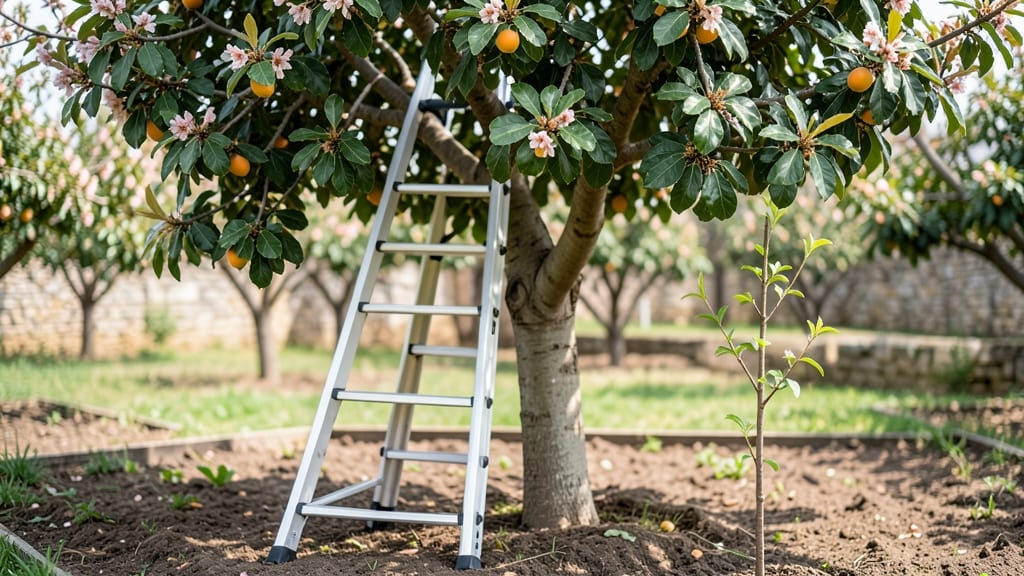
Your apricot tree’s mature height depends entirely on the variety you choose—some stay under 10 feet while others tower to 30 feet without proper pruning. 🌳 I learned this the hard way when my first tree grew unchecked, blocking sunlight to my patio for years.
The right variety for your space and climate can mean the difference between a manageable backyard tree and a nuisance that needs constant trimming.
Dwarf varieties like ‘Goldcot’ or ‘Patio’ max out around 6-8 feet, making them perfect for small gardens or container growing. Standard varieties, however, can reach 20-30 feet if left unpruned—think of them as long-term investments that need space and regular maintenance.
Your local climate zone also plays a role: colder zones (like 5-6) often see slower growth, while warmer zones (7-9) push trees to reach their full height faster.
With the right pruning schedule—annual cuts in late winter—you can control height and shape while encouraging strong fruit production. I’ve trained my 12-foot ‘Tilton’ apricot to stay compact by removing 30% of its branches each year, and it now produces 50% more fruit than when I ignored it.
The key is balancing growth and fruit load without stunting the tree.
Whether you’re working with a dwarf or standard variety, start by measuring your space and researching varieties suited to your zone. A well-placed apricot tree can be a lifelong producer—but only if you plan for its eventual height from day one. Let’s get those pruners ready!
📚 In This Guide
- What you need
- Instructions
- Tips and common mistakes
- Wrapping up and next steps
What you need
- ● Apricot Tree Sapling: 1 dwarf variety (e.g., ‘Goldcot’ or ‘Moongold’) – 6–10 ft tall at maturity
- ● 1 semi-dwarf variety (e.g., ‘Tilton’ or ‘Blushcot’) – 12–16 ft tall at maturity
- ● 1 standard variety (e.g., ‘Royal’ or ‘Sungold’) – 20–30 ft tall at maturity
- ● Soil Amendments: 5 lbs balanced fertilizer (10-10-10 or 8-3-9) for planting
- ● 2–3 lbs compost or well-rotted manure per planting hole
- ● 1 lb lime (if soil pH is below 6.5)
- ● Pruning Tools: 1 pair bypass pruners (for small branches)
- ● 1 pruning saw (for thicker branches)
- ● 1 sharp pruning shears (for precision cuts)
- ● 1 ladder (8–12 ft, depending on tree size)
- ● Safety Gear: 1 pair gloves (cut-resistant for pruning)
- ● 1 safety goggles
- ● 1 long-sleeve shirt (to protect from thorns)
- ● 1 tree support stake (for young saplings in windy areas)
- ● 1 mulch (3–4 inches of wood chips or straw)
- ● 1 tree growth regulator (e.g., Paclobutrazol) for dwarf varieties
- ● 1 drip irrigation system (for consistent moisture)
- ● 1 tree spray (for pest/disease prevention)
Understanding apricot tree height: how varieties and climate shape growth
Here's how to predict—and manage—your apricot tree's mature height based on its variety and where you live.
🌱 Step 1: Identify Your Apricot Variety's Natural Growth Range
Apricot trees fall into three height categories: dwarf (6-12 feet), semi-dwarf (12-20 feet), and standard (20-30 feet). Dwarf varieties like 'Goldbar' or 'Patio' are bred for containers or small yards, while standard types like 'Blenheim' or 'Royal' need room to stretch. Check your tree's tag or nursery notes—this determines pruning needs and spacing from structures.
If you're unsure, observe the tree's growth habit: trees with upright branches (like 'Tilton') will stay taller, while weeping varieties (like 'Chevallier') grow broader but shorter. This matters because pruning a standard variety to dwarf height stresses the tree and reduces fruit production. Match the tree to the space first.
☀️ Step 2: Adjust Growth Based on Your USDA Hardiness Zone
Cold climates (Zones 5-6) stunt apricot growth naturally—expect trees to mature 20-30% shorter than their listed height due to winter stress. In warmer Zones 7-9, apricots thrive and reach full height, but heat also accelerates growth, requiring more frequent pruning. For example, a 'Sungold' apricot (typically 15-20 feet) might max out at 12 feet in Zone 5.
Watch for seasonal cues: In colder zones, you'll see slower spring budbreak and smaller leaves—signs the tree is conserving energy for survival. In hot zones, look for rapid new growth after harvest (a signal to prune before winter). Both extremes affect height management.
✂️ Step 3: Prune Strategically to Control Height
Prune in late winter (before buds swell) to shape the tree. For height control, remove 1/3 of the tree's height in branches over 3 years—never cut more than 25% in one season. Focus on vertical branches: select 2-3 main scaffolds and prune competing upward growth. Use sharp pruners to make clean cuts just above outward-facing buds.
Here's the thing—don't top the tree (cutting the very top). This creates a "water sprout" that's weak and prone to disease. Instead, prune branches back to lateral branches to encourage bushier growth. You'll see new shoots emerge from the sides within 4-6 weeks—these will fill in the canopy and reduce height incrementally.
🪴 Step 4: Monitor Soil and Water for Height Impact
Apricot trees in nutrient-poor soil grow slower and stay shorter, which can be an advantage in tight spaces. Test your soil (pH 6.0-7.0 is ideal) and amend with compost if needed. Over-fertilizing with nitrogen promotes leafy growth at the expense of fruit and can make the tree leggy and taller than expected.
Water deeply 1-2 times per week during the first two years to establish roots, but avoid overwatering—it causes weak, tall growth. Let the top 6 inches of soil dry out between waterings. You'll notice sturdier stems and better branching when watering is consistent but not excessive.
⏰ Step 5: Plan for Long-Term Height Management
Apricot trees grow 1-2 feet per year in ideal conditions, but this slows as they mature. Track growth annually in late winter: measure from the base to the highest branch. If the tree exceeds your desired height by 3 feet, it's time for structural pruning. For dwarf varieties, consider annual pruning to maintain shape.
Real talk: apricot trees live 20-30 years, so height management isn't a one-time task. Reassess every 3-5 years, especially if you notice branches growing toward power lines or your roof. A well-pruned apricot tree balances height, fruit production, and longevity—you'll see the best harvests when the tree's energy isn't diverted to excessive vertical growth.
Tips & tricks for managing apricot tree height
These practical strategies will help you maintain your apricot tree's ideal height while maximizing fruit production and tree health.
Variety-Specific Pruning: When pruning in Step 3, prioritize removing vertical branches that compete with your 2-3 main scaffolds. For standard varieties (20-30 feet), focus on reducing upward growth by 25% annually to prevent excessive height. Dwarf varieties (6-12 feet) benefit from more aggressive shaping—prune back to lateral branches to encourage bushier growth within the 4-6 week window mentioned. This maintains the tree's natural shape while controlling height incrementally.
Seasonal Growth Cues: Pay attention to the seasonal cues mentioned in Step 2. In colder zones (5-6), slower spring budbreak signals the tree's energy conservation—this is your window to prune before new growth begins. In warmer zones (7-9), rapid post-harvest growth means you should prune before winter to redirect energy toward fruit production rather than vertical expansion. This timing prevents the tree from exceeding its 1-2 feet annual growth rate in ideal conditions.
Soil and Water Balance: The soil pH of 6.0-7.0 mentioned in Step 4 isn't just about nutrients—it directly affects growth rate. In nutrient-poor soil, apricot trees naturally stay shorter, which can be advantageous for space constraints. However, avoid overwatering during the first two years, as the 1-2 times per week recommendation can lead to leggy growth if the top 6 inches of soil don't dry between waterings. Sturdier stems develop when watering is consistent but not excessive, helping maintain the tree's structural integrity.
Pro Tips for Apricot Tree Height
- These practical strategies will help you maintain your apricot tree's ideal height while maximizing fruit production and tree health.
- Variety-Specific Pruning: When pruning in Step 3, prioritize removing vertical branches that compete with your 2-3 main scaffolds.
- Seasonal Growth Cues: Pay attention to the seasonal cues mentioned in Step 2.
Frequently asked questions
Got questions about managing your apricot tree’s height? Here are answers to the most common concerns—whether you’re pruning for space, yield, or just curious about growth patterns.
How tall can an apricot tree grow if left unpruned?
Unpruned apricot trees can reach 20–30 feet tall (6–9 meters), depending on the variety and climate. Dwarf varieties like ‘Goldcot’ max out at 8–10 feet (2.5–3 meters), while standard types (e.g., ‘Blush’) may tower without intervention. Pro tip: Regular pruning keeps them manageable and improves fruit production!
When is the best time to prune an apricot tree for height control?
Prune late winter or early spring (before buds swell) for best results. Avoid heavy pruning in fall—it can stress the tree and invite disease. Bonus: Light summer trimming after harvest helps maintain shape without sacrificing next year’s fruit.
Does climate zone affect how tall an apricot tree grows?
Yes! Trees in USDA Zones 5–9 (their ideal range) grow faster and taller. In colder zones (e.g., Zone 5), they may stay shorter due to dormancy. Dwarf varieties thrive in containers for urban gardens, while standard types need space in warmer climates like California or Arizona.
Can I prune an apricot tree too much and kill it?
Over-pruning (removing >25% of foliage at once) weakens the tree, reducing fruit yield and stressing it. Focus on selective cuts—remove dead wood first, then shape branches. Warning: Never prune during frost or extreme heat; timing matters!
What’s the best alternative if I want a compact apricot tree?
Choose dwarf or semi-dwarf varieties like ‘Tilton’ (12–15 ft) or ‘Patio’ (8–10 ft). Grafting onto dwarfing rootstock (e.g., ‘Marianna 2624’) also limits height. For containers, pick self-pollinating types like ‘Goldbar’ to simplify care.
Wrapping up and next steps
Understanding your apricot tree’s height potential is key to nurturing a thriving orchard—whether you’re pruning for harvest or simply admiring its blooms! 🌳 From dwarf varieties that stay under 8 feet to towering standards reaching 30+ feet, the right choice depends on your space, climate, and goals. Start small with compact types like ‘Goldcot’ or ‘Patio’ for urban gardens, or go bold with ‘Royal’ or ‘Blanquerna’ for sprawling landscapes.
Ready to take the next step? Measure your space, pick a variety that fits, and give your tree the love it deserves—your future apricot harvest will thank you! 🍑✨