
Pruning
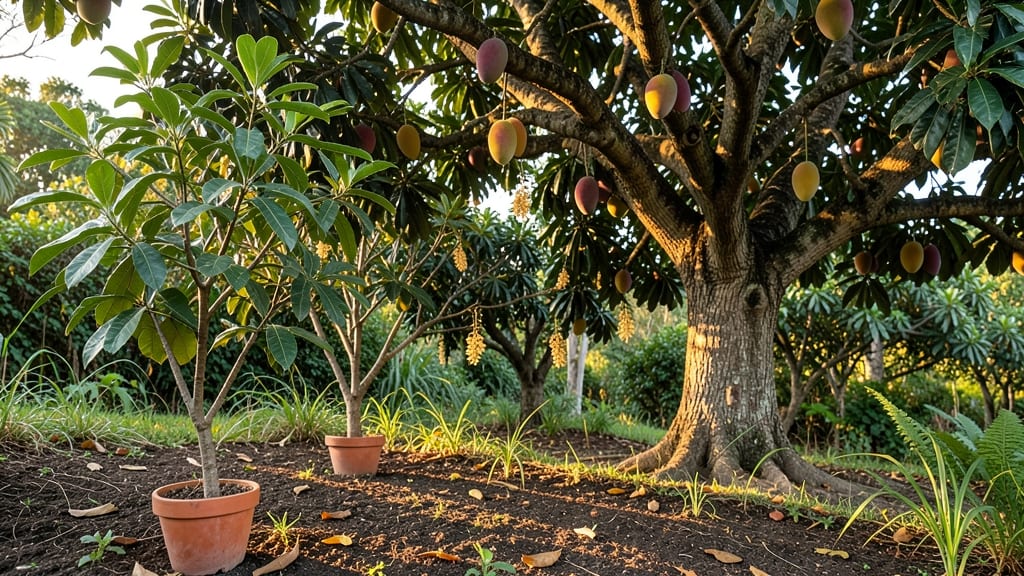
Tracking a mango tree growth chart is like watching a slow-motion miracle unfold—those first leaves appear within weeks, but it takes 5+ years before you’ll taste your own fruit. 🌱 I’ve watched my own tree progress from a 6-inch sapling to a 15-foot beauty, and the key is understanding each stage’s quirks before they become problems.
The first two years focus on root and trunk development, while years 3-5 bring the real drama: flowering and fruiting. Without knowing what to expect, you might overwater, prune too aggressively, or miss critical care cues.
Here’s the real secret: varieties grow at wildly different rates. A ‘Haden’ might hit 10 feet by year 4, while a ‘Keitt’ stays compact at 6 feet. Climate matters too—tropical zones push growth faster than subtropical areas, where cold snaps can stall progress for months.
My tree in Zone 10 blooms reliably by year 5, but a friend’s in Zone 9 waits until year 7. The chart breaks down height, width, and care shifts for each phase, so you’ll know exactly when to fertilize, prune, or protect against pests.
By year 3, you’ll spot the first signs of maturity: thicker branches, leaf clusters, and—if you’re lucky—tiny flowers. That’s when most gardeners panic and over-prune, but the right cuts actually boost fruit production.
The chart highlights these turning points, plus common pitfalls like fungal spots on young leaves or blossom drop in hot weather. With this roadmap, you’ll avoid the heartbreak of watching your tree struggle when a little timing adjustment could’ve saved it.
Whether you’re growing from seed or transplanting a sapling, this growth timeline keeps you one step ahead. Next, we’ll dive into the care shifts at each stage—because knowing when to act is just as important as how.
📚 In This Guide
- What you need
- Instructions
- Tips and common mistakes
- Wrapping up and next steps
What you need
- ● Mango seeds or saplings: 1-3 high-quality seeds (from ripe, organic mangoes) or 1 healthy sapling (3-6 months old, disease-free)
- ● Potting mix: 5-10 gallons of well-draining, slightly acidic soil (pH 5.0-7.0). Mix 50% coco coir, 30% perlite, and 20% compost.
- ● Containers: 1 5-gallon nursery pot (for seedlings) or 1 15-gallon+ container (for mature saplings)
- ● Fertilizers: 1 balanced 10-10-10 fertilizer (for seedlings) 1 citrus/mango-specific fertilizer (high in nitrogen, phosphorus, and potassium) (for mature trees)
- ● Pruning tools: 1 sharp bypass pruners (for small branches) 1 hand saw (for thicker branches) 1 sterilizing solution (70% isopropyl alcohol or bleach water)
- ● Support structures: 1 stake or bamboo pole (4-6 ft tall, for young trees) 1 tree tie or soft garden twine (to secure the tree)
- ○ Watering supplies: 1 watering can or hose with a gentle spray nozzle 1 moisture meter (optional but helpful for monitoring soil hydration)
- ● 1 mulch (straw or wood chips) to retain soil moisture and regulate temperature.
- ● 1 shade cloth (30-50% coverage) to protect young seedlings from harsh sun.
- ● 1 humidifier or misting bottle for tropical humidity control (especially in dry climates).
- ● 1 growth regulator (like seaweed extract) to boost root and shoot development.
- ● 1 pH testing kit to monitor soil acidity and adjust as needed.
Understanding your mango tree's growth timeline
Here's how to track your mango tree's development by variety and age.
🌱 Step 1: First Year - Germination to Sapling Stage
Your mango tree begins life as a seedling that grows 1-3 feet tall in its first year. Varieties like 'Keitt' and 'Haden' typically show first true leaves within 2-4 weeks of planting, while tropical varieties like 'Cogshall' may sprout slightly faster. The key is consistent moisture—keep the soil evenly damp but not soggy during this stage.
You'll notice the seedling develop cotyledons (first leaves) followed by true leaves that resemble miniature adult foliage. At this point, the root system establishes itself, so avoid transplanting until you see 4-6 true leaves and the stem reaches 6 inches tall. This usually happens around 3-4 months for most varieties.
☀️ Step 2: Year 2-3 - Rapid Vertical Growth
This is when your mango tree enters its growth spurt. By year 2, expect 6-12 feet of height gain depending on variety and climate. 'Valencia Pride' often grows 8-10 feet in its second year, while 'Tommy Atkins' may reach 10-12 feet. The tree develops its characteristic feathery foliage and begins forming branch structure.
Here's where light becomes critical. Mango trees need 6+ hours of direct sun daily—you'll see leggy growth if they're shaded. Watch for new terminal buds forming at branch tips; these indicate healthy growth. Prune only to remove dead wood or crossing branches during this phase.
🌿 Step 3: Year 4-5 - Flowering and First Fruit Set
Most mango varieties begin flowering between 4-6 years, with some early producers like 'Julie' flowering as early as year 3. You'll notice panicles (flower clusters) forming at branch tips, typically after a period of cooler weather. The tree may produce 100-500 flowers per cluster, though only 1-5% typically set fruit.
This is when you'll see the first fruit set—small, hard green mangoes about 1 inch in diameter. Don't be alarmed if many drop; this is normal. Varieties like 'Kent' often produce 50-100 pounds of fruit in their first productive year, while others like 'Ataulfo' may yield 20-40 pounds. Monitor for pests like mango seed weevils during this critical stage.
⏰ Step 4: Year 6+ - Mature Growth and Full Production
By year 6, your mango tree reaches its mature height—typically 25-40 feet depending on variety. 'Ice Cream' varieties may stay shorter at 20-25 feet, while tropical varieties like 'Kensington Pride' can exceed 50 feet in ideal conditions. The canopy spreads 15-25 feet wide, creating that classic tropical shade tree shape.
Productive trees yield 200-600 pounds of fruit annually, with peak production occurring between years 10-15. You'll notice fruit clusters forming along branches, with each mango growing from 1-3 inches per week during the growing season. This is when regular pruning becomes essential to maintain shape and airflow.
📊 Step 5: Creating Your Custom Growth Chart
Track your tree's progress by recording height measurements every 6 months and noting key milestones. Create a simple chart with columns for: variety, age, height, flowering date, fruit set date, and yield. For example, your 'Haden' tree might show 15 feet at year 3, 25 feet at year 5, and first fruit at year 4.
Compare your tree's progress to variety-specific benchmarks. For instance, 'Carrie' typically reaches 10 feet by year 3 and flowers by year 4, while 'Nam Dok Mai' grows 20 feet by year 5 and may take 7-8 years to bear fruit. Adjust care based on how your tree compares to these averages—underperformers may need more sunlight or fertilizer.
Tips & tricks for tracking your mango tree's development
Here’s how to make your mango tree’s growth chart work for you—not just track it. Small adjustments now save headaches later.
Variety-Specific Adjustments: The growth benchmarks in Step 1-4 are averages, but your 'Carrie' might grow faster than a 'Nam Dok Mai' in the same conditions. I keep a side-by-side comparison chart for my trees—note when your tree hits milestones earlier or later than expected. For example, if your 'Haden' reaches 10 feet by year 2 (instead of year 3), it might be a sign of ideal sunlight or soil conditions worth replicating for future plantings.
Pruning for Precision: The instructions mention pruning only to remove dead wood or crossing branches, but here’s the trick: prune after the rapid growth phase (Step 2) to shape your tree’s future canopy. Cut back 1/3 of the new growth in late winter—this encourages thicker branching where fruit clusters form later. I learned this the hard way after my first 'Keitt' grew too leggy, and its fruit set was sparse.
Fruit Set Secrets: That 1-5% fruit set rate in Step 3 can feel discouraging, but you can nudge it higher. Thin clusters to leave only 5-10 flowers per panicle—the fewer flowers, the more energy each mango gets. Also, watch for reddish color on the flower stalks: this signals pollination success. If you see mostly green, hand-pollinate with a soft brush in the morning when bees are active.
Long-Term Tracking Hack: For the custom growth chart in Step 5, use a digital photo of your tree every 6 months alongside your measurements. The visual progression shows patterns your numbers might miss—like sudden leaf yellowing or branch dieback. I store mine in a labeled folder on my phone, and it’s become my go-to reference when comparing trees.
Pro Tips for Mango Tree Growth Chart
- Here’s how to make your mango tree’s growth chart work for you—not just track it.
- Variety-Specific Adjustments: The growth benchmarks in Step 1-4 are averages, but your 'Carrie' might grow faster than a 'Nam Dok Mai' in the same conditions.
- Pruning for Precision: The instructions mention pruning only to remove dead wood or crossing branches, but here’s the trick: prune after the rapid growth phase (Step 2) to shape your tree’s future canopy.
Frequently asked questions
Got questions about tracking your mango tree’s growth? Here are some of the most common ones—plus quick answers to keep your tree thriving!
How fast does a mango tree grow each year?
A mango tree’s growth rate depends on the variety and care, but most Mangifera indica varieties grow 1–3 feet per year in their first 5 years. Dwarf varieties (like ‘Cogshall’) may grow just 6–12 inches annually, while standard types can reach 10+ feet in ideal conditions. Patience is key—full maturity (and fruit production) can take 3–6 years!
When should I expect my mango tree to bear fruit?
Timing varies by variety, but most mango trees start producing fruit 3–6 years after planting. Dwarf varieties (like ‘Julie’ or ‘Keitt’) may fruit in 2–3 years, while tropical types (like ‘Alphonso’) can take 5+ years. Ensure your tree gets full sun, well-draining soil, and regular watering to speed up fruiting.
What’s the best time to prune a young mango tree?
Prune your mango tree in late winter or early spring (just before new growth starts) to shape it and encourage airflow. Avoid heavy pruning in the first 2–3 years—focus on removing dead or crossing branches. Pro tip: Use sterilized tools and prune at a 45-degree angle to prevent disease.
Can I grow a mango tree in a pot? What size container do I need?
Yes! Dwarf varieties thrive in pots, but standard mango trees need at least a 15–20 gallon container with drainage holes. Repot every 2–3 years as roots grow. Place the pot in full sun and use a well-draining potting mix (like cactus/succulent blend). Just remember: Potted trees may fruit later than ground-planted ones.
Why aren’t my mango tree leaves turning green? (Troubleshooting yellowing)
Yellow leaves often signal overwatering, nutrient deficiency, or pests. Check the soil—it should be slightly moist but not soggy. Lack of zinc or nitrogen can cause yellowing; fertilize with a balanced citrus/mango formula in spring. Inspect for aphids or mites and treat with neem oil if needed.
Wrapping up and next steps
Growing a mango tree is a rewarding journey, and understanding its variety-specific growth chart helps you nurture it to full potential! Whether you’re cultivating a Keitt (slow but sturdy) or a Valencia Pride (fast-growing), patience and care will yield sweet, tropical rewards. 🌱
Now that you’re equipped with the right knowledge, it’s time to take action! Start by selecting the perfect spot, preparing the soil, and giving your tree the love it deserves. Happy planting—and may your mango tree thrive! 🍈✨