
Pruning
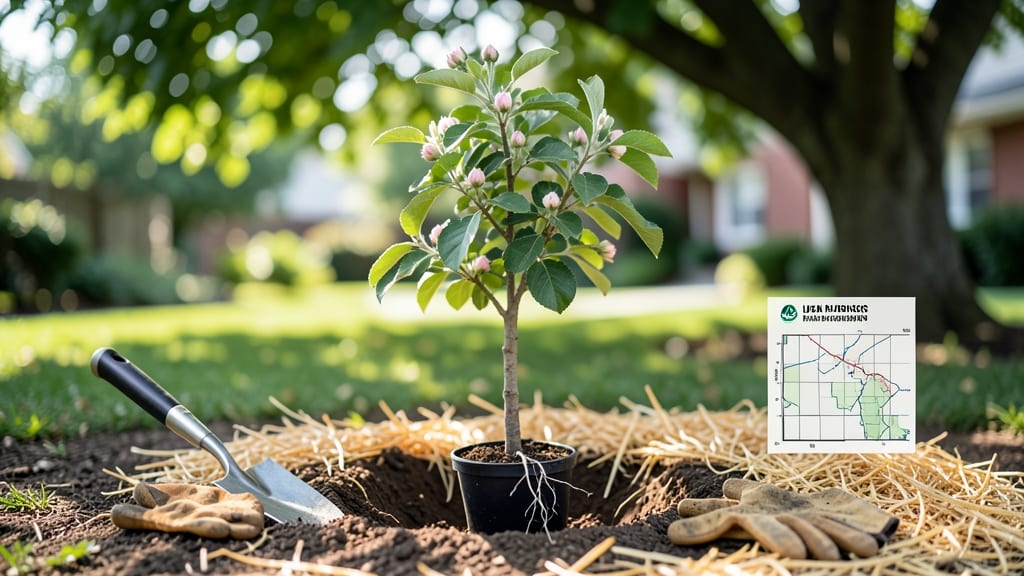
Planting an apple tree in the wrong zone is like setting up a snowball fight in July—it just won’t work. 🌳 Understanding your apple tree planting zones means choosing varieties that thrive where you live, from the deep freeze of Zone 3 to the mild winters of Zone 9.
I’ve learned the hard way that skipping this step leads to stunted growth, poor fruit, or worse—losing the tree entirely.
The key is matching your zone to cold-hardy varieties like Honeycrisp (Zones 3-8) or Gala (Zones 4-9). These aren’t just random picks—they’re bred to handle your climate’s extremes. Start by checking the USDA Plant Hardiness Zone Map, then dig into soil pH (6.0-7.0 is ideal) and full-sun spots.
Most people overlook soil prep, but amending with compost and organic matter makes all the difference for root health.
By planting at the right time—early spring or fall—you’ll give roots time to establish before winter. A well-chosen tree in the right zone produces abundant, flavorful fruit for decades. No more guessing games or disappointed harvests. Let’s get you growing apples that actually thrive where you live.
Whether you’re in Alaska’s Zone 1 or Florida’s Zone 10, there’s a perfect apple variety waiting. The secret is knowing which one fits your corner of the country. Ready to pick the right tree for your yard?
📚 In This Guide
- What you need
- Instructions
- Tips and common mistakes
- Wrapping up and next steps
What you need
- ● Apple tree sapling: Choose a cold-hardy variety suited to your USDA Plant Hardiness Zone (e.g., 'Honeycrisp' for Zones 4-7, 'McIntosh' for Zones 3-8, or 'Liberty' for Zones 4-9). Ensure it’s disease-resistant and bare-root or potted.
- ● Shovel: A round-point or digging shovel (18-24 inches wide) for digging the planting hole.
- ● Garden fork: For loosening compacted soil in the planting area.
- ● Compost or well-aged manure: 5-10 gallons to enrich the soil.
- ● Organic mulch: 3-4 inches of wood chips, straw, or pine needles to retain moisture and suppress weeds.
- ● Pruning shears: Sharp, bypass-style shears for trimming dead or crossing branches.
- ○ Staking materials (optional but recommended for young trees): 2-3 wooden stakes (4-6 feet tall) or metal tree supports.
- ● Soft tree tie straps (3-4) to secure the tree without damaging the trunk.
- ● Watering can or hose: With a gentle spray nozzle for post-planting hydration.
- ● Garden gloves: To protect your hands from thorns and rough bark.
- ● Soil test kit: To check pH and nutrient levels (ideal range: 6.0-7.0 for apples).
- ● Fertilizer: A balanced, slow-release fertilizer (10-10-10) to give your tree a nutrient boost.
- ● Tree guard or collar: To protect the trunk from rodents and lawnmowers.
- ● Drip irrigation system: For consistent moisture, especially in dry climates.
- ● Pest control: Neem oil or copper spray to prevent early infestations.
How to choose the right apple tree for your planting zone
Here's how I match cold-hardy varieties to your climate for thriving fruit trees.
🌱 Step 1: Determine Your Exact Planting Zone
Find your USDA Plant Hardiness Zone by entering your ZIP code at planthardiness.ars.usda.gov. The map shows zones 1-12, but apple trees thrive best in zones 3-8. I always double-check my local extension office's microclimate notes—urban areas can be 5°F warmer than rural zones just a few miles away.
Look for the average annual minimum temperature in your zone. For example, zone 4 endures -30°F to -20°F winters, while zone 7 handles 0°F to 10°F. This tells you which apple varieties will survive your coldest winters without damage. I keep a small notebook with my zone number and nearby zone variations—it's saved me from buying non-hardy trees twice.
☀️ Step 2: Select Varieties Rated for Your Zone
Choose apple varieties with cold-hardiness ratings matching or exceeding your zone. For example, 'Honeycrisp' thrives in zones 3-8, while 'Fuji' needs zones 5-8. I always cross-reference three sources: the USDA database, my local nursery's recommendations, and online forums from gardeners in my exact zone.
Look for varieties labeled "cold-hardy" or "dwarf for cold climates". Dwarf trees (like 'Liberty' or 'Enterprise') grow well in containers and smaller spaces, making them ideal for zones 3-5. I avoid tropical varieties like 'Red Delicious' in northern zones—they simply won't survive winter.
🌿 Step 3: Consider Pollination and Chill Hours
Most apple trees need 300-1,000 chill hours (below 45°F) to produce fruit. Check your zone's average chill hours—zone 4 typically has 1,500+ hours, while zone 7 may only get 500-800 hours. Plant two compatible varieties if you want fruit—'Gala' and 'McIntosh' pollinate each other beautifully.
If your zone has fewer than 500 chill hours, choose low-chill varieties like 'Anna' or 'Dorsett Golden'. I once planted a standard 'Granny Smith' in zone 8—it bloomed but never set fruit because the winters weren't cold enough for its chill requirements.
⏰ Step 4: Time Planting for Zone-Specific Conditions
Plant bare-root trees in late fall or early spring (before buds swell) in zones 3-6. Container-grown trees can go in year-round, but avoid extreme heat or frost. In southern zones (7-8), plant in winter or early spring to avoid summer heat stress.
Mulch heavily in colder zones with 4-6 inches of wood chips, keeping mulch 6 inches away from the trunk. This insulates roots during winter and prevents heaving. I always water deeply before the first hard frost in zone 5—it helps roots establish before dormancy.
🪴 Step 5: Protect Young Trees in Harsh Zones
In zones 3-4, wrap the trunk with tree guard or burlap to prevent rodent damage. Use anti-desiccant spray on evergreens and young trees to prevent winter burn. I've seen entire orchards fail in zone 4 because gardeners skipped this step—don't make that mistake.
For extreme cold (below -20°F), mound soil around the base of the tree up to the graft union. This creates an insulating blanket. Remove the mound in early spring once the ground thaws. I test soil moisture in late winter—if it's dry, I water lightly before the growing season starts.
Tips & tricks for perfect apple tree planting zones
These cold-hardy planting tips will help you avoid common mistakes and maximize your tree's survival chances.
Zone Verification: Don't rely solely on the USDA map—urban areas can be 5°F warmer than rural zones just a few miles away. I always call my local extension office to confirm microclimate variations. For example, a zone 5 city might have pockets of zone 6 heat islands near buildings, while nearby farmland stays true to zone 5. This simple verification saved me from buying a non-hardy tree that died in my first winter.
Variety Cross-Checking: When selecting varieties like 'Honeycrisp' for zones 3-8, I recommend checking three sources: the USDA database, your local nursery's recommendations, and gardening forums from people in your exact zone. Nurseries sometimes carry varieties that won't survive your specific winter lows. I once planted a 'Fuji' in zone 5—it survived, but the fruit quality suffered because it was at the edge of its recommended range.
Chill Hour Reality Check: The 300-1,000 chill hour range is a guideline, but your actual chill hours might differ. Use a chill hour calculator with your local weather data for precise numbers. For example, some zone 7 areas might only get 400 chill hours, making standard varieties like 'Granny Smith' unreliable. I now carry a small notebook to track my local chill hours each winter to adjust future plantings.
Winter Protection Layering: For extreme cold (below -20°F), combine all winter protection methods: tree guard, mulch, and soil mounding. I've seen trees survive -30°F winters when all three were used together. The key is creating multiple insulating layers—think of it like putting on long underwear under your winter coat. Don't skip any single protection method in harsh zones.
Pro Tips for Apple Tree Planting Zones
- These cold-hardy planting tips will help you avoid common mistakes and maximize your tree's survival chances.
- Zone Verification: Don't rely solely on the USDA map—urban areas can be 5°F warmer than rural zones just a few miles away.
- Nurseries sometimes carry varieties that won't survive your specific winter lows.
Frequently asked questions
Got questions about planting apple trees in the right zones? You’re not alone!
Here are answers to the most common concerns—from choosing varieties to troubleshooting common issues. Let’s make your orchard dreams a reality!
What are the best apple tree varieties for cold climates?
Cold-hardy varieties like Honeycrisp, McIntosh, and Cortland thrive in USDA Zones 3–6. For Zone 2 or colder, try Haralson or Prarie Spy. Always check your local planting zone to match the tree’s tolerance to winter temps!
When is the best time to plant an apple tree?
Plant in early spring (after last frost) or fall (4–6 weeks before first frost). Avoid extreme heat or cold—roots need time to establish! Fall planting gives trees a head start, while spring ensures they’re ready for summer growth. Pro tip: Water deeply after planting to reduce transplant shock.
Can I grow dwarf apple trees in any zone?
Yes! Dwarf varieties (like Columnar or Semi-Dwarf) adapt to most zones but need sturdy support and proper spacing. They’re great for small yards or containers but still require full sun (6+ hours/day) and zone-appropriate chill hours for fruit production.
Why aren’t my apple tree leaves turning green after planting?
Slow leaf growth? Check for poor drainage, over/under-watering, or nutrient deficiency (add compost!). If leaves are yellow, it may be chlorosis—test soil pH (ideal: 6.0–7.0) and amend with iron if needed. Pro tip: Mulch around the base to retain moisture and regulate soil temp.
Do apple trees need a pollinator if I plant just one?
Most apple trees are self-pollinating but produce more fruit with a pollinator nearby (another variety blooming at the same time). For single-tree success, choose self-fruitful varieties like Liberty or Enterprise. Cross-pollination boosts yields—just plant a second tree within 50 feet!
Wrapping up and next steps
Planting an apple tree in the right apple tree planting zones sets the stage for years of sweet rewards! 🍏 Whether you’re in a chilly Zone 3 or a milder Zone 8, choosing cold-hardy varieties ensures your tree thrives—and maybe even outpaces pests.
Now that you’re armed with the best practices and answers to common questions, it’s time to roll up your sleeves and dig in.
Start by selecting your perfect variety, prepping the soil, and marking your planting spot. Your future orchard awaits! Happy planting—may your apples be bountiful and your harvests legendary. 🌱✨