
Watering
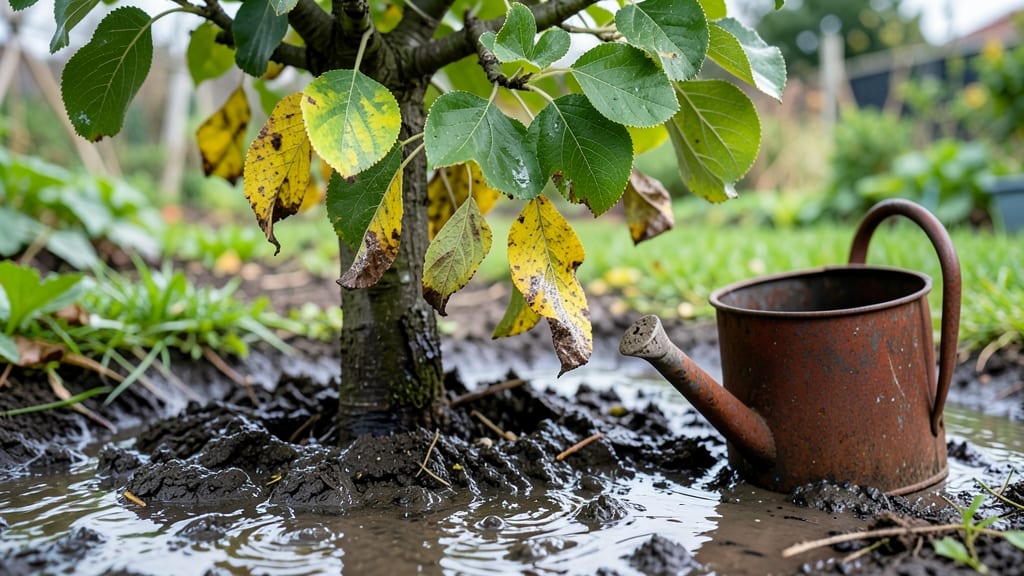
Your apple tree’s yellowing leaves and soggy soil aren’t just signs of overwatering—they’re a silent root rot crisis waiting to happen. 🌱 I’ve nursed back more than a few drowning apple trees, and these 5 simple steps can save yours before it’s too late.
The key? Stopping the rot, fixing drainage, and giving roots the breathing room they need.
Overwatering smothers roots by cutting off oxygen, turning soil into a suffocating swamp. You’ll spot the trouble in wilting leaves, mushy brown roots, or fruit that stays small and sour.
My first rescue involved digging up a tree with roots so soft they fell apart—don’t let yours get that far. The fix starts with adjusting your watering schedule and amending the soil.
Drainage is your first defense: add gravel or sand to compacted soil, and consider raised beds for severe cases. Prune back any mushy roots you find, then water deeply but infrequently—think 1-2 inches per week, not daily drips.
Within 4-6 weeks, you’ll see fresh green leaves pushing through, and next year’s fruit will finally reach its full sweet potential.
For trees in advanced rot, don’t hesitate to call an arborist—they can assess whether your tree’s worth saving or if replanting is the smarter move. But for most cases, these steps work like a charm. Your apple tree’s comeback starts now.
Why it happens
Overwatering an apple tree isn’t just a gardening blunder—it’s a silent killer that chokes roots by suffocating them in excess moisture. Understanding the why behind this problem is the first step to saving your tree. Here’s a breakdown of the most common causes, backed by science and practical insights.
🌱 Poor Soil Drainage: The Silent Culprit
Apple trees thrive in well-draining soil, but many gardeners unknowingly plant them in clay-heavy or compacted soil, which acts like a sponge, trapping water near the roots. When water can’t escape, it creates an anaerobic (oxygen-deprived) environment. Roots need oxygen to respire—just like humans need air to breathe.
Without it, they suffocate, leading to Phytophthora and other root-rotting pathogens. Test your soil: Dig a 12-inch hole near your tree. If water pools or drains slower than 4 hours, your soil is too dense.
💧 Overzealous Watering Schedules
Many gardeners follow the "more water = better growth" myth, but apple trees are drought-tolerant once established. Overwatering—especially on a fixed schedule—disrupts the tree’s natural hydration cycles. Roots adapted to dry spells can’t handle constant moisture, leading to:
- Root rot: Fungal infections like Armillaria or Pythium flourish in soggy conditions.
- Nutrient leaching: Excess water washes away essential minerals (nitrogen, potassium) before roots absorb them.
- Weak root systems: Trees develop shallow, sparse roots instead of deep, resilient ones.
Pro tip: Water deeply but infrequently—aim for 1–1.5 inches per week (including rainfall). Use a moisture meter to check soil dampness before watering again.
🌧️ Ignoring Weather and Seasonality
Water needs vary by season. Overwatering in fall or winter is especially dangerous because:
- Cooler temps slow root activity, making trees more susceptible to rot.
- Heavy rainfall + extra watering = double the drowning risk.
- Spring planting? New roots are extremely fragile—water only when the top 2 inches of soil are dry.
💡 Seasonal hack: Reduce watering by 50% in rainy seasons and avoid wetting leaves (use drip irrigation or soaker hoses to target roots).
🪴 Container Constraints: Potted Apple Trees
Apple trees in pots or small root zones dry out faster than in-ground trees, but many gardeners assume they need daily watering. The opposite is true: Containers drain quickly, but if they’re overwatered, roots circle the pot (a condition called girdling) and rot sets in. Signs of pot overwatering:
- Yellowing leaves with blackened stems.
- Mushy, foul-smelling soil.
- Roots growing out of drainage holes.
🔥 Fix it: Ensure pots have drainage holes and use a chunky soil mix (50% potting soil, 30% perlite, 20% compost). Water only when the top 1 inch is bone-dry.
🌿 Mulch Gone Wrong: The Smothering Layer
Mulch is a gardener’s best friend—unless it’s piled too high. A thick (3–4+ inches) layer of mulch can block oxygen and trap moisture against the trunk, creating a rot-friendly zone. Worse, organic mulch (like wood chips) breaks down into a water-retaining mat over time. Correct mulching:
- Keep mulch 2–3 inches deep and 3 inches away from the trunk.
- Use inorganic mulch (gravel, rubber chips) in problem areas.
- Avoid mulching in winter unless your climate has extreme cold.
✨ Bonus: Add a 1-inch layer of coarse sand under mulch to improve drainage.
Fixing Overwatered Apple Trees
Overwatering can turn your thriving apple tree into a soggy, stressed plant—but don’t worry! With the right steps, you can nurse it back to health and prevent future waterlogging.
Below, we’ve mapped out practical fixes based on the root cause of your tree’s woes, plus prevention tips to keep it happy and productive.
If your apple tree’s roots are suffocating in waterlogged soil, root rot may be setting in. Here’s how to tackle it:
1️⃣ Stop Watering Immediately (🚰🚫)
- Why? Overwatering is the #1 cause of root rot.
Let the soil dry out before watering again. - How? Pause all irrigation (drip systems, sprinklers, or manual watering) for at least 3–5 days. - Pro Tip: 💡 Use a moisture meter to check soil moisture—water only when the top 2–3 inches are dry.
2️⃣ Improve Soil Drainage (🏗️💦)
Poor drainage traps excess water. Fix it with these low-cost solutions:
| Problem | Solution | Tools Needed |
|---|---|---|
| Compacted soil | Loosen soil 12–18 inches deep with a garden fork or tiller. | Garden fork, tiller |
| Heavy clay soil | Mix in organic matter (compost, peat moss, or sand) to lighten texture. | Compost, sand, shovel |
| Low-lying area | Create a slight slope (1–2 inches per foot) away from the tree trunk. | Shovel, landscape rake |
| No drainage layer | Add gravel or coarse sand (4–6 inches) beneath the root zone. | Gravel, landscape fabric |
3️⃣ Prune Affected Roots (✂️🌿)
If roots are black, mushy, or smelly, they’re rotting. Here’s how to trim them safely:
- When? Early spring or fall (avoid summer heat stress).
- How? 1. Dig carefully around the outer roots (keep soil moist to avoid damage).
- Cut away soft, discolored roots with sterilized pruners (soak in 1:9 bleach-water for 10 mins).
- Dispose of infected roots in a sealed bag (don’t compost them!). - Pro Tip: 🌡️ Disinfect tools between cuts to prevent spreading disease.
4️⃣ Apply Fungicide (🛡️🍄)
Root rot is often caused by fungal pathogens. Use a copper-based or phosphite fungicide (like Copper Sulfate or Serenade Garden). Follow label instructions for application.
If your tree shows yellowing leaves, leaf drop, or weak growth (but no root rot), it’s likely overwatered but not yet critical. Reset its watering routine:
1️⃣ Water Deeply, Less Often (💧⏳)
- Goal: Encourage deep root growth instead of shallow, waterlogged roots.
- How?
- Water slowly and deeply (1–2 inches per week, including rain).
- Use drip irrigation or a soaker hose to deliver water at the base, not the leaves.
- Avoid overhead watering (especially in the evening—it promotes fungal diseases).
2️⃣ Mulch Properly (🍂🌿)
A 2–4 inch layer of organic mulch (wood chips, straw, or shredded bark) helps:
- Retain moisture (but not excess).
- Regulate soil temperature.
- Prevent soil compaction.
- Keep mulch 6 inches away from the tree trunk to avoid rot.
3️⃣ Test Soil pH & Nutrients (📊🍎)
Overwatering leaches nutrients. A soil test kit ($10–$20) can reveal deficiencies. Common fixes:
- Low iron? Apply iron chelate or Epsom salt (1 tbsp per gallon of water).
- Nitrogen deficiency? Use a balanced fertilizer (10-10-10) in early spring.
Once your apple tree recovers, prevent overwatering with these habits:
✅ 🌧️ Check the forecast – Skip watering if rain is expected within 24–48 hours. ✅ 🕒 Water in the morning – Reduces evaporation and fungal risks. ✅ 🔍 Monitor soil moisture – Stick your finger 2 inches deep; if dry, water. ✅ 🌿 Plant in well-draining soil – Avoid low spots where water pools. ✅ 🌳 Choose the right spot – Apple trees need 6–8 hours of sun and good airflow. ✅ 🚫 Avoid heavy foot traffic – Compacted soil = poor drainage.
Final Thought: 🎯 With the right adjustments, your apple tree can bounce back stronger—even after overwatering. Act fast if you see root rot, but don’t panic if it’s just a watering habit issue. Small changes now mean bigger, healthier fruit later!
Frequently asked questions
How do I know if my apple tree is overwatered vs. underwatered?
Check the soil first—overwatered trees have soggy, cool soil that smells musty, while underwatered trees have dry, cracked soil. Look for yellowing leaves (overwatered) or crispy brown edges (underwatered). Overwatered trees also develop mushy brown roots when dug up, while underwatered ones have dry, brittle roots.
Can I save an apple tree with root rot from overwatering?
Yes, but act fast! First, stop watering immediately for 3–5 days to dry the soil. Prune away any black, mushy roots with sterilized tools, then improve drainage by adding gravel or compost to compacted soil. Apply a copper-based fungicide to prevent further spread. With proper care, many trees recover within 4–6 weeks.
Why does my apple tree need less water in winter?
Cold weather slows root activity by up to 70%, so trees absorb far less water. Overwatering in winter creates waterlogged soil, which suffocates roots and invites fungal rot. Only water if the ground is completely frozen or during prolonged dry spells. A 2–3 inch mulch layer helps insulate roots while preventing excess moisture.
What’s the best way to test my soil drainage before planting?
Dig a 12-inch deep hole near where you’ll plant. Fill it with water, then time how long it takes to drain. If it takes more than 4 hours, your soil drains poorly. For a quick fix, mix in coarse sand or perlite (20% of the soil volume) to improve airflow. Test again after amending!
Will overwatering kill my apple tree instantly?
Not immediately, but chronic overwatering leads to root rot within 2–4 weeks if unchecked. Early signs include yellow leaves, wilting despite wet soil, and slow growth. The good news? Trees are resilient—correcting drainage and watering habits can reverse damage before it’s fatal. Think of it as a slow-motion emergency with a high recovery rate if you act early.