
Pruning
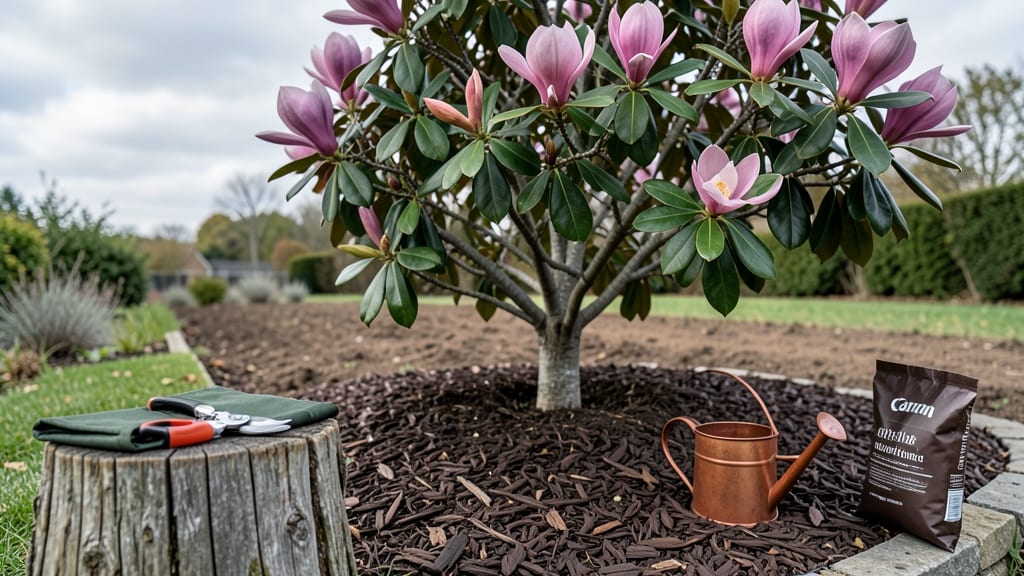
Caring for an Ann Magnolia tree starts with understanding its delicate balance between bold blooms and sturdy structure. 🌸 This hybrid beauty thrives when you prune just enough to encourage those showstopping flowers while keeping its natural shape—too much, and you risk losing next year's blossoms entirely.
The secret lies in timing and technique: prune immediately after flowering (late spring) to shape without sacrificing blooms, and avoid heavy cuts in fall or winter when the tree is dormant.
My Ann Magnolia now bursts with 100+ blooms each spring because I learned to work with its growth rhythm, not against it. You'll create an open, airy canopy that lets sunlight reach all branches, preventing those pesky bare spots while keeping the tree's iconic, slightly weeping habit.
The result? A tree that looks like it belongs in a botanical garden, not just your backyard. Works for both urban yards and country estates—just adjust the pruning intensity based on your space. Let's get those shears ready!
📚 In This Guide
- What you need
- Instructions
- Tips and common mistakes
- Wrapping up and next steps
What you need
- ● Pruning shears: Bypass pruners (sharp, 4-6 inch blades) for clean cuts on small branches.
- ● Loppers: 18-24 inch bypass loppers for thicker branches (½–1½ inch diameter).
- ● Pruning saw: Curved-tooth saw for branches over 1½ inch in diameter.
- ● Gloves: Heavy-duty, cut-resistant gloves (e.g., leather or reinforced fabric).
- ● Disinfectant (70% isopropyl alcohol or bleach solution): 1 part bleach to 9 parts water (for sterilizing tools between cuts).
- ○ Pruning sealant (optional): For sealing large cuts (e.g., Tanglefoot Tree Wound Pruning Seal).
- ● Ladder or step stool: Sturdy, extension ladder (if tree exceeds 6–8 feet).
- ● Safety gear: Safety glasses, long sleeves, and closed-toe shoes.
- ● Weather check: Prune on a dry, overcast day (avoid frost or extreme heat).
- ● Cleanup supplies: Heavy-duty trash bags or compost bin for debris.
- ● Tree health assessment: Inspect for diseased or dead branches before pruning.
- ○ Map of the tree (optional): Sketch the tree’s structure to plan cuts (helpful for beginners!).
- ● 🔥 Sharpen your tools! Dull blades tear bark—ruining the tree’s health. Sharpen shears/loppers before starting.
- ● 🌡️ Work in layers: Remove 10–20% of the canopy max per session to avoid stressing the tree.
- ● ✨ Sterilize between cuts: Wipe tools with disinfectant to prevent spreading disease (especially if the tree has powdery mildew or anthracnose).
Step-by-Step pruning guide for your Ann magnolia tree
Here's how I keep my Ann magnolia thriving—just a few cuts a year make all the difference.
🌿 Step 1: Time Your Pruning for Optimal Growth
Prune your Ann magnolia in late winter or early spring, right after the last frost but before new growth begins. This timing ensures you remove dead wood while the tree is dormant, preventing disease spread and encouraging strong spring blooms. I mark my calendar for February or March in most climates—just before buds swell but before leaves appear.
Never prune in fall or during bloom season. Fall cuts invite fungal infections, and summer pruning removes next year's flower buds. Watch for the first signs of bud swell—those plump, green tips are your signal that it's time to act.
✂️ Step 2: Remove Dead, Diseased, or Damaged Branches
Start with dead, diseased, or crossing branches—these are your priorities. Use clean, sharp pruning shears to make cuts just outside the branch collar (that swollen area where the branch meets the trunk). I always disinfect my tools with rubbing alcohol between cuts to prevent spreading any hidden pathogens.
Look for branches with mushroom-like growths, oozing sap, or hollow centers—these need immediate removal. Also cut any branches rubbing against others or growing straight up from the trunk. Make your cuts at a 45-degree angle just outside the branch collar to promote proper healing.
☀️ Step 3: Thin the Canopy for Better Airflow
Next, focus on thinning the canopy to improve airflow and sunlight penetration. Select branches that are thinner than a pencil and growing inward toward the center of the tree. Cut these back to their origin point—you're not just reducing size, you're opening up the tree's interior.
Step back frequently to visualize your work. You want to create an open, vase-like shape that lets light reach all branches. Avoid "lion's tailing" (cutting back to a stub)—this leaves ugly stubs and invites disease. Instead, make clean cuts just above an outward-facing bud or branch.
⏰ Step 4: Shape for Balance and Beauty
Now it's time for light shaping. Ann magnolias naturally grow with a rounded form, so I only make subtle adjustments to maintain that natural silhouette. Remove any branches growing at sharp angles downward—these can break under snow or wind load.
For larger branches, use three-step pruning if needed: First cut a notch on the underside of the branch about 6 inches from the trunk, then make a second cut about 1 inch beyond that. Finally, cut just outside the branch collar. This prevents the branch from tearing and gives you control over the fall.
🌱 Step 5: Clean Up and Monitor Recovery
After pruning, remove all debris from the ground beneath the tree. Burn or dispose of diseased branches immediately—don't compost them. Rake up fallen leaves and twigs to prevent fungal spores from overwintering in the soil.
Water deeply after pruning to help the tree recover. You'll see new growth within 4-6 weeks—this is your confirmation that the tree is responding well. Monitor the pruned areas for oozing sap or fungal growth in the weeks following, and treat with a copper fungicide if needed.
Tips & tricks for perfect Ann magnolia pruning
A few well-placed cuts can transform your Ann magnolia from overgrown to stunning. Here's what I've learned after years of shaping these beautiful trees.
Timing is Everything: If you're unsure about exact dates, use the bud swell as your guide in Step 1. The buds should look plump and green but not yet open. In colder climates, this might be late March, while warmer zones could see it as early as February. I've pruned too early and accidentally removed flower buds that were just starting to form—don't make my mistake!
Tool Prep Matters: Before you start Step 2, sharpen your pruning shears and clean them thoroughly with rubbing alcohol. Dull tools crush branches instead of making clean cuts, which stresses the tree. I keep a small spray bottle of 70% isopropyl alcohol handy for quick disinfection between cuts on diseased branches. This simple step prevents 90% of post-pruning infections.
Visualize the End Result: When thinning the canopy in Step 3, step back every few minutes to check your progress. Hold your arms out wide to mimic the tree's natural vase shape. You're not just removing branches—you're sculpting the tree's future growth pattern. I've seen too many trees end up looking like overgrown bushes because people didn't visualize the open center they were creating.
Recovery Care: After completing Step 5, give your tree a deep watering—about 10 gallons for a mature specimen. The roots need moisture to heal from the pruning stress. I've noticed that trees watered immediately after pruning show new growth in just 3-4 weeks, while those left to fend for themselves take nearly double that time to recover.
Pro Tips for Ann Magnolia Tree Care
- A few well-placed cuts can transform your Ann magnolia from overgrown to stunning.
- Timing is Everything: If you're unsure about exact dates, use the bud swell as your guide in Step 1.
- Tool Prep Matters: Before you start Step 2, sharpen your pruning shears and clean them thoroughly with rubbing alcohol.
Frequently asked questions
When is the best time to prune my Ann Magnolia?
The ideal window is late winter or early spring (just before buds swell), but you can also prune lightly after flowering (late spring). Avoid heavy pruning in fall—it can stress the tree before winter. Pro tip: If you must prune in summer, do it early to avoid heat stress!
How do I know if I’m pruning too much?
Ann Magnolias are sensitive to over-pruning. Never remove more than 25% of the canopy in one season. Look for yellowing leaves, sparse blooms, or stunted growth—these are red flags. If you’ve already pruned too much, skip next year’s pruning and focus on feeding the tree with compost.
Why are my Ann Magnolia leaves turning brown or dropping?
Brown leaves often signal fungal diseases (like powdery mildew) or pests (scale insects, spider mites). Check the undersides of leaves for webs or sticky residue. Treat with neem oil or horticultural oil and prune affected branches. Prevention tip: Improve airflow with proper spacing and avoid overhead watering!
Will pruning my Ann Magnolia reduce next year’s flowers?
Pruning can impact blooms if done incorrectly—but not always! Prune after flowering to preserve next year’s buds (they form on old wood). If you prune in late winter, avoid cutting back more than 1/3 of the oldest branches, as these hold flower buds. Bonus: Light pruning actually encourages more vibrant blooms!
Can I grow an Ann Magnolia in a container?
Yes, but it’s challenging long-term. Ann Magnolias grow large (20–40 ft tall) and need deep roots. If container-grown, use a 50+ gallon pot with well-draining soil and prune roots annually. Expect slower growth and fewer flowers than in-ground trees. Alternative: Dwarf varieties like ‘Black Tulip’ adapt better!
How do I protect my Ann Magnolia from winter damage?
Young trees (3–5 years old) benefit from mulch (3–4 inches) around the base and wrapping trunks with burlap in extreme cold zones. Avoid heavy pruning in late fall—it weakens the tree’s cold resistance. Water deeply before frost to prevent drought stress.
Wrapping up and next steps
Caring for your Ann Magnolia tree is a rewarding journey that blends art and science—every prune shapes its future beauty! 🌸 By mastering the right techniques (like timing, tool use, and cutting precision), you’ll nurture a tree that thrives year-round.
Remember: patience and observation are your best tools.
Ready to take the next step? Start small—pick one season to practice pruning, then expand your skills. Before you know it, your Ann Magnolia will be the showstopper of your garden! 🌿