
Pruning
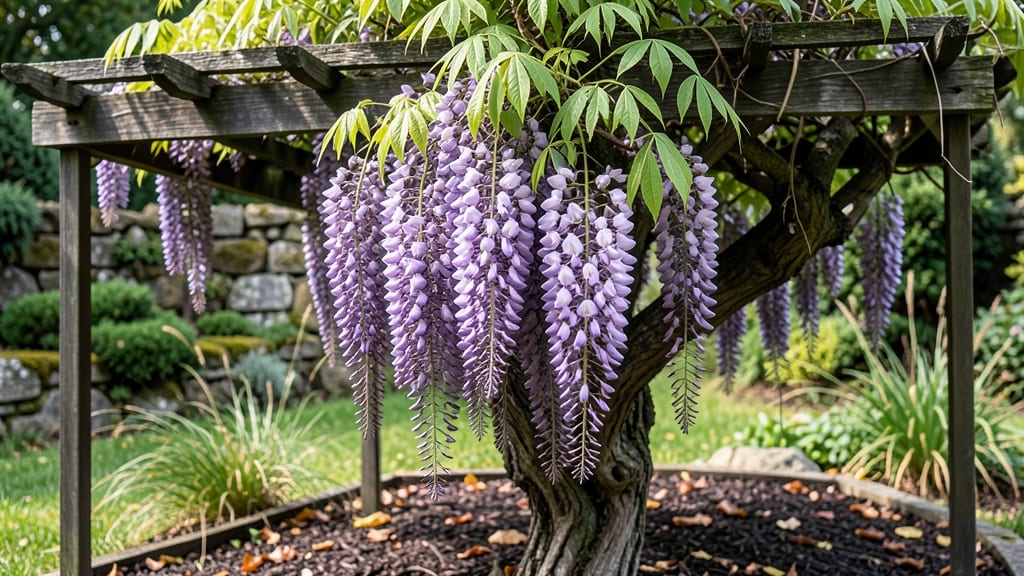
Transforming Amethyst Falls wisteria into a tree form creates a breathtaking vertical masterpiece that turns heads at every season. 🌿 The key is patience and precision—this variety thrives when shaped like a graceful, sky-reaching sentinel rather than a sprawling vine.
I’ve pruned mine for three years now, and the difference is stunning: long, arching branches heavy with lavender blooms instead of tangled messes.
The secret lies in three critical cuts: first, selecting a strong central leader when young; second, removing competing stems to maintain a single trunk; and third, strategic annual pruning to encourage upward growth.
You’ll need sharp pruners, a sturdy ladder, and a clear vision—this isn’t a quick fix, but the payoff is worth it. By summer, your wisteria will resemble a living chandelier, its cascading flowers creating a fragrant canopy.
What makes this variety special is its disease resistance and hardiness—it handles pruning better than most wisterias, making tree form achievable even for beginners. The blooms arrive earlier than traditional varieties, too, giving you months of fragrance.
Just be prepared for the weight of those flowers; support branches with lightweight hardware cloth if needed. For best results, plant in full sun with well-draining soil, and water deeply but infrequently once established. The first two years are about shaping the structure; after that, it’s maintenance.
Mistakes happen—like over-pruning too late in the season—but even then, Amethyst Falls bounces back with surprising resilience. Let’s get growing!
📚 In This Guide
- What you need
- Instructions
- Tips and common mistakes
- Wrapping up and next steps
What you need
- ● Pruning shears: Bypass pruners (sharp, 6–8" blades) for clean cuts on small stems.
- ● Loppers: 8–10" loppers for thicker branches (up to 2" diameter).
- ○ Pruning saw: Curved-tooth saw for stubborn, woody growth (optional but helpful for mature vines).
- ● Disinfectant: 70% isopropyl alcohol or 10% bleach solution (to sterilize tools between cuts).
- ● Garden gloves: Heavy-duty, cut-resistant gloves (wisteria thorns are serious!).
- ● Tape measure: Flexible 25-foot tape for measuring branch lengths and spacing.
- ● Support structure: Trellis or arbor: 8–10 ft tall, sturdy enough to bear 20+ lbs of vine weight (powder-coated metal or cedar recommended).
- ● Ties: Soft plant ties or old T-shirts (avoid wire—it can damage bark).
- ○ Pruning sealant: Optional but useful for large cuts (>1" diameter) to prevent disease (e.g., Tanglefoot Tree Wound Pruning Seal).
- ● Timing: Prune in late winter/early spring (before buds swell) or right after flowering (avoid summer pruning—it reduces blooms!).
- ● Weather: Choose a dry, overcast day to minimize stress on the plant.
- ● Safety gear: Long sleeves/pants and safety goggles (thorns + saw = recipe for ouchies!).
- ● Fertilizer: Balanced 10-10-10 or slow-release organic fertilizer (apply after pruning to boost recovery).
- ● Mulch: 2–3" of organic mulch (shredded bark) around the base to retain moisture and suppress weeds.
Instructions for pruning Amethyst Falls wisteria into a tree form
Transforming wisteria into a stunning tree form requires patience and precision—here's how I shape mine each season.
🌿 Step 1: Understand the Growth Habits of Amethyst Falls Wisteria
Amethyst Falls wisteria grows aggressively, with long, flexible canes that naturally vine upward. The key to tree form is selecting one strong central leader and pruning back competing stems early. I start by identifying the thickest, most vertical shoot—the one that will become your trunk. This shoot should be at least ½ inch in diameter and free of damage.
Remove any competing vertical stems at the base immediately. These will fight your central leader for dominance, creating a weak, multi-trunk structure. Use sharp pruning shears to cut cleanly at a 45-degree angle, leaving no stubs. This prevents disease and encourages faster healing. The goal is to create a single, strong vertical axis before the plant puts on new growth in spring.
✂️ Step 2: Prune for Structure During Dormant Season
The best time to shape your wisteria tree is in late winter or early spring, just before buds swell. This is when the plant is dormant and sap flow is minimal, reducing stress. I focus on three structural elements: the central leader, lateral branches, and flower clusters. First, extend your central leader by cutting back any side branches that grow directly upward from the main stem.
For lateral branches, I allow only 3-5 well-spaced branches along the central leader. These should be positioned at least 12 inches apart and angled outward at 45-60 degrees. Prune back any branches that grow inward or cross the central leader—these will create a dense, tangled mess. Cut lateral branches back to a strong outward-facing bud to encourage proper growth direction.
☀️ Step 3: Maintain Shape Through the Growing Season
Once your wisteria tree form is established, regular maintenance keeps it looking its best. Throughout the growing season, I monitor new growth and prune aggressively to maintain the tree shape. Remove any suckers that sprout from the base—they’ll compete with your central leader and create an unsightly thicket. I also trim back any branches that grow too long or become leggy.
Watch for flower clusters forming on lateral branches. While wisteria flowers are stunning, they can weigh down branches and encourage excessive growth. After flowering, I prune back about ⅓ of the current year’s growth on lateral branches. This keeps the plant compact and encourages more blooms next season. Always prune just above a leaf bud or lateral branch to maintain the tree’s natural form.
⏰ Step 4: Annual Winter Pruning to Refine the Form
Each winter, I perform a thorough pruning to refine the tree form and prepare for the next growing season. Start by removing any dead, diseased, or crossing branches. Then, focus on thinning out the canopy to allow light and air to reach the center. I aim for an open, airy structure with branches spaced evenly along the central leader.
For the central leader, I may need to prune back the top to encourage branching lower down. Cut just above a strong lateral bud to promote new growth. On lateral branches, I shorten them by about ⅓ to ½ to maintain their size and shape. This also stimulates flowering and keeps the plant from becoming too top-heavy. Finish by cleaning up any small twigs and leaves to give your wisteria tree a polished look.
🌱 Step 5: Encourage Healthy Growth with Proper Care
Pruning alone won’t create a beautiful wisteria tree—proper care is essential. Amethyst Falls wisteria needs full sun (6-8 hours daily) and well-draining soil to thrive. I water deeply once a week during dry spells, ensuring the roots stay moist but not waterlogged. Fertilize in early spring with a balanced, slow-release fertilizer to support new growth.
Watch for signs of stress, like yellowing leaves or sparse foliage. These can indicate over-pruning or poor growing conditions. If you notice new growth becoming leggy or sparse, increase light exposure or adjust your pruning approach. With consistent care and pruning, your Amethyst Falls wisteria will develop into a stunning, skyward-reaching tree form that’s the centerpiece of your garden.
Tips & tricks for perfect Amethyst Falls wisteria tree form
Shaping wisteria into a tree form takes more than just pruning—it’s about understanding the plant’s natural growth patterns and working with them. Here’s how I refine my approach to create that elegant, skyward-reaching structure.
Central Leader Selection: When choosing your central leader in Step 1, look for a shoot that’s not just thick but also straight and free of kinks. I’ve learned the hard way that a slightly crooked trunk will only become more pronounced over time. If you can’t find a perfectly vertical shoot, don’t force it—select the straightest one available and prune competing stems aggressively to encourage it to dominate. The goal is to create a single, unbroken vertical line that draws the eye upward.
Pruning Angle Precision: That 45-degree angle in Step 1 isn’t just arbitrary—it’s about directing water runoff away from the cut to prevent rot. I use a small protractor on my pruning shears to ensure consistency. For larger branches, I make the cut just outside the branch collar (the swollen area where the branch meets the trunk). This detail makes all the difference in how cleanly the wound heals and how quickly new growth emerges.
Seasonal Timing: The dormant season window in Step 2 is critical—buds should be swollen but not yet open. I’ve missed this timing twice, resulting in excessive bleeding from the cuts. To be safe, I check the local forecast and aim for a week before the last expected frost. If you’re in a warmer climate, you might need to adjust this slightly, but never prune when buds are actively growing.
Lateral Branch Spacing: In Step 3, those 12-inch intervals between lateral branches aren’t just for aesthetics—they’re about light penetration and air circulation. I use a tape measure to mark my spacing before making any cuts. This open structure prevents disease and allows you to see the beautiful cascading flowers that wisteria is known for. Remember, you can always add more branches later, but you can’t easily remove them once they’re established.
Pro Tips for Amethyst Falls Wisteria Tree Form
- Shaping wisteria into a tree form takes more than just pruning—it’s about understanding the plant’s natural growth patterns and working with them.
- Central Leader Selection: When choosing your central leader in Step 1, look for a shoot that’s not just thick but also straight and free of kinks.
- Pruning Angle Precision: That 45-degree angle in Step 1 isn’t just arbitrary—it’s about directing water runoff away from the cut to prevent rot.
Frequently asked questions
Got questions about growing or pruning your Amethyst Falls wisteria tree form? Here are some common ones—and their answers—to help you cultivate a stunning, skyward-reaching beauty!
When is the best time to prune my Amethyst Falls wisteria tree form?
The ideal time to prune is late winter or early spring (before new growth begins). This encourages vigorous blooming in spring and summer. Avoid heavy pruning in fall, as it can stimulate tender growth vulnerable to frost. Light trimming to shape can happen after flowering if needed, but avoid cutting back more than 1/3 of the plant at once.
How much should I prune back my wisteria tree form to encourage upward growth?
For a tree form, aim to prune back 1/3 of the previous year’s growth each year to maintain structure and upward momentum. Focus on removing older, woody stems that grow outward or downward, redirecting energy to the central leader. Thin out crowded branches to improve airflow—this reduces disease risk and lets sunlight reach lower blooms.
Why isn’t my Amethyst Falls wisteria flowering as much as it should?
Wisteria blooms best with balanced pruning and sunlight. Common culprits:
- Over-pruning: Cutting too aggressively removes next year’s flower buds (formed on old wood).
- Shade: Wisteria needs 6+ hours of sun daily—trim nearby trees or relocate if needed.
- Nutrient deficiency: Feed with a balanced fertilizer (high in phosphorus) in early spring.
Can I grow Amethyst Falls wisteria as a tree form in a small yard or container?
Yes! While wisteria is vigorous, the Amethyst Falls cultivar is more compact than traditional varieties, making it suitable for small spaces or containers. Use a large pot (20+ gallons) with drainage and prune regularly to control size. Choose a dwarfing rootstock if available, and stake young trees to encourage upward growth. Just ensure it gets full sun and consistent watering.
How do I protect my wisteria tree form from winter damage?
Wisteria is hardy to USDA Zone 5, but young trees or severe winters may need help:
- Mulch the base with 3–4 inches of organic mulch (straw or shredded bark) to insulate roots.
- Wrap the trunk with burlap or tree guard to prevent sunscald and rodent damage.
- Avoid heavy pruning in late fall—wait until late winter to minimize stress.
Wrapping up and next steps
Transforming your Amethyst Falls wisteria into a stunning tree form is a rewarding journey that blends patience, precision, and passion. 🌿 By mastering the techniques shared here—from strategic pruning to seasonal timing—you’ll cultivate a breathtaking vertical masterpiece that graces your space for years.
Now that you’re armed with the know-how, roll up your sleeves and get pruning! Start small, celebrate progress, and watch your wisteria’s dreamy cascades evolve into a showstopping focal point.
Next step: Mark your calendar for your first pruning session—spring is your best friend! 🌸