
Trees
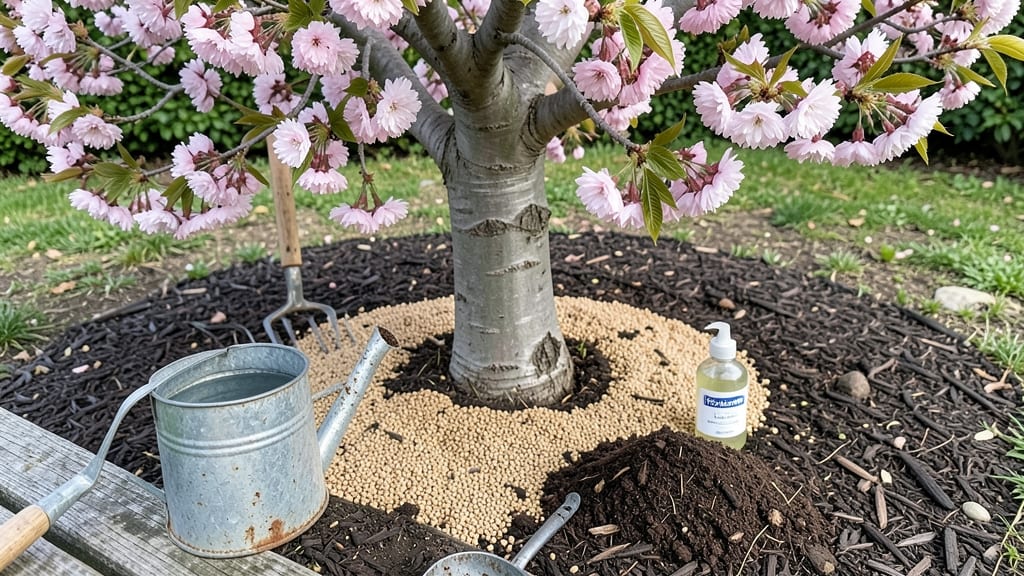
For Yoshino cherry tree fertilizer, use a balanced 10-10-10 or 8-3-9 N-P-K blend in early spring, combined with compost. Skip high-nitrogen feeds in late summer to prevent unwanted fall foliage growth.
Yoshino cherry trees need a nutrient balance that supports both their stunning spring blooms and long-term health.
The 10-10-10 ratio provides equal parts nitrogen, phosphorus, and potassium, which encourages vibrant flowers while strengthening roots and stems. 🌸 Organic compost adds beneficial microbes and improves soil structure, creating an ideal growing environment.
What sets Yoshino cherries apart is their sensitivity to timing—too much nitrogen in late summer can trigger leafy growth instead of next year's blossoms, so a lighter hand in fall is key.
Here's a pro tip: I always mix my fertilizer with a 2-inch layer of compost around the tree's drip line in early spring. This gradual release system mimics natural nutrient cycles and reduces the risk of overfeeding.
For mature trees, a slow-release granular fertilizer applied in late winter works wonders, giving them a steady nutrient supply as they wake up from dormancy.
💡 In This Article
- Optimal N-P-K Ratios for Yoshino Cherry Tree Growth
- Seasonal Fertilizer Schedule for Yoshino Cherry Trees
Optimal N-P-K ratios for Yoshino cherry tree growth
The 10-10-10 ratio is ideal for Yoshino cherries because these trees need equal parts nitrogen (N), phosphorus (P), and potassium (K) to support their dual priorities: vibrant spring blooms and robust structural growth. Nitrogen fuels leaf development and overall vigor, while phosphorus strengthens root systems and flower formation.
Potassium acts as a quality control nutrient, enhancing disease resistance and drought tolerance—critical for trees that often face urban stress from pavement and pollution. 🌿
Phosphorus plays a particularly crucial role in Yoshino cherries because these trees are heavy bloomers. A phosphorus deficiency (visible as dark green leaves with purple stems) can reduce next year's flower buds by up to 30%.
The 8-3-9 ratio works well for established trees because it maintains adequate phosphorus while slightly reducing nitrogen, which prevents excessive vegetative growth that can overshadow flowering. For young trees, I recommend starting with 10-10-10 to build strong root systems before shifting to 8-3-9 once they reach 5-7 years old.
What most gardeners miss is how these ratios change with seasons. During dormancy (late fall to winter), trees require minimal nutrients—just enough to support root growth.
This is why I avoid fertilizing in late summer: high nitrogen triggers new leaf growth that won't harden off before frost, leaving tender foliage vulnerable to winter damage.
The key is timing: apply 75% of annual fertilizer in early spring (just as buds swell) and the remaining 25% in early summer to support fruit development (though Yoshino cherries produce minimal fruit).
Micronutrients like iron, zinc, and manganese also matter—Yoshino cherries often show deficiency symptoms (yellowing between veins) in alkaline soils. A soil test reveals these needs, but most benefit from a chelated micronutrient spray in early spring.
The calcium in eggshell meal (crushed and worked into soil) further strengthens cell walls, reducing susceptibility to bacterial canker—a common Yoshino cherry disease. 🌱
Here's a visual comparison of how ratios affect growth:
- 10-10-10: Balanced growth, ideal for young trees or trees recovering from stress
- 8-3-9: Encourages flowering and disease resistance in mature trees
- 5-10-10: Best for trees with phosphorus deficiencies (purple stems)
For organic gardeners, fish emulsion (3-4-2 ratio) makes an excellent nitrogen source in spring, while bone meal (0-3-0) boosts phosphorus for root development. The secret is layering: combine synthetic granular fertilizer with organic amendments like composted leaves or worm castings to create a nutrient-rich zone around the tree's drip line.
This mimics natural forest ecosystems where fallen leaves slowly release nutrients. 🌳