
Pruning
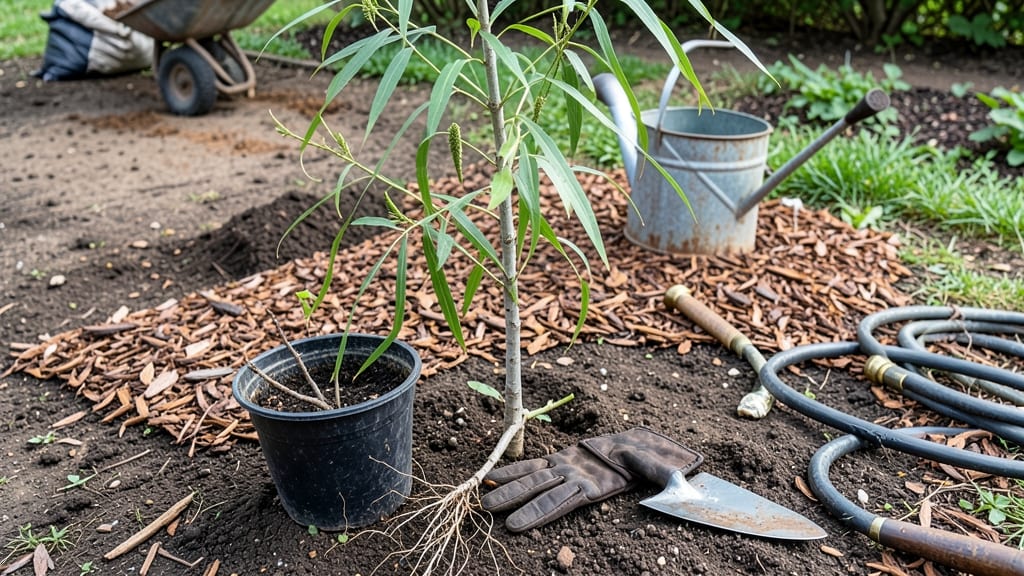
Willow tree starts thrive when propagated through stem cuttings in water or soil, with rooting success depending heavily on species—some varieties like black willow root aggressively in just a few weeks, while others such as weeping willow need careful moisture control and hormonal treatments. Timing matters most: early spring yields the healthiest cuttings for transplanting.
Willow trees are nature's rooting champions, thanks to their ability to form adventitious roots along stems when submerged or planted. 🌱 The key to success lies in selecting flexible, pencil-thick branches (about 12-18 inches long) from the current year's growth—these contain the highest concentration of growth hormones.
For water propagation, simply place the cut end in a jar of room-temperature water and change it every 3-4 days until roots appear (usually within 2-4 weeks). Soil propagation requires moist, well-draining medium and a humidity dome to prevent wilting during the rooting phase.
What sets willow propagation apart is its adaptability: while species like crack willow root almost effortlessly, others such as white willow demand more precise conditions.
The best time to take cuttings is during active growth in early spring, when the tree's energy is focused on new shoots rather than seed production. This timing maximizes the chances of successful root formation before summer heat stress sets in.
💡 In This Article
- How Willow Tree Propagation Works by Species
- Step-by-Step Willow Tree Cutting Techniques for Beginners
How willow tree propagation works by species
Willow trees root through a fascinating biological process called adventitious root formation, where roots grow directly from stems rather than just the base.
This happens because willow stems contain high levels of auxin, a natural plant hormone that triggers root development when exposed to moisture. 🌿 The process begins when you cut a stem at a 45-degree angle just below a node (the bump where leaves attach)—this exposes more cells to moisture and growth signals.
Species like black willow (Salix nigra) root in as little as 10-14 days in water, while weeping willow (Salix babylonica) may take 3-4 weeks due to its slower metabolic rate.
The success rate varies dramatically by species due to differences in natural growth habits. For example, crack willow (Salix fragilis) roots almost effortlessly in water because its stems contain more auxin and less lignin (the rigid plant polymer).
In contrast, white willow (Salix alba) requires a moist but well-aerated soil medium to prevent rot, as its stems are more prone to fungal infections when overwatered. The ideal cutting length is 12-18 inches, balancing flexibility (younger stems bend easily) with structural integrity (older stems are too woody).
Timing is critical because it aligns with the tree's natural growth cycles. Early spring (March-April) is prime time because new shoots are packed with energy from winter reserves, while summer cuttings often wilt due to heat stress.
Fall cuttings (September-October) work for hardier species like pussy willow (Salix discolor), but they require immediate planting to avoid winter dormancy. The key is catching the tree when it's transitioning from dormancy to active growth—this window maximizes hormonal activity in the stems.
What most gardeners overlook is how light exposure affects rooting. Willow cuttings need bright, indirect light (like a north-facing window) to photosynthesize while rooting—their leaves produce sugars that fuel root growth. Direct sunlight causes dehydration, while too little light weakens the cutting.
For water propagation, use a clear jar so you can monitor root development daily—roots typically appear first at the nodes closest to the water. 🌱 In soil, keep the medium consistently moist (like a wrung-out sponge) and use a humidity dome to maintain 70-80% humidity until roots establish.
Species like coyote willow (Salix exigua) thrive in drier conditions, making them ideal for xeriscaping, while peachleaf willow (Salix amygdaloides) prefers consistently moist soil. The choice of propagation method depends on your climate: water propagation works best in humid regions, while soil planting suits drier areas.
For example, in Arizona's dry heat, I've found that planting cuttings directly into moist sand (rather than water) yields better survival rates because it mimics the tree's natural desert-adapted rooting habits.
One advanced technique is using rooting hormone (like IBA—indole-3-butyric acid) for stubborn species. Dip the cut end in powdered hormone before planting—this can double rooting success for weeping willow cuttings.
However, even with hormone treatment, these species often require a 4-6 week rooting period compared to 2-3 weeks for crack willow. The trade-off is worth it for their elegant, trailing branches.