
Pruning
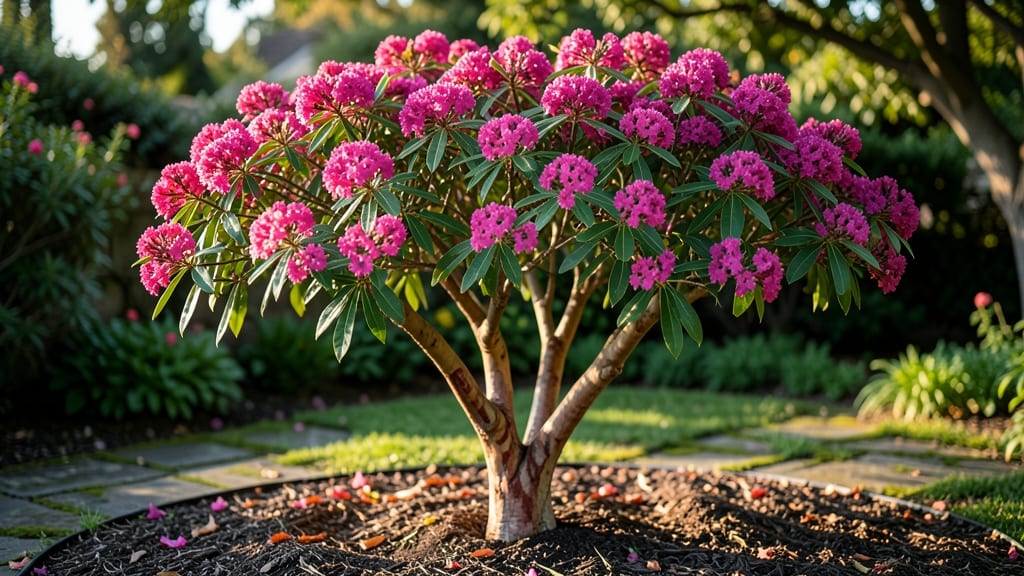
That tree that looks like a crepe myrtle in your neighbor’s yard—with its peeling bark and summer blooms—might be too big for your space.
If you love the shape but need something smaller, you’re in the right place. 🌿 Dwarf crepe myrtles and look-alikes like lilacs or Bradford pears can mimic that iconic form—just without the 20-foot height. The key is matching leaf texture, bloom color, and that signature exfoliating bark.
Crepe myrtles have three-lobed leaves, smooth gray bark that sloughs off in strips, and lavender-pink summer flowers. Lilacs bring similar fragrance but with heart-shaped leaves and clusters of purple blooms.
Bradford pears? They’ve got white spring flowers and a more rounded silhouette. All three thrive in full sun and handle heat—perfect for small patios or foundation plantings.
For a compact crepe myrtle look, opt for ‘Tonto’ or ‘Natchez’ varieties, which max out at 6–10 feet. Style them as solitary focal points near entryways or line them up for a low-maintenance hedge.
The bark’s texture adds winter interest, and pruning in late winter keeps them tidy. Just avoid heavy pruning—crepe myrtles bloom on new growth, so timing matters.
Here’s the game-changer: these trees multiply curb appeal without the space commitment. Pair a dwarf crepe myrtle with ornamental grasses for contrast, or use lilacs for a fragrant living screen.
The trick is planting them where their best features—bark, blooms, or foliage—get noticed year-round. Start small, and you’ll wonder why you didn’t try this sooner.
📚 In This Guide
- What you need
- Instructions
- Tips and common mistakes
- Wrapping up and next steps
What you need
- ● Dwarf Crepe Myrtle Varieties: Choose from options like 'Natchez', 'Arapaho', or 'Tonto' (all under 6 ft tall). Quantity: 1–3 plants, depending on your space.
- ● High-Quality Potting Soil: Type: Well-draining, organic mix (e.g., 60% topsoil, 30% compost, 10% perlite). Quantity: 2–3 cubic feet per plant.
- ● Garden Gloves: Type: Heavy-duty, breathable (e.g., leather or reinforced fabric).
- ○ Pruning Shears: Type: Bypass pruners (sharp, 6–8" blades) for clean cuts. Optional: Loppers for thicker branches (if needed).
- ● Hand Pruners: Type: Bypass or anvil (for smaller trims).
- ● Disinfectant: Type: 70% isopropyl alcohol or pruning sealant (to prevent disease).
- ● Mulch: Type: Organic (pine bark or shredded leaves). Quantity: 2–3 inches around the base.
- ● Watering Can or Hose: Type: Adjustable nozzle for gentle watering.
- ○ Stakes & Ties (Optional):strong> For young plants in windy areas.
- ● Slow-Release Fertilizer: Type: Balanced (10-10-10) or crepe myrtle-specific. Quantity: 1–2 tbsp per plant.
- ● Plant Support Cage: For shaping or protecting delicate branches.
- ● Tree Guard: Purpose: Protects trunk from pests (e.g., deer or rabbits).
- ● Garden Kneeler/Pad: For comfort during planting or pruning.
- ● Plant Marker: To label your dwarf crepe myrtle variety.
Step-by-step guide to selecting and planting dwarf crepe myrtle varieties
Here's how to choose the perfect compact crepe myrtle for your small yard—with planting tips that ensure thriving growth.
🌱 Step 1: Choose the Right Dwarf Variety for Your Space
Dwarf crepe myrtles stay under 10 feet tall at maturity, making them ideal for tight spaces. The 'Arapaho' variety reaches 6-8 feet with stunning lavender blooms, while 'Tonto' maxes out at 5 feet—perfect for containers or small gardens. Look for 'Natchez' if you want pure white flowers on a 6-foot frame, or 'Rapidita' for rapid growth to 8 feet in just a few seasons.
Check the mature height and spread of each variety before buying. Some, like 'Dynamite' (6 feet), have fiery red flowers, while others like 'Catahoula' (8 feet) offer deep purple blooms. I always verify the tag specifies "dwarf" or "compact"—some nurseries mislabel standard-sized trees as "dwarf."
🪴 Step 2: Prepare the Planting Site for Optimal Growth
Crepe myrtles thrive in full sun (6+ hours daily) and well-draining soil. Test your soil's pH—ideal range is 6.0-7.0. If your yard is heavy clay, amend the planting hole with 2-3 inches of compost mixed into the native soil. Avoid soggy spots; these trees hate wet feet and will develop root rot.
Dig a hole twice as wide as the root ball but only as deep—planting too deep suffocates the roots. Loosen the edges of the hole with a shovel to encourage root spread. If planting in a container, use a pot at least 18 inches deep with drainage holes. I always add a 2-inch layer of gravel at the bottom to prevent compaction.
☀️ Step 3: Plant and Water for Strong Establishment
Remove the tree from its container and gently tease the roots if they're circling. Place it in the hole so the top of the root ball sits level with the surrounding soil—never bury the trunk. Backfill with native soil mixed with compost, tamping lightly as you go to eliminate air pockets. Water deeply until the soil is evenly moist 6 inches down.
Mulch with 2-3 inches of organic mulch (like shredded bark) around the base, keeping it 6 inches away from the trunk to prevent rot. Water twice weekly for the first month, then taper to once weekly once new growth appears. Avoid overhead watering—direct moisture on leaves encourages fungal diseases like powdery mildew.
✂️ Step 4: Prune for Shape and Health in Early Spring
Crepe myrtles bloom on new wood, so prune just after bud break in early spring. Remove dead, crossing, or weak branches first, cutting back to the nearest healthy lateral branch. Thin the canopy to improve airflow—aim for an open, vase-like shape that lets sunlight reach the center.
Never "top" the tree by cutting the main stems—this creates unsightly stubs and weak growth. Instead, prune to just above an outward-facing bud to encourage fuller branches. After pruning, apply a balanced fertilizer (10-10-10) around the base, watering it in thoroughly. This jumpstarts growth for the season.
🌿 Step 5: Maintain Through the Growing Season
Monitor for aphids or scale insects, which love crepe myrtles. Spray with neem oil at the first sign of pests—it's organic and effective. Deadhead spent blooms in late summer to encourage a second flush of flowers, but leave seed pods for winter interest if you prefer a natural look.
Water deeply once every 10-14 days once established, unless your area experiences a heatwave. Dwarf varieties are drought-tolerant but look best with consistent moisture. In winter, protect young trees from cold snaps with burlap wraps if temperatures dip below 15°F. Mature trees handle frost well, but young bark is vulnerable to cracking.
Tips & tricks for perfectly placed dwarf crepe myrtles
Here's what nobody tells you about getting your compact crepe myrtle to thrive—these insights come from years of watching trees transform small spaces.
Variety Verification: Always double-check the tag at the nursery for "dwarf" or "compact" labeling—some stores mislabel standard crepe myrtles as dwarf varieties. I've seen 'Rapidita' trees marketed as 5-footers when they'll actually reach 8 feet. For true compact options, stick to certified 'Tonto' (5 feet) or 'Natchez' (6 feet) varieties that consistently deliver on their height promises.
Sunlight Strategy: While the instructions mention full sun (6+ hours), I've learned that morning sun combined with afternoon shade works surprisingly well in hot climates. Position your tree where it gets direct morning sunlight but filtered afternoon light—this prevents leaf scorch while still encouraging blooming. Just avoid deep shade entirely, as that's where these trees struggle to produce flowers.
Soil Amendments: The 2-3 inches of compost recommendation is perfect for average soil, but if you're working with heavy clay, consider adding a 50/50 mix of compost and perlite to the planting hole. This creates better drainage while still providing nutrients. For sandy soil, mix in some peat moss to help retain moisture during those first critical weeks.
Winter Protection: The 15°F threshold for burlap wraps is accurate, but I've found that young trees (under 3 years old) benefit from extra protection when temps drop below 20°F, even if mature trees handle 15°F fine. Wrap the trunk and lower branches with burlap, securing it loosely to allow some airflow. This prevents bark cracking that can occur when temperature swings happen rapidly.
Pro Tips for Tree Looks Like Crepe Myrtle
- Here's what nobody tells you about getting your compact crepe myrtle to thrive—these insights come from years of watching trees transform small spaces.
- Variety Verification: Always double-check the tag at the nursery for "dwarf" or "compact" labeling—some stores mislabel standard crepe myrtles as dwarf varieties.
- Sunlight Strategy: While the instructions mention full sun (6+ hours), I've learned that morning sun combined with afternoon shade works surprisingly well in hot climates.
Frequently asked questions
What are the best dwarf crepe myrtle look-alikes for tight spaces?
If you love the tree that looks like crepe myrtle but need a compact version, consider dwarf crape myrtles (like ‘Centennial’ or ‘Tonto’) or alternatives like dwarf lilacs, Japanese snowbell, or abelia shrubs. These mimic crepe myrtle’s flowers, foliage, and growth habit without the height—perfect for patios or small yards!
How long does it take for a dwarf crepe myrtle look-alike to mature?
Most dwarf varieties reach mature size (3–6 feet) in 2–5 years, depending on climate and care. For faster results, opt for container-grown plants (they’re pricier but skip the waiting!). Patience pays off—your tree will reward you with blooms in its first or second year.
Do dwarf crepe myrtle look-alikes need pruning like full-size ones?
Yes, but lightly! Trim in late winter/early spring to shape and remove dead branches. Avoid heavy pruning—these trees bloom on new wood, so cutting back too hard can delay flowers. Deadheading spent blooms encourages more flowers!
Can I grow a crepe myrtle look-alike in a pot?
Many dwarf varieties thrive in large containers (15+ gallons) with well-draining soil. Choose a pot with drainage holes and move it to partial sun (6+ hours/day). Just remember: potted trees need regular watering and may need winter protection in cold zones.
What pests or diseases should I watch for in a crepe myrtle look-alike?
Common issues include aphids, scale, or powdery mildew. Keep your tree healthy with proper spacing (for airflow) and regular inspections. If pests strike, use neem oil or insecticidal soap—avoid harsh chemicals near flowers! Most dwarf varieties are low-maintenance but stay vigilant.
Still unsure? Drop your specific concerns below—we’re happy to help you pick the perfect tree that looks like crepe myrtle for your space!
Wrapping up and next steps
If you’re dreaming of a stunning crepe myrtle look in a compact space, dwarf varieties are your perfect match! 🌿 These trees bring all the beauty—delicate blooms, smooth bark, and year-round interest—without the bulk.
Whether you’re a pruning pro or just starting, the key is patience, the right tools, and a little creativity.
Now that you’re armed with tips and tricks, why not take the next step? Visit your local nursery, grab a small dwarf variety, and start shaping your vision. Happy planting—and enjoy watching your tiny tree grow into a big personality! 🌱✨