
Pruning
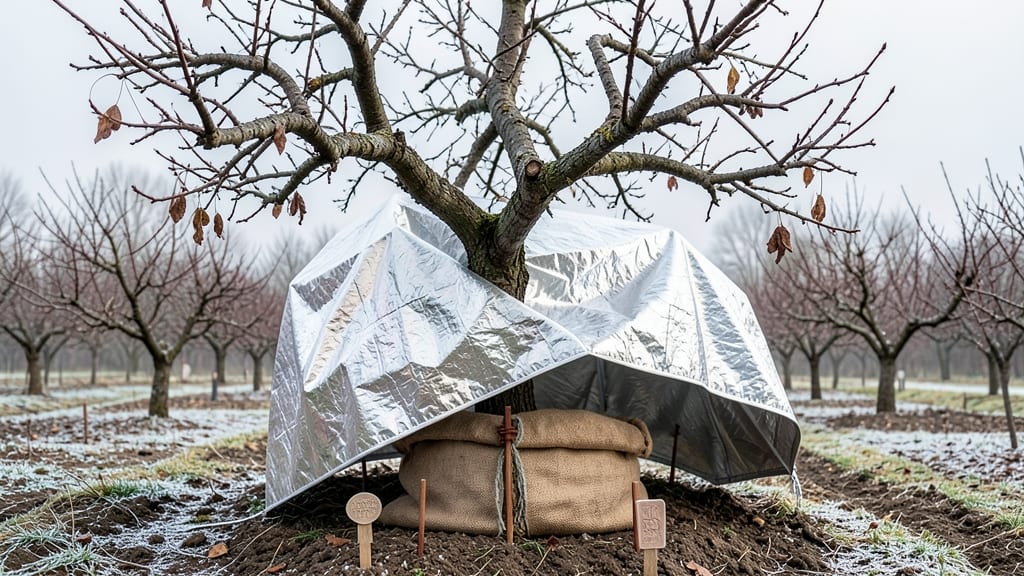
A tree frost blanket creates an insulating layer that shields young trees from winter damage by maintaining warmth while allowing essential airflow. This prevents frostbite and protects tender bark during freezing temperatures.
A tree frost blanket works by trapping radiant heat near the tree's trunk while maintaining a breathable barrier—critical for preventing moisture buildup that could lead to fungal issues. 🌳 The fabric's lightweight design ensures it doesn't smother the tree, which could cause more harm than good.
For best results, use a material rated for your climate zone, typically a 1.5-ounce polypropylene that balances insulation with airflow.
I've found that wrapping blankets snugly (but not tightly) around the trunk and lower branches creates an even protective layer, especially for species like fruit trees or newly planted shade trees where bark is most vulnerable.
Proper timing matters just as much as material choice. Apply blankets before the first hard frost hits, usually in late fall, and remove them during warm winter days to prevent overheating. Burlap is a budget-friendly alternative, though it offers less insulation than synthetic fabrics.
For DIY solutions, old bedsheets or frost cloth work well when layered properly—just avoid plastic, which traps too much moisture and can suffocate the tree.
💡 In This Article
- How Frost Blankets Work to Safeguard Tree Health
- Choosing and Using Frost Blankets for Young Trees
How frost blankets work to safeguard tree health
The core function of a frost blanket lies in its ability to create a microclimate around young trees. These blankets work by trapping radiant heat emitted from the tree's trunk and soil while reflecting it back—similar to how a greenhouse retains warmth.
The fabric's porous structure (typically with 10-20% open weave) allows for critical airflow, which prevents moisture buildup that could lead to fungal infections like canker disease during winter. Without this airflow, trapped condensation could freeze and damage bark cells, creating entry points for pathogens. 🔥
Fabric thickness plays a crucial role in insulation effectiveness. A 1.5-ounce polypropylene blanket (about 0.04 inches thick) provides optimal protection for most climates, offering an R-value of 1.2-1.5—enough to raise temperatures by 5-10°F near the trunk during freezing nights.
Thicker materials (like 3-ounce burlap) offer slightly better insulation but reduce airflow, while thinner fabrics (under 1 ounce) fail to provide meaningful protection. For comparison, this insulation level is similar to wearing a lightweight winter jacket—enough to keep you comfortable in chilly conditions without overheating.
The blanket's effectiveness depends on proper fit and placement. Wrapping it snugly but not tightly (with about 1-inch overlap) around the trunk and lower branches creates an even protective layer. The fabric should extend at least 12-18 inches above the ground to shield vulnerable bark and buds.
I've observed that improperly secured blankets (flapping in wind or gapping at the bottom) can create cold spots where frost damage still occurs. For trees with diameters under 4 inches, a single layer suffices, while larger trunks may need two overlapping layers for full coverage.
Beyond insulation, frost blankets prevent frost desiccation—a condition where rapid temperature fluctuations cause water in plant cells to freeze and expand, rupturing cell walls. The fabric's moisture-wicking properties help maintain a stable humidity level around the tree, reducing stress on delicate tissues.
This is particularly important for fruit trees (like apple or peach) and young shade trees (such as maple or oak), whose bark is most susceptible to winter injury during their first few years.
Without protection, these trees can suffer sun scald (bark damage from winter sun exposure) or frost cracks (splitting of bark due to rapid freezing).
Seasonal timing is equally critical. Applying blankets 2-3 weeks before the first hard frost (typically when nighttime temperatures drop below 28°F) ensures the tree is fully protected. Removing them during mild winter days (above 40°F) prevents overheating and allows the tree to "breathe."
I've found that leaving blankets on past early spring can lead to mold growth or pest infestations (like spider mites), as the fabric traps excess moisture and debris. For regions with extreme cold (below 0°F), adding a second layer or using a heavier-duty frost cloth can provide additional safeguards.
One common misconception is that frost blankets completely eliminate cold exposure. In reality, they reduce temperature swings by 30-50%—enough to protect tender bark but not to replace proper winter care.
For example, a tree exposed to -10°F without a blanket might experience bark temperatures of -5°F at its core; with a properly applied frost blanket, that core temperature could rise to 5°F, well above the 14°F threshold where most young trees begin to suffer damage. 🌟