
Pruning
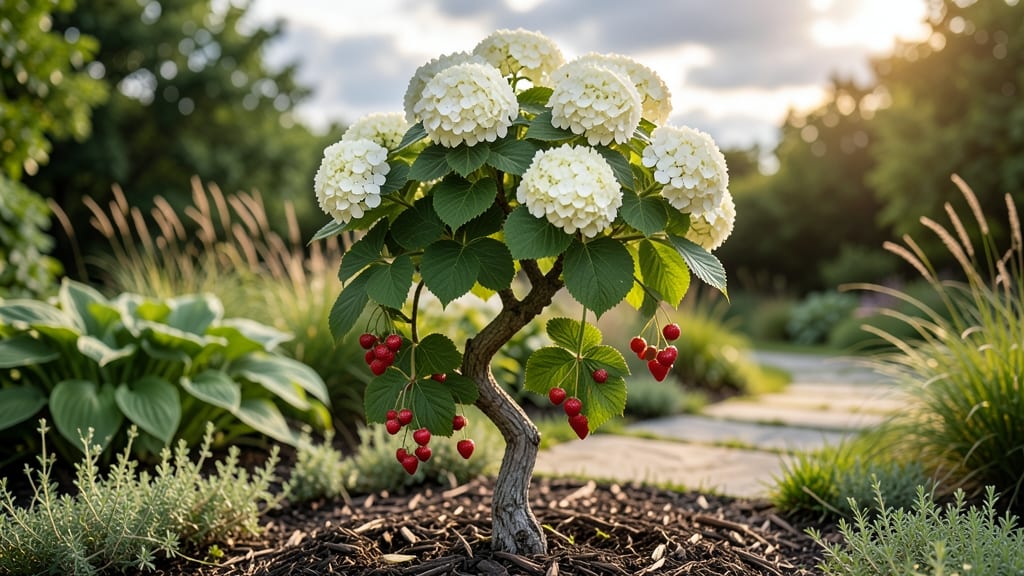
Crafting a strawberry vanilla hydrangea tree form transforms your garden into a living lace sculpture—delicate blooms on sturdy branches that dance through every season. 🌸 I fell in love with this variety after seeing one in a neighbor’s yard: the soft pink flowers smelled like strawberries and vanilla, while the architectural shape made it the centerpiece of their small garden.
The key? Pruning young stems to encourage a single, strong trunk with tiered branches, creating that elegant tree silhouette.
Start with a Strawberry Vanilla hydrangea (Hydrangea macrophylla 'Strawberry Vanilla')—its compact growth habit and fragrant blooms make it perfect for this style. You’ll need sharp pruners, a sturdy stake for support, and a clear vision of your desired height (typically 4-6 feet).
The magic happens in late winter or early spring, when you prune back the main stem to your desired trunk height, then selectively trim side branches to create tiers. Patience is key: it takes 2-3 years to achieve that polished tree form, but the payoff is worth it.
Once shaped, your hydrangea tree will reward you with year-round interest: lush green foliage in summer, delicate blooms in late spring/early summer, and even winter charm when the stems take on a soft brown hue.
Pair it with dwarf conifers for contrast, ferns for texture, or spring bulbs at its base for seasonal color. In small gardens, it thrives in containers (choose a 15-gallon pot for stability), while larger landscapes can feature it as a striking focal point near patios or entryways.
Pro tip: Avoid heavy pruning once established—focus on light shaping in late winter to maintain the tree form. Mulch around the base to protect roots, and water deeply during dry spells.
The result? A showstopping centerpiece that smells amazing, requires minimal upkeep, and becomes the heart of your garden’s design. Ready to shape your own?
📚 In This Guide
- What you need
- Instructions
- Tips and common mistakes
- Wrapping up and next steps
What you need
- ● Strawberry vanilla hydrangea (Hydrangea macrophylla 'Strawberry Vanilla') – 1 healthy, mature plant (3-5 years old, 3-4 feet tall). Pro tip: 💡 Choose a plant with strong, flexible stems for easier shaping!
- ● Sharp pruning shears – Bypass pruners (for clean cuts) or anvil pruners (for thicker stems). ✨ Sanitize blades with rubbing alcohol to prevent disease spread.
- ● Hand pruners – For precision trimming of smaller branches.
- ● Loppers – 8-10 inch, for thicker branches (if needed).
- ● Garden gloves – Heavy-duty, cut-resistant gloves to protect your hands.
- ○ Pruning sealant – Optional but helpful for sealing larger cuts (e.g., Tanglefoot Tree Wound Pruning Sealer).
- ● Support structure – Sturdy stakes (4-6, 4-6 feet long) + tree ties or soft garden twine for securing branches.
- ● Mulch – 2-3 inches of organic mulch (e.g., shredded bark) to retain moisture and protect roots.
- ● Watering can or hose with a gentle spray nozzle – For post-pruning hydration.
- ● Wire or flexible branches – For creating a temporary framework if shaping free-form.
- ● Plant growth regulator – Like Paclobutrazol (to control excessive growth).
- ● Fertilizer – Balanced, slow-release granular fertilizer (e.g., 10-10-10) for post-pruning recovery.
- ● Pruning saw – For any stubborn, thick branches that need removal.
- ● Notebook & pencil – To sketch your design before cutting!
How to train a hydrangea into a strawberry vanilla tree form
This whimsical topiary style transforms your hydrangea into a living lace sculpture. Here's how to shape it with precision and patience.
✂️ Step 1: Select and Prune Your Base Hydrangea
Begin with a healthy, mature hydrangea bush—mophead or lacecap varieties work best for this form. In late winter or early spring, before new growth begins, prune back one-third of the oldest stems to the ground. This encourages fresh, vigorous growth from the base. Choose 3-5 of the strongest, upright stems to form your tree trunk. These should be spaced evenly around the center of the plant.
Use clean, sharp pruners to make 45-degree cuts just above a leaf node or outward-facing bud. Avoid cutting into old wood—you want to promote new growth that will form your tree structure. If your hydrangea has leggy stems, prune them back by half to encourage bushier growth at the base. This step sets the foundation for your tree form, so take your time to create a balanced, sturdy framework.
🌿 Step 2: Train the Trunk and Lower Canopy
Once your selected stems begin growing, tie them together with soft plant ties or twine to form a single, thick trunk. Space the ties every 6-8 inches up the stem to prevent rubbing and encourage fusion. If you're working with a young hydrangea, this process may take 1-2 growing seasons to fully bind the stems into one trunk. For older plants, you might see immediate thickening as the stems grow together.
Allow the lower 12-18 inches of the trunk to remain bare, with no side branches. This creates the illusion of a tree trunk. Once the trunk reaches your desired height (4-6 feet is ideal for a strawberry vanilla effect), begin pinching back the tips of the remaining stems to encourage branching. You're aiming for a rounded canopy that starts just above the bare trunk. Prune any suckers or unwanted growth that emerges from the base to keep the form clean and intentional.
☀️ Step 3: Shape the Canopy for Lace-Like Texture
As your hydrangea grows, prune selectively to create a multi-layered, wispy canopy. The strawberry vanilla form relies on delicate, layered branches that mimic the texture of a vanilla bean or strawberry. Start by thinning out crowded stems—remove any that grow inward or cross over others. This prevents rubbing and allows light to penetrate the center, which encourages fuller growth.
For a true lace-like effect, focus on shearing the outer edges of the canopy lightly during the growing season. Use hand pruners or shears to trim just the tips of the branches, encouraging bushier growth. Avoid heavy pruning—this form thrives on soft, feathery layers rather than dense foliage. Step back occasionally to assess the shape from all angles. The goal is a rounded, airy silhouette that resembles a strawberry's seeds or the swirls of a vanilla bean.
⏰ Step 4: Maintain and Refine Year-Round
After the first year, prune lightly in late spring to shape the canopy and remove any dead or weak growth. The strawberry vanilla form benefits from regular, gentle maintenance—think of it like trimming a bonsai. In early summer, you can pinch back new growth to encourage more branching and a fuller appearance. Avoid heavy pruning in fall or winter, as hydrangeas set next year's blooms on old wood.
Fertilize lightly in spring with a balanced, slow-release fertilizer to support steady growth. Hydrangeas in tree form need consistent moisture—water deeply once a week during dry spells, ensuring the soil stays evenly moist but not soggy. Mulch around the base with 2-3 inches of organic mulch to retain moisture and regulate soil temperature. With patience, your hydrangea will develop into a graceful, year-round centerpiece that captures the elegance of its namesake.
Tips & tricks for perfect strawberry vanilla hydrangea tree form
Transforming your hydrangea into a strawberry vanilla tree takes thoughtful technique—here's how to avoid common pitfalls and achieve that dreamy lace-like silhouette.
Pruning Precision in Step 1: When selecting your 3-5 strongest stems for the trunk, look for ones that are evenly spaced around the plant's center. Uneven spacing can create an awkward silhouette later. I've found that stems with a slight natural taper work best—they'll develop a more organic, tree-like shape over time. Mark your chosen stems with small flags or paint dots to avoid accidentally pruning them later.
Trunk Training Secret: The key to a sturdy trunk lies in those 6-8 inch intervals for your ties. Use soft plant ties that won't cut into the stems as they thicken. I recommend checking your ties every 2-3 weeks during the growing season—they'll need tightening as the stems swell. For extra strength, you can even weave in a few small wooden skewers between the stems before tying, creating a lattice that fuses more quickly.
Canopy Shaping Insight: When creating that delicate lace texture in Step 3, think of it like painting with your pruners. Start with broader strokes to establish the overall shape, then refine with finer cuts. The goal is to create layers where light can filter through—this is what gives that signature strawberry vanilla translucency. I like to work from the outside in, trimming just enough to see through the center when I step back 6 feet.
Maintenance Mindset: The "regular, gentle maintenance" in Step 4 is where true patience pays off. I've seen hydrangeas that looked perfect after two years suddenly lose their form when owners got overzealous with winter pruning. Remember that hydrangeas bloom on old wood—always wait until after flowering to do major shaping. A good rule of thumb is to never remove more than 1/3 of the plant's growth in any single season.
Pro Tips for Strawberry Vanilla Hydrangea Tree Form
- Transforming your hydrangea into a strawberry vanilla tree takes thoughtful technique—here's how to avoid common pitfalls and achieve that dreamy lace-like silhouette.
- Pruning Precision in Step 1: When selecting your 3-5 strongest stems for the trunk, look for ones that are evenly spaced around the plant's center.
- Trunk Training Secret: The key to a sturdy trunk lies in those 6-8 inch intervals for your ties.
Frequently asked questions
Got questions about growing and maintaining your Strawberry Vanilla Hydrangea Tree Form? You’re not alone! Here are answers to the most common queries to help you nurture this stunning, year-round beauty with confidence.
How fast does the Strawberry Vanilla Hydrangea Tree Form grow?
The Hydrangea paniculata ‘Strawberry Vanilla’ typically grows 12 to 24 inches per year under ideal conditions. With proper care—like regular watering, well-draining soil, and occasional pruning—you’ll see steady growth, especially in its first 3–5 years. Patience pays off, as its full elegance shines after a few seasons!
When is the best time to prune this hydrangea?
Prune your Strawberry Vanilla in late winter or early spring (before new growth emerges) to shape it and encourage vibrant blooms. Avoid heavy pruning in fall, as it removes next year’s flower buds. For tree forms, focus on thinning out crowded branches to maintain airflow and structure.
Can I grow this hydrangea in a pot or container?
Yes! While this hydrangea thrives in the ground, it can adapt to large containers (15+ gallons) with proper drainage. Use a high-quality potting mix and ensure the pot doesn’t dry out. Just know it may need more frequent watering and winter protection in cold climates. A tree form in a pot still makes a stunning focal point!
Why aren’t my hydrangea blooms changing color like the name suggests?
The Strawberry Vanilla earns its name from its cream-to-pink-to-strawberry hues as the season progresses. If colors seem dull, check soil pH (aim for 5.5–6.5 for best results) or ensure it gets full sun to partial shade. Over-fertilizing with high nitrogen can also reduce vibrant color shifts.
How cold-hardy is this hydrangea, and does it need winter care?
This variety is USDA Zones 3–8 hardy, meaning it tolerates winter temps down to -30°F. In colder zones, mulch the base with 3–4 inches of organic mulch to protect roots. For potted plants, move containers to a sheltered spot or wrap them in burlap for extra insulation.
Pro Tip: For extra drama, pair your Strawberry Vanilla with complementary perennials like purple coneflowers or silver foliage plants to highlight its evolving colors!
Wrapping up and next steps
The Strawberry Vanilla Hydrangea Tree Form is a dream come true for gardeners who crave year-round beauty with minimal fuss. Its delicate, lace-like blooms and fragrant charm make it a standout—whether you're pruning for the first time or refining your skills.
With the right tools, timing, and techniques, you’ll unlock a garden masterpiece that thrives season after season.
Ready to transform your space? Start small: prune with confidence, monitor growth, and enjoy the process. Your hydrangea will reward you with lush, fragrant elegance—one careful cut at a time! 🌸✂️