
Pruning
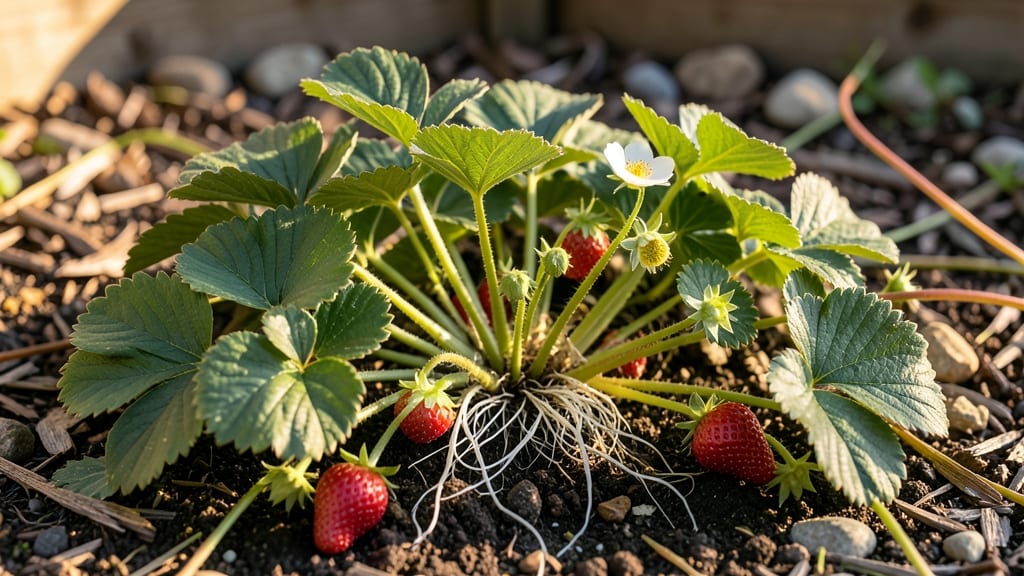
Your strawberry tree’s trunk holds the key to its fruit production—neglect it, and you’ll lose both harvests and health. 🌿 I’ve seen canker spread like wildfire on neglected trunks, turning a productive tree into a sad shadow of itself.
The good news? Strategic pruning and early intervention can save even the most damaged trunks, restoring that lush, fruiting glory.
Start by inspecting the trunk for sunken, discolored patches or oozing sap—classic signs of fungal canker. Prune only when the tree is dormant (late winter), using sterilized tools to avoid spreading disease.
Remove infected branches 6 inches below the damage, then seal cuts with pruning paint to prevent further rot. This isn’t just about trimming; it’s about giving your tree a fighting chance.
With proper care, your tree will rebound with vibrant new growth by spring and a full harvest by summer. The trunk will stay sturdy, the branches will spread evenly, and those sweet strawberries will return year after year. It’s not just about saving the tree—it’s about unlocking its full potential.
Works for both young trees and mature ones, whether you’re dealing with minor damage or full-blown canker. The key is consistency: check the trunk twice a year, prune aggressively when needed, and keep the area around the base clear of debris.
Your tree will thank you with buckets of fruit.
📚 In This Guide
- What you need
- Instructions
- Tips and common mistakes
- Wrapping up and next steps
What you need
- ● Pruning shears: Sharp, bypass-style shears (for clean cuts on branches up to ½-inch thick). Quantity: 1 pair.
- ● Loppers: Heavy-duty, bypass or anvil (for thicker branches, ½-inch to 2-inches). Quantity: 1 pair.
- ● Pruning saw: Curved-tooth saw for branches over 2-inches thick. Quantity: 1.
- ● Gloves: Cut-resistant or heavy-duty gardening gloves (to protect hands from thorns and sap). Quantity: 1 pair.
- ● Disinfectant: 70% isopropyl alcohol or rubbing alcohol (to sterilize tools between cuts). Quantity: Small bottle.
- ○ Pruning sealant: Optional but recommended for large cuts (e.g., tree wound dressing or beeswax-based sealant). Quantity: Small jar.
- ● Ladder or step stool: Stable, extendable (for reaching higher branches). Height: At least 6–8 feet.
- ● Trash bags: Heavy-duty (for collecting pruned branches). Quantity: 2–3 bags.
- ○ Notebook & pencil: Optional (to sketch a pruning map or note cuts).
- ● Weather check: Prune on a dry, overcast day (avoid wind or rain).
- ● Safety glasses: Protective eyewear (to shield from debris).
- ● Long sleeves & pants: Lightweight, breathable fabric (to avoid scratches and sap irritation).
- ● Water & snacks: Stay hydrated—pruning can take hours!
- ● Tree identification: Confirm it’s a strawberry tree (Arbutus unedo) (not a strawberry bush!).
Strategic trimming guide for your strawberry tree trunk
Here's how to shape your tree for maximum fruit production while keeping it healthy and compact.
✂️ Step 1: Assess the Tree Structure in Late Winter
Wait until late winter when the tree is still dormant but buds are swelling—typically February or early March in most climates. This timing lets you see the full structure without disturbing active growth. Look for dead, crossing, or crowded branches that compete for energy. I always start by removing any branches that rub against each other—they'll create wounds that invite disease.
Use clean, sharp pruning shears to make 45-degree cuts just outside the branch collar (that swollen area where the branch meets the trunk). Avoid leaving stubs—this prevents rot and encourages clean healing. If a branch is larger than ½ inch thick, use a pruning saw instead. Mark branches to remove with a piece of twine or tape so you don't accidentally cut the wrong one.
☀️ Step 2: Open the Center for Better Airflow and Light
Strawberry trees produce best when sunlight reaches the inner branches. Thin out 25-30% of the tree's branches to open the center—this prevents shade and improves fruit quality. Focus on removing branches that grow inward or downward; these never get enough light and waste the tree's energy. Start from the bottom of the tree and work your way up to maintain a natural, balanced shape.
Here's the thing—don't overdo it. You want to see light filtering through to the trunk but keep enough foliage to maintain photosynthesis. If you remove too many branches at once, the tree will struggle to recover. I like to leave 3-5 main scaffold branches that form the tree's structure. These should be spaced 8-12 inches apart along the trunk.
🌿 Step 3: Prune for Fruit Production After Harvest
After the main harvest season (typically late summer to early fall), give your strawberry tree a second trim to encourage next year's fruit. Remove any spent fruit clusters and weak, leggy growth that developed after harvest. These branches have already given their energy to fruit and won't contribute much to future production. Cut them back to a healthy lateral branch or bud.
This is also the time to shorten last year's growth by about ⅓. Look for branches that grew too long and became sparse—they'll produce fewer fruits. Cutting them back stimulates new, bushier growth that will bear more fruit next season. Just avoid pruning in fall or early winter—the tree needs time to heal before dormancy sets in.
⏰ Step 4: Maintain Year-Round with Light Trims
Throughout the growing season, do light maintenance pruning to keep the tree tidy. Remove dead leaves, damaged branches, or any growth that looks diseased. I also pinch back new shoots that grow too close to the trunk—these often become weak and crowded. Use your fingers or small pruners to snip them off just above a leaf node where new growth can emerge.
Watch for suckers (those aggressive shoots that pop up at the base of the tree). These drain energy from your main plant. If you want to propagate new trees, dig up a few suckers and replant them elsewhere. Otherwise, remove them as soon as you spot them—they multiply fast and can overwhelm your tree. A quick monthly check keeps them under control without much effort.
🪴 Step 5: Fertilize and Water After Pruning
After your main pruning sessions, give the tree a boost to recover. Water deeply—1-2 inches of water per week—to help the tree establish new growth. I like to add a balanced fertilizer (like 10-10-10) in early spring right after the first pruning. This gives the tree nutrients to support new shoots and fruit development.
Real talk: Don't fertilize right after heavy pruning in late winter—the tree is still dormant and won't use the nutrients yet. Wait until buds begin to swell (usually 2-3 weeks after pruning) before applying fertilizer. This timing ensures the tree uses the nutrients for strong new growth, not wasted energy. Keep an eye on the soil—if it feels dry 1 inch below the surface, it's time to water again.
Tips & tricks for perfect strawberry tree trimming
These simple strategies will help you maintain a healthy, productive strawberry tree all year long.
Timing is Everything: The late winter timing in Step 1 is crucial—buds should be swelling but not yet open. If you prune too early, you risk exposing the tree to late frosts. I've learned the hard way that pruning in January can stress the tree when cold snaps still occur. Wait until February or early March when daytime temperatures consistently stay above freezing. This timing gives you the full picture of the tree's structure while minimizing stress on the plant.
Branch Collar Awareness: When making cuts in Step 1, focus on the branch collar—the swollen area where the branch meets the trunk. This is the tree's natural healing point. I once made a clean cut that missed the collar, and it took the tree twice as long to heal properly. Use a sharp tool and cut just outside the collar at a 45-degree angle. For branches thicker than ½ inch, a pruning saw will give you the cleanest cut without tearing the bark.
Light Management Strategy: In Step 2, when thinning branches to open the center, aim for that "light filtering through" effect. I like to visualize holding a flashlight at the center of the tree—you should see light reach the trunk. This practice prevents shade and improves fruit quality. Start from the bottom and work up to maintain balance. If you're unsure about which branches to remove, take photos before and after to track your progress—it helps you see the structural changes more clearly.
Post-Harvest Pruning: After the main harvest in late summer to early fall, focus on removing spent fruit clusters and leggy growth from Step 3. These branches have already given their energy to fruit production and won't contribute much to next year's harvest. I've found that shortening last year's growth by about ⅓ stimulates bushier, more productive growth. Just remember to avoid pruning in fall or early winter—this gives the tree time to heal before dormancy sets in.
Pro Tips for Strawberry Tree Trunk
- These simple strategies will help you maintain a healthy, productive strawberry tree all year long.
- Timing is Everything: The late winter timing in Step 1 is crucial—buds should be swelling but not yet open.
- Branch Collar Awareness: When making cuts in Step 1, focus on the branch collar—the swollen area where the branch meets the trunk.
Frequently asked questions
Got questions about pruning your strawberry tree trunk for maximum fruit production? You’re not alone! Here are answers to the most common queries—plus a few pro tips to keep your tree thriving.
When is the best time to trim a strawberry tree trunk?
The ideal time is late winter or early spring, just before new growth begins. This helps avoid stressing the tree during dormancy and ensures it’s ready to focus energy on fruit production. Avoid heavy pruning in fall—it can leave wounds vulnerable to disease before winter.
How much of the strawberry tree trunk can I safely remove?
Never remove more than 25-30% of the tree’s canopy in one session. For strawberry trees, focus on thinning out overlapping branches or dead wood rather than heavy topping. Over-pruning weakens the tree and reduces next year’s fruit yield. Think of it like a haircut—better to trim gradually!
My strawberry tree trunk has black spots—is it dying?
Black spots could signal fungal infection (like anthracnose) or bacterial canker. Prune affected branches 1-2 inches below the spot with sterilized tools, then dispose of clippings. Apply a copper-based fungicide if spots persist. Keep the area well-ventilated to prevent recurrence.
Will pruning my strawberry tree trunk increase fruit size?
Yes! Strategic pruning boosts airflow and sunlight to the center of the tree, which encourages larger, sweeter berries. Focus on removing suckers (shoots at the base) and crossing branches—this redirects energy toward fruit production. Just avoid over-trimming, or you’ll sacrifice quantity for size.
Can I use the trimmed branches for anything else?
Compost the healthy clippings
to enrich your soil, or use them as mulch around the tree’s base. For diseased wood, burn or trash it (don’t compost). You can also propagate new plants from cuttings—just dip them in rooting hormone and plant in moist soil!
Pro Tip: Label your cuts!
Use a waterproof marker to jot notes on pruning shears (e.g., “Dead branch,” “Sucker,” “Crossing”). This helps you stay organized and track progress over time—especially useful for large or complex trees.
Wrapping up and next steps
Mastering the art of trimming your strawberry tree trunk is like unlocking a treasure chest of year-round fruit—with patience and precision, you’ll reap delicious rewards! 🍓 By following the right techniques, timing, and tools, you’ll not only boost productivity but also keep your tree healthy and thriving.
Whether you’re a seasoned gardener or just starting, every snip brings you closer to a bountiful harvest.
Ready to take the next step? Start small—pick one branch this season, practice your cuts, and observe how your tree responds. Over time, you’ll build confidence and turn pruning into a rewarding ritual. Happy trimming, and may your strawberry tree flourish! 🌱