
Container Gardens
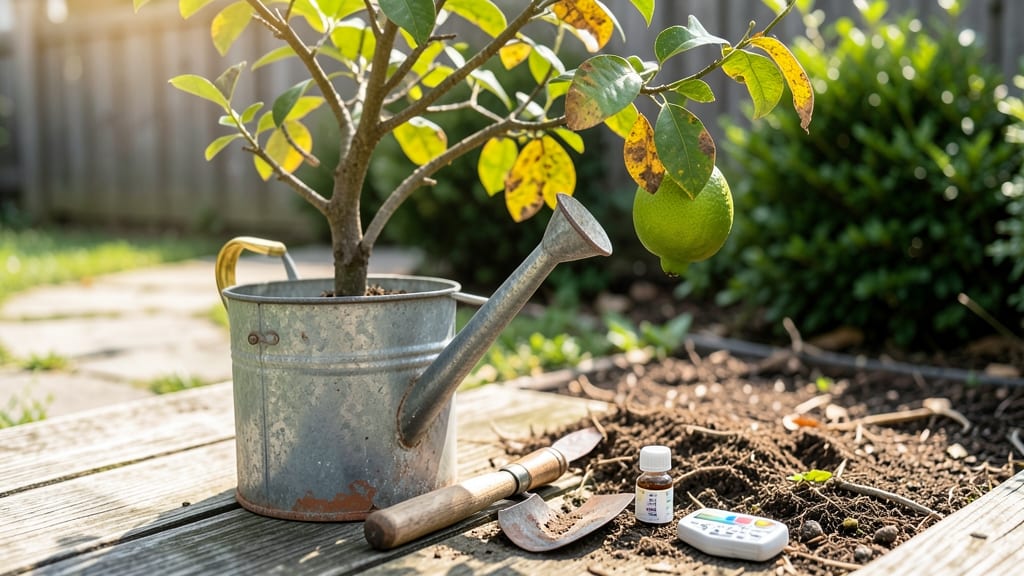
Your potted lemon tree losing leaves can feel like a gut punch—especially when you’ve poured love into it. 🌿 The good news? Nine times out of ten, it’s fixable with simple adjustments to water, soil, or light.
I’ve nursed back three lemon trees myself, and the first step is identifying why those glossy leaves are falling faster than they should. Start by checking the soil: if it’s bone-dry two inches down, you’re underwatering; if it’s soggy, you’re drowning the roots.
Yellow leaves with brown edges? That’s classic overwatering. But here’s the twist—lemon trees hate wet feet, so drainage is non-negotiable. A saucer under the pot won’t cut it; you need holes and a cache pot to prevent root rot.
Once you’ve ruled out water issues, inspect the leaves for pests or nutrient deficiencies. Yellowing between the veins? Likely iron deficiency. Tiny white bugs? Mealybugs. The fix isn’t complicated—just targeted. I’ll walk you through each scenario, so you can save your tree before it’s too late.
Lemon trees thrive on routine, and breaking that routine—like moving it from bright sun to shade—can send leaves spiraling. They also need humidity, so if your home’s air feels like a desert, mist the leaves or place the pot on a pebble tray.
The key is consistency: same sunlight spot, same watering schedule, same care year-round.
Here’s the silver lining: lemon trees are resilient. With the right fix, you’ll see new growth within weeks. I’ve seen trees bounce back from near-death conditions—even after losing half their leaves.
The trick is acting fast and addressing the root cause, not just the symptom. Let’s get your tree back to thriving.
Why it happens
When your potted lemon tree starts shedding leaves, it’s often a cry for help from the plant itself. Understanding the why behind the problem is the first step to saving your citrus companion.
Below, we break down the most common triggers—from environmental stress to hidden pests—and explain the science behind each one. 🌱💧
🌡️ Temperature And Cold Shock
Lemon trees (Citrus × limon) are subtropical plants, meaning they thrive in warm climates but struggle when temperatures drop too low. When exposed to sudden cold snaps (below 40°F/4°C), your tree may drop leaves as a survival mechanism to conserve energy.
The cold disrupts cellular processes, causing chlorophyll breakdown and leaf abscission (the natural shedding of leaves).
Even if your tree isn’t in a frost zone, drafts from windows, air conditioning vents, or moving it between hot and cold spaces can trigger stress. Actionable clue: Check for yellowing or browning edges on leaves—this is a classic cold shock symptom.
💧 Overwatering And Root Suffocation
Lemon trees prefer well-draining soil, and overwatering is one of the fastest ways to kill them. When roots sit in soggy conditions, they suffocate from a lack of oxygen, leading to anaerobic respiration.
This process produces toxic ethanol and hydrogen sulfide, which damage root cells and trigger leaf drop as the tree prioritizes survival over foliage.
Overwatering also promotes root rot, caused by fungi like Phytophthora.
Infected roots can’t absorb nutrients or water efficiently, leading to nutrient deficiency symptoms—such as yellowing leaves (chlorosis)—before the tree sheds them entirely. Pro tip: Stick your finger 2 inches into the soil; if it’s damp, wait before watering again. 🌡️
☀️ Sunburn And Light Stress
While lemon trees love sunlight, they can’t handle intense, direct exposure—especially after being moved or after a period of lower light. When leaves suddenly receive too much UV radiation, they develop photoxidative damage, causing brown, crispy patches (sunburn). The tree sheds these damaged leaves to protect itself.
Conversely, low light conditions (below 6–8 hours of sunlight daily) weaken the tree, leading to sparse, yellowing leaves that eventually drop. Key sign: Look for bleached or white patches on leaves exposed to harsh afternoon sun. Gradually acclimate your tree to brighter spots over 1–2 weeks. ✨
🐜 Pests And Hidden Invaders
Tiny but mighty, pests like spider mites, scale insects, and aphids suck sap from leaves, causing them to yellow, curl, and fall off.
These pests thrive in dry conditions and weaken the tree’s vascular system, disrupting nutrient transport. Scale insects, for example, secrete a sticky honeydew that attracts sooty mold, further blocking sunlight and suffocating leaves.
How to spot them:
- 🕷️ Spider mites: Fine webbing on undersides of leaves
- 🐛 Scale insects: Bumpy, waxy spots on stems/leaves
- 🐜 Aphids: Clusters of tiny green/black bugs on new growth
Use a magnifying glass and inspect leaves regularly—early intervention (neem oil or insecticidal soap) can prevent widespread damage.
🍽️ Nutrient Deficiencies And Poor Soil
Lemon trees are heavy feeders and require a balance of macronutrients (N-P-K) and micronutrients like iron, zinc, and magnesium. When soil lacks these, your tree can’t produce chlorophyll, leading to yellowing leaves (chlorosis) and eventual leaf drop. Common deficiencies include:
| Nutrient | Deficiency Signs | Cause |
|---|---|---|
| Nitrogen (N) | Older leaves turn yellow (but stay green at veins) | Poor soil, overwatering leaching nutrients |
| Iron (Fe) | Young leaves turn pale yellow (interveinal chlorosis) | Alkaline soil (pH >7), compacted soil |
| Magnesium (Mg) | Yellow patches between leaf veins (older leaves first) | Over-fertilization with nitrogen, poor soil structure |
Fix it: Test your soil (pH should be 6.0–7.0) and amend with citrus-specific fertilizer or compost. For alkaline soil, add chelated iron supplements. 💡
Revive Your Lemon Tree Now
Your potted lemon tree’s leaf loss doesn’t have to mean the end of its citrusy charm—with the right fixes, you can nurse it back to health.
Below, we’ve mapped out practical, step-by-step solutions for the top causes of leaf drop, plus prevention tips to keep your tree thriving. Let’s turn this around!
Signs: Yellowing leaves, mushy stems, or soil that smells sour or rotten.
How to Fix It: 🔥 Step 1: Stop Watering Immediately
- Let the top 2–3 inches of soil dry out completely before watering again. Stick your finger in the soil—if it’s damp past 1 inch, wait.
🍳 Step 2: Improve Drainage
- If your pot lacks drainage holes, repot your lemon tree into a container with holes (or drill them yourself). Use a well-draining mix like:
- 60% potting soil
- 30% perlite or pumice
- 10% coarse sand or orchid bark
👨🍳 Step 3: Check the Roots
- Gently remove the tree from its pot and inspect the roots. If they’re black, mushy, or smelly, trim the damaged ones with sterilized scissors and repot in fresh soil.
🥘 Step 4: Adjust Your Watering Routine
- Water only when the top 2 inches of soil are bone-dry (usually 1–2 times per week, depending on climate).
- Pro Tip: 💡 Bottom-watering (placing the pot in a tray of water for 10–15 minutes) encourages roots to grow deeper and reduces rot.
🌡️ Prevention:
- Use a moisture meter to track soil dryness.
- Avoid watering on a schedule—always check the soil first.
Signs: Crispy, brown edges on leaves, dry soil pulling away from the pot.
How to Fix It: 🔥 Step 1: Water Deeply
- Soak the soil until water runs out the drainage holes. Don’t just sprinkle—aim for thorough saturation.
🍳 Step 2: Increase Humidity (If Needed)
- Lemon trees love 50–70% humidity. Place the pot on a pebble tray with water or use a humidifier nearby.
👨🍳 Step 3: Mulch to Retain Moisture
- Sprinkle a 1-inch layer of mulch (like bark chips) on top of the soil to slow evaporation.
🥘 Step 4: Adjust Frequency
- Water every 5–7 days in warm weather, but reduce in winter (when growth slows).
🎯 Prevention:
- Group potted plants together to create a microclimate.
- Mist leaves occasionally (but avoid soggy foliage).
Signs: Rapid leaf drop within 1–2 weeks of repotting, wilting, or stunted growth.
How to Fix It: 🔥 Step 1: Give It Time
- Transplant shock can take 4–6 weeks to recover. Don’t fertilize during this period—focus on gentle care.
🍳 Step 2: Optimize the New Pot
- Choose a pot only 1–2 inches larger than the old one (too big = root rot risk).
- Use fresh, well-draining potting mix (avoid garden soil).
👨🍳 Step 3: Protect from Stressors
- Keep the tree in indirect light for a week and avoid cold drafts.
- Prune any damaged leaves to redirect energy to root recovery.
🥘 Step 4: Gradually Resume Care
- After 2 weeks, resume normal watering and light fertilization (use a balanced citrus fertilizer at half strength).
✨ Prevention:
- Repot in spring (when the tree is actively growing).
- Prune roots lightly if they’re circling before repotting.
Signs: Yellowing leaves, leaf drop after sudden cold snaps or heatwaves, or blackened leaf tips.
How to Fix It: 🔥 Step 1: Move to a Stable Spot
- Lemon trees thrive in 60–80°F (15–27°C). Keep them away from:
- AC vents or heaters
- Direct sunlight (especially in summer)
- Glass doors/windows (cold drafts)
🍳 Step 2: Acclimate Gradually
- If moving outdoors, harden off the tree by placing it in partial shade for a week before full sun.
👨🍳 Step 3: Protect in Winter
- If temps drop below 50°F (10°C), bring the pot indoors near a sunny window or use a frost cloth for outdoor trees.
🥘 Step 4: Monitor Soil Moisture
- Cold stress + dry soil = leaf scorch. Keep soil consistently moist (but not soggy) in extreme temps.
🌡️ Prevention:
- Use a thermometer near the plant to track temperature swings.
- Group plants together to moderate temperature fluctuations.
Signs: Sticky residue (aphids), white webbing (spider mites), black spots (fungus), or chewed leaves.
How to Fix It: 🔥 Step 1: Identify the Culprit
- Aphids/Scale: Sticky sap, curled leaves.
- Spider Mites: Tiny webs, yellow speckles.
- Fungal Issues: Dark spots, powdery mildew.
🍳 Step 2: Treat Naturally First
- Neem oil spray (1 tsp neem oil + 1 tsp mild soap + 1 quart water) – spray every 5–7 days for 2–3 weeks.
- Horticultural oil (for scale insects) – apply when pests are active.
👨🍳 Step 3: Prune and Clean
- Snip off infested leaves and dispose of them (don’t compost).
- Wipe leaves with a soapy cloth to remove pests.
🥘 Step 4: Prevent Recurrence
- Quarantine new plants for 2 weeks before introducing them.
- Improve airflow by spacing plants and pruning crowded branches.
💡 Prevention:
- Inspect leaves weekly (especially undersides).
- Avoid overwatering (fungus loves damp foliage).
Final Tip: 🎯 Patience is key! Some leaf loss is normal as your tree adjusts, but with these fixes, you’ll see new growth in 4–8 weeks. Keep an eye on your lemon tree’s progress and adjust care as needed—your citrusy reward will be worth it!
Frequently asked questions
My potted lemon tree loses leaves in winter—is this normal?
Some leaf drop in winter is normal as the tree conserves energy, but excessive shedding suggests temperature stress. Lemon trees prefer 60–80°F (15–27°C)—keep them away from drafts, AC vents, or cold windows. If leaves yellow or brown, move the pot to a warmer, brighter spot.
How often should I fertilize a lemon tree to prevent leaf loss?
Feed your lemon tree every 4–6 weeks in spring/summer with a balanced citrus fertilizer (6-6-6 or 10-10-10 ratio). Reduce to once every 2–3 months in fall/winter when growth slows. Over-fertilizing burns roots, causing leaf drop—always water before applying fertilizer.
Can I save my lemon tree if half its leaves are gone?
Yes! With proper care, lemon trees recover well. First, check for root rot or pests—trim damaged roots and treat infestations. Then, adjust watering and light. New growth should appear in 4–8 weeks if the roots are healthy. Prune remaining leaves to redirect energy to recovery.
Why are my lemon tree’s new leaves yellow?
Yellow new leaves usually signal iron deficiency or overwatering. Test soil pH (ideal: 6.0–7.0) and amend with chelated iron if alkaline. Let the top 2 inches of soil dry between waterings. Yellowing between veins? That’s classic iron chlorosis.
Is it safe to prune my lemon tree while it’s losing leaves?
Yes, but focus on damaged or diseased leaves—never prune more than 25% of foliage at once. Use sterilized scissors to cut just above a leaf node. Pruning helps redirect energy to root recovery, but avoid heavy pruning during active leaf drop.