
Neem Oil
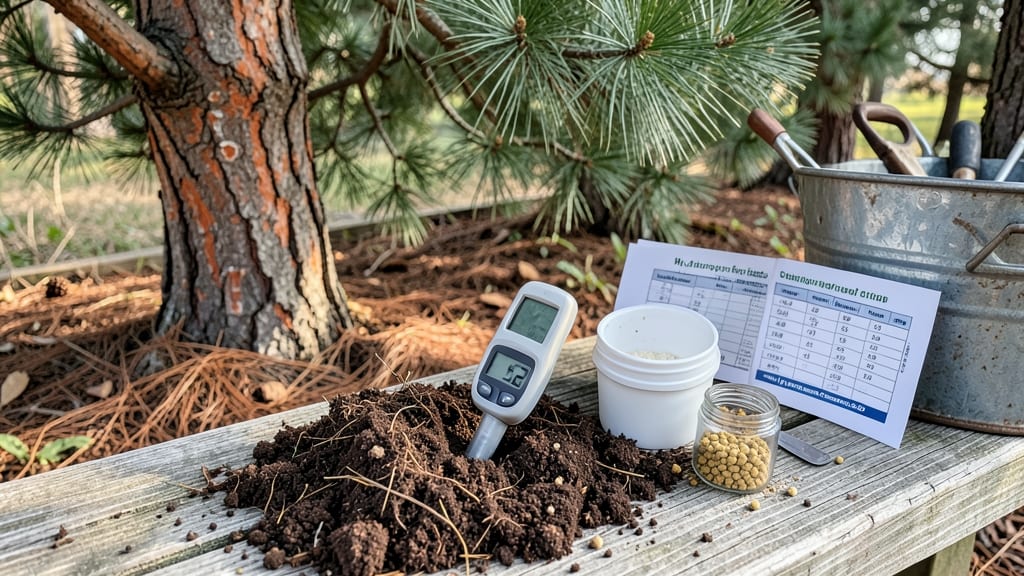
Pine trees need acidic soil with a pH between 4.5 and 6.0 to thrive—anything outside this range stresses their roots and weakens growth.
Struggling with yellowing pine needles or stunted growth? Your soil’s pH might be the hidden culprit—pine trees thrive only in very specific conditions that most gardeners overlook.
Most garden soils lean toward neutral or alkaline, but pine trees 🌲 demand acidity to absorb nutrients like iron and manganese. Without it, they’ll show signs of distress long before you notice the soil’s imbalance.
In this guide, I’ll break down the exact pH levels for common pine species, how to test your soil, and step-by-step methods to adjust it—whether you need to lower pH with sulfur or raise it with lime.
Optimal pine tree soil pH levels by species: exact ranges for maximum growth
Pine trees are famously particular about their soil conditions, and soil pH is the most critical factor most gardeners overlook. Unlike many plants, pines thrive exclusively in acidic soils, with most species preferring a pH range between 4.5 and 6.0.
Even slight deviations can trigger nutrient deficiencies, yellowing needles, or stunted growth—symptoms that often mimic other issues like pests or drought. Understanding your pine species' exact pH needs is the first step to creating an environment where it can flourish for decades.
Not all pines are created equal—some varieties, like the ponderosa pine, are more tolerant of slightly alkaline conditions, while others, such as the eastern white pine, demand strict acidity. Below, I’ve broken down the ideal pH ranges for the most common pine species, along with their tolerance limits.
This data will help you diagnose why your tree might be struggling and how to adjust your soil before it’s too late.
Why pH matters: Pine trees absorb nutrients like iron, manganese, and aluminum most efficiently in acidic soil. A pH above 6.5 locks these nutrients out, causing yellowing needles even if your tree gets plenty of water and sunlight. Conversely, soils below 4.0 can become toxic, damaging root systems. Testing your soil’s pH before planting is a non-negotiable step for long-term success.
If you’re unsure which pine species you’re growing, start by examining the needle length and cone shape. For example, eastern white pines have 5-needle clusters, while loblolly pines feature 3-needle bundles.
Once identified, use the table above as your guide to determine whether your soil is too alkaline or not acidic enough. Most garden centers sell soil pH test kits for under $20—an investment that can save your tree from irreversible damage.
Testing your soil is simple: collect samples from 6–8 inches deep around the tree’s drip line (the outermost edge of its canopy). Mix these samples and send them to a lab or use a digital pH meter for instant results.
Aim to test in early spring before fertilizing, as recent amendments can skew readings. If your soil tests above 6.0, you’ll need to lower the pH using organic matter like pine needles or sulfur. For soils below 4.0, avoid adding lime and instead focus on improving drainage.
Regional soil types play a huge role in pH balance. For instance, sandy soils in the southeastern U.S. often drain too quickly, requiring organic mulches to retain acidity. In contrast, clay-heavy soils in the Midwest may need gypsum to prevent compaction while maintaining acidity. Before planting,
How to adjust soil pH for pine trees: step-by-step acidification methods
Pine trees demand acidic soil to thrive, with most species preferring a pH range of 4.5 to 6.0. If your soil test reveals higher levels, don’t panic—lowering pH is straightforward with the right amendments.
I’ve found that organic methods like pine needles or elemental sulfur work best for gradual, long-term adjustments without shocking your tree’s roots.
Before diving in, test your soil’s current pH using a digital meter or lab kit. This tells you exactly how much to adjust. For example, if your soil reads 7.0, you’ll need a more aggressive approach than if it’s just slightly alkaline at 6.5.
Always work in small batches—overcorrecting can harm beneficial soil microbes and your pine’s root system.
- Test Soil pH: Use a meter or send a sample to a lab. Aim for 4.5–6.0 for pine trees. Write down your current reading.
- Choose Your Amendment:
- Organic: Pine needles, peat moss, or composted leaves (slow-acting, best for maintenance).
- Synthetic: Elemental sulfur (fast-acting, best for quick fixes).
- Calculate Application Rate:
- For organic amendments: Apply 2–3 inches of pine needles or peat moss to the soil surface annually.
- For sulfur: Use 1–2 pounds per 100 sq ft for every 1.0 pH point you need to lower (e.g., 2 lbs to drop from 7.0 to 6.0).
- Apply in Early Spring: Spread amendments evenly over the root zone (extend 2–3 feet beyond the dripline). Water thoroughly to activate sulfur or decompose organic matter.
- Monitor & Retest: Wait 2–3 months before retesting pH. Organic methods take longer—plan for 6–12 months for full effect.
- Maintain Long-Term: Add a 1-inch layer of pine needles annually as mulch. Avoid lime or wood ash, which raise pH.
Timing matters—spring or fall are ideal because the soil is moist, and your pine tree isn’t stressed by extreme temperatures. I’ve seen dramatic improvements in ponderosa pines within a year of consistent acidification.
For example, a loblolly pine in my neighbor’s yard went from yellowing needles to vibrant green after we lowered the pH from 6.8 to 5.5 using sulfur and pine mulch.
If you’re using elemental sulfur, apply it when the soil is moist but not soggy. Water it in immediately—this helps convert sulfur into sulfuric acid, which lowers pH faster.
For organic methods, patience is key. Peat moss, for instance, breaks down slowly, releasing acids over time. Mix it into the top 6 inches of soil during planting for best results.
Watch for over-acidification, which can also harm your pine. Signs include brown needle tips or stunted growth. If this happens, add wood ash sparingly (only 1/2 cup per 100 sq ft) to raise pH slightly.
Always retest after adjustments—soil chemistry is a balancing act, not a one-time fix.
For container-grown pines, use a pre-mixed acidic potting soil (pH 5.0–6.0) and repot every 2–3 years with fresh soil. Add a handful of sulfur-coated fertilizer annually to maintain acidity. Containers dry out faster, so monitor moisture closely—dry soil can lock in high pH levels.