
Pruning
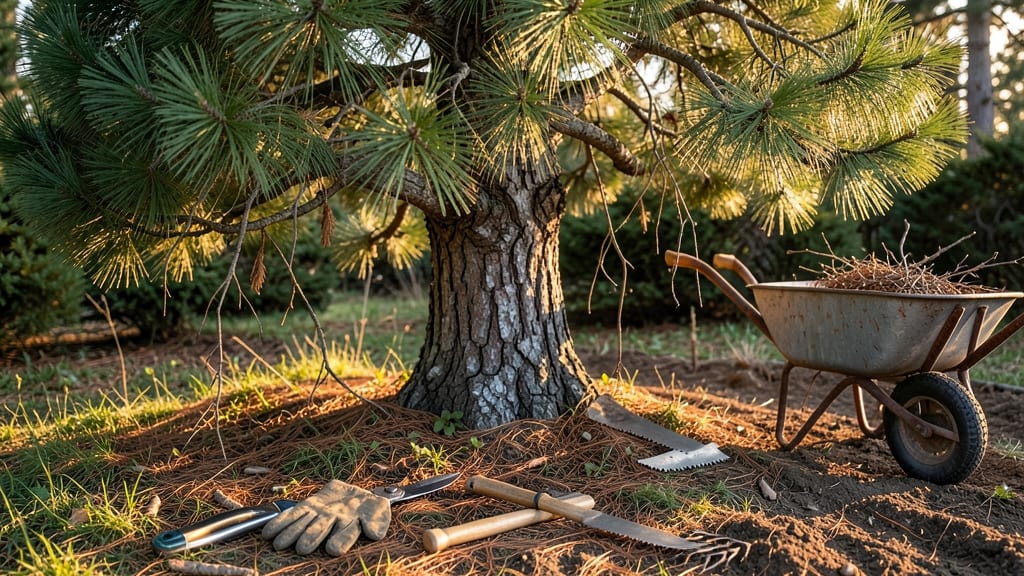
Your pine tree’s dead branches aren’t just an eyesore—they’re a safety hazard and a sign your tree needs attention. 🌲 I’ve pruned enough pines to know the difference between natural aging, pest damage, and environmental stress, and how to fix it without harming the tree.
The key is acting at the right time with the right tools, so you don’t turn a minor issue into a major problem.
Dead branches often start with brown needles that fall off easily, brittle wood, or no new growth in spring. Common causes include fungal infections, borer beetles, or drought stress—all of which can spread if left unchecked. The good news?
Pines are resilient, and removing dead wood actually helps the tree focus its energy on healthy growth. Just avoid pruning during extreme heat or frost, and never cut more than 25% of the tree’s branches at once.
With the right technique, you’ll see fresh green needles within a season and a stronger, safer tree. Start by sterilizing your pruners with rubbing alcohol, then make clean cuts just outside the branch collar.
For branches thicker than your wrist, call a professional—safety first. The goal isn’t perfection; it’s giving your pine the best chance to thrive again.
This works for all pine species, from towering pines to dwarf varieties, and handles everything from minor cleanup to major revitalization. Whether your tree’s been struggling for months or you just noticed a few dead branches, this method keeps it healthy without stressing the plant.
Let’s get those dead branches off safely!
Understanding Dead Branch Causes
Dead branches on pine trees can be frustrating, but they often signal underlying issues that—once identified—can be managed or even prevented. Below, we break down the most common reasons your pine tree’s branches are dying, with clear explanations and actionable insights.
Pine trees are resilient, but extreme weather or poor growing conditions can push them beyond their limits, leading to branch dieback.
- Drought & Water Scarcity 💧 Pines rely on consistent moisture, especially during dry spells.
When roots struggle to absorb water, branches turn brown and brittle. Signs: Needle discoloration (yellowing or browning), dry, snapping twigs. - Why it happens: Xylem vessels (water-transporting tubes) collapse under dehydration, blocking nutrient flow. - Actionable fix: Deep watering (1–2 inches per week) during droughts and mulching to retain soil moisture.
- Freeze Damage & Winter Burn ❄️ Sudden temperature drops or late-season frosts can kill needles and branches. Signs: Brown, crispy needles that stay attached (unlike natural shedding). - Why it happens: Ice crystals form in plant cells, rupturing them.
Evergreens like pines are especially vulnerable because they retain foliage year-round. - Actionable fix: Water trees deeply before winter to reduce freeze risk and avoid winterizing too early (let them harden off naturally).
- Wind & Physical Trauma 🌪️ High winds can snap branches or strip protective bark, exposing wood to pests and disease.
- Why it happens: Pines have shallow root systems, making them top-heavy and prone to uprooting or breakage.
- Actionable fix: Prune to improve structural integrity (remove crossing or weak branches) and consider staking young trees in storm-prone areas.
Insects and pathogens are silent branch killers, often going unnoticed until damage is severe.
- Bark Beetles & Wood Borers 🪲 These pests tunnel under bark, disrupting the tree’s vascular system. Signs: Sawdust-like frass at branch bases, excessive sap oozing, or sudden needle drop.
- Why it happens: Beetles target stressed trees (drought, poor health), and their larvae girdle branches by feeding on phloem.
- Actionable fix: Remove infested branches immediately (beetles spread quickly) and treat with systemic insecticides if infestation is widespread.
- Fungal Infections (e.g., Armillaria, Root Rot) 🍄 Fungi thrive in wet, compacted soil, attacking roots and spreading upward. Signs: Mushrooms at the base, white fungal fans under bark, or sudden branch death.
- Why it happens: Poor drainage or wounds from pruning/pests create entry points for spores.
- Actionable fix: Improve soil aeration, avoid overwatering, and prune only during dry conditions to prevent fungal spread.
- Spider Mites & Needle Diseases 🕷️ These tiny pests suck sap, causing needles to yellow, brown, and fall prematurely. Signs: Fine webbing on branches, stippled or speckled needles.
- Why it happens: Dry, dusty conditions weaken trees, making them susceptible to mite outbreaks.
- Actionable fix: Spray branches with water to dislodge mites and apply horticultural oil or neem oil as a preventative.
Overzealous or improper pruning can stress pines, leading to dead branches—or worse, inviting disease.
- Incorrect Cuts or Timing ⏰ Cutting too late in the season (fall/winter) or making jagged cuts can seal over slowly, inviting rot. Signs: Branches die back from the cut point, oozing sap. - Why it happens: Pines heal slowly, and improper cuts expose raw wood to pathogens. - Actionable fix: Prune in late winter/early spring (before new growth).
Use sharp tools to make clean cuts just outside the branch collar (the swollen area where the branch meets the trunk).
- Removing Too Much at Once ⚠️ Over-pruning (removing >25% of foliage in one go) starves the tree of energy. Signs: Stunted growth, yellowing needles, or widespread branch dieback.
- Why it happens: Pines rely on needle photosynthesis; sudden defoliation disrupts their food supply.
- Actionable fix: Limit pruning to no more than 10–15% of the canopy per year and focus on dead/diseased branches first.
- Topping or Stub Pruning ❌ Severely cutting branches back to a stub leaves wounds that never heal, leading to decay. Signs: Dark streaks in wood, mushrooms growing from stubs.
- Why it happens: Stub cuts create large, exposed surfaces that trap moisture and invite fungal growth.
- Actionable fix: Always cut back to the branch collar or a lateral branch—never leave stubs.
Pines need specific nutrients to stay healthy, and deficiencies often manifest as dead or stunted branches.
- Nitrogen Deficiency 🌱 Signs: Pale yellow needles, slow growth, and branches with sparse foliage.
- Why it happens: Nitrogen is crucial for chlorophyll production; without it, needles can’t photosynthesize efficiently.
- Actionable fix: Apply a balanced fertilizer (e.g., 10-10-10) in early spring and top-dress with compost.
- Magnesium or Potassium Shortages ⚗️ Signs: Yellowing between needle veins (magnesium) or brown needle tips (potassium).
- Why it happens: These minerals regulate water and nutrient transport; deficiencies disrupt branch vitality.
- Actionable fix: Test soil pH (pines prefer acidic soil, pH 4.5–6.0) and amend with sulfur or wood ash as needed.
Pro Tip: 💡 If you’re unsure whether branches are dead or dormant, scratch a small section of bark—green underneath? It’s alive. Brown/dry? It’s dead and should be pruned.
Revive Your Pine Tree Now
Revitalizing a pine tree with dead branches requires identifying the root cause and taking targeted action. Below, we break down practical solutions for each common issue, along with prevention tips to keep your tree healthy long-term.
If dead branches are caused by disease, act fast to prevent spread.
🔥 Step 1: Remove Infected Branches
- Use sterilized pruning shears (clean with rubbing alcohol) to cut 6–12 inches below the dead or discolored area.
- Burn or dispose of infected branches (do not compost) to stop spores from spreading.
🍳 Step 2: Apply Fungicide
- Spray copper-based fungicide (like Bordeaux mixture) or a neem oil solution on remaining branches.
- Reapply every 2–4 weeks during wet seasons.
👨🍳 Step 3: Improve Airflow & Drainage
- Thin out dense foliage to reduce humidity near the tree.
- Ensure the soil drains well—amend with sand or perlite if compacted.
💡 Pro Tip:
✨ Prevent recurrence by avoiding overhead watering and removing leaf litter around the base.
Pine trees in harsh climates (like sudden heat or wind) can develop dead branches.
🥘 Step 1: Prune Damaged Tips
- Trim only the dead portions—avoid over-pruning healthy growth.
- Use sharp, clean tools to prevent tearing.
🌡️ Step 2: Provide Shade & Moisture
- Mulch the base with 3–4 inches of organic material (pine straw or wood chips) to retain moisture.
- Water deeply 1–2 times per week (avoid shallow watering).
🎯 Step 3: Protect from Wind
- Plant windbreak shrubs (like arborvitae) on the exposed side.
- Avoid pruning in extreme heat—do it in early morning or evening.
✨ Pro Tip:
🌿 Young pines are most vulnerable—consider lightweight shade cloth in scorching summers.
Pests weaken trees, leading to branch dieback.
🔪 Step 1: Remove Heavy Infestations
- Bark beetles? Prune and burn infested branches immediately.
- Aphids? Blast off with a strong water spray or use insecticidal soap.
⏰ Step 2: Apply Natural Repellents
- Diatomaceous earth (food-grade) around the base deters beetles.
- Neem oil spray (repeat every 2 weeks) controls aphids.
💡 Pro Tip:
🔥 Healthy trees resist pests—fertilize with slow-release, balanced fertilizer (10-10-10) in early spring.
Over/under-watering or poor soil can kill branches.
💧 Step 1: Check Soil Moisture
- Stick your finger 2–3 inches deep—soil should be slightly moist, not soggy.
- Adjust watering: Drought? Water deeply 2x/week. Overwatered? Let soil dry between waterings.
📊 Step 2: Amend Compacted Soil
- Dig 6–12 inches deep around the root zone and mix in compost or peat moss.
- For sandy soil, add organic matter to retain moisture.
🌱 Step 3: Mulch Properly
- Use 2–3 inches of mulch, keeping it 6 inches away from the trunk.
- Never pile mulch against the bark—this causes rot.
✨ Pro Tip:
🌡️ Pine trees hate "wet feet"—ensure proper drainage with raised beds if needed.
Final Note: Most pine trees recover well with correct pruning and care. Monitor progress over 6–12 months, and adjust treatments as needed. 🌲💪
Frequently asked questions
How can I tell if a pine tree branch is truly dead?
Scratch the bark on the branch—if it’s green underneath, it’s still alive. If it’s brown or dry, it’s dead and should be pruned. Another test is to gently bend the branch: if it snaps easily, it’s dead. Healthy branches bend slightly before breaking.
Is it safe to prune dead branches in winter?
Winter is actually ideal for pruning pine trees since they’re dormant. Just avoid extreme cold or frost. Prune on a dry day when temperatures are above freezing. This reduces stress on the tree and minimizes disease risk.
When should I call a professional for dead branches?
If branches are larger than your wrist, located high up, or if the tree shows signs of disease like oozing sap or mushrooms at the base, call an arborist. Also seek help if you’re unsure about the cause or if the tree is near power lines or structures.
Can I compost pine tree branches after pruning?
Only if they’re completely healthy—never compost branches showing signs of disease or pest infestation. For dead branches, chop them into small pieces and use as mulch (they’ll break down slowly). If diseased, dispose of them in the trash or burn them.
How often should I prune my pine tree?
Prune only when necessary—typically once a year during late winter or early spring. Never remove more than 10–15% of the canopy in one session. Focus on dead, diseased, or crossing branches first to maintain tree health.