
Pruning
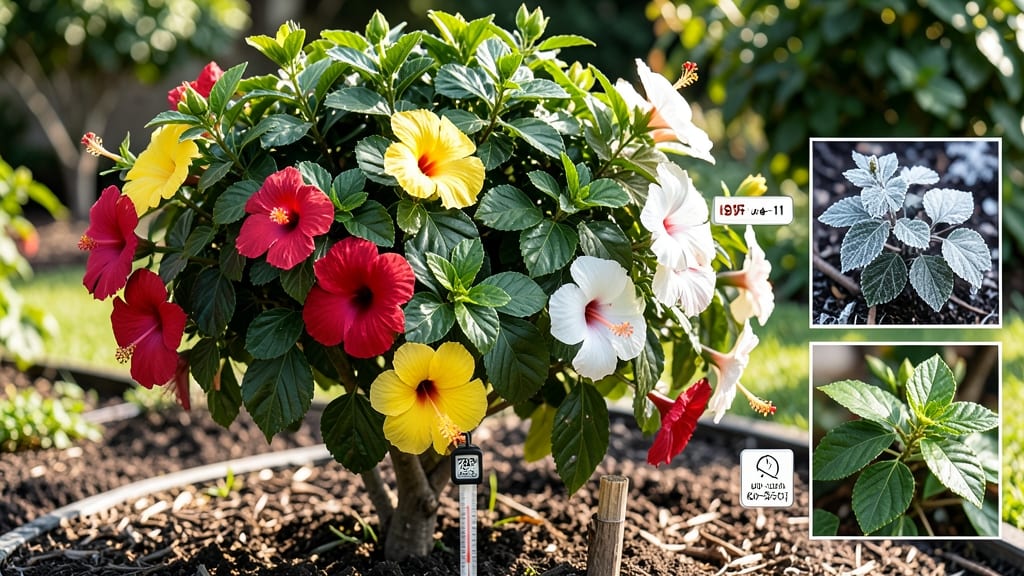
A hibiscus tree's temperature tolerance determines whether your 🌺 thrives or just survives — and the wrong climate can turn your prized plant into a casualty of heat or frost.
Struggling to keep your hibiscus tree alive through brutal winters or scorching summers? You’re not alone. Many gardeners assume these tropical beauties can’t handle anything outside their ideal 70–85°F range, but the truth is far more nuanced.
Some hibiscus varieties, like the hardy Hibiscus moscheutos, can brave chilly nights down to 0°F, while others wilt in temperatures above 95°F without proper care. The key lies in knowing your plant’s limits and adjusting your approach.
In this guide, I’ll break down cold-hardy vs. heat-sensitive hibiscus types, share seasonal survival tips, and show you how to protect your plant—whether it’s snuggling under mulch in winter or beating the heat with shade and smart watering.
Cold-hardy hibiscus varieties that survive freezing temperatures
If you love hibiscus but live in USDA zones 5-9, you’re in luck—some varieties thrive even when temperatures plunge to 0°F (-18°C). These cold-hardy hibiscus species don’t just survive winter; they rebound with stunning blooms come spring.
The key lies in selecting the right species and providing minimal winter protection.
Most hibiscus varieties hail from tropical climates, making them sensitive to frost. However, two standout species—Hibiscus moscheutos (swamp hibiscus) and Hibiscus syriacus (rose of Sharon)—are bred to handle freezing temperatures. Both offer large, showy flowers and adaptable growth habits, making them perfect for northern gardens.
Below, I’ve compared their cold tolerance limits, bloom seasons, and ideal growing conditions to help you choose the best fit for your climate and garden style.
| Variety | Cold Tolerance | Bloom Season | USDA Zones | Mature Height | Winter Care |
|---|---|---|---|---|---|
| Hibiscus moscheutos | 0°F (-18°C) | Mid-summer to fall | 5-9 | 4-6 ft | Mulch heavily; prune dead stems in spring |
| Hibiscus syriacus | -20°F (-29°C) | Late summer to early fall | 4-9 | 6-12 ft | Wrap trunk; minimal pruning needed |
| Hibiscus coccineus | -10°F (-23°C) | Summer | 6-9 | 5-8 ft | Cut back to ground; regrows from roots |
Hibiscus moscheutos, also called swamp hibiscus, is a perennial powerhouse in zones 5-9. Its bold, dinner-plate flowers in shades of pink, red, and white make it a showstopper. This variety thrives in moist, well-draining soil and loves full sun, though it tolerates partial shade. Its deep root system helps it survive freezing temperatures without extra protection beyond a thick layer of mulch.
For gardeners in USDA zones 4-9, Hibiscus syriacus (rose of Sharon) is a hardy, multi-stemmed shrub that blooms prolifically from late summer through fall. Unlike its tropical cousins, this hibiscus sheds its leaves in winter but regrows vigorously in spring.
Its fragrant flowers attract pollinators, and its adaptability makes it ideal for urban gardens or small yards.
If you’re in zone 6 or colder, consider Hibiscus coccineus, the scarlet hibiscus. This semi-evergreen shrub tolerates -10°F (-23°C) and produces vibrant red blooms from summer through fall. It’s perfect for humid climates and thrives near ponds or in moist garden beds.
After a hard freeze, simply prune it back to the ground—it’ll bounce back with new growth.
When planting cold-hardy hibiscus, timing is everything. Wait until after the last frost in spring to transplant seedlings or bare-root plants. Amend your soil with compost or organic matter to improve drainage, as hibiscus hates soggy roots.
Space plants 3-5 feet apart to allow for airflow, reducing the risk of fungal diseases in humid climates.
Winter prep starts in late fall. Apply a 4-6 inch layer of mulch around the base of the plant to insulate roots. For Hibiscus syriacus, wrap the trunk with burlap or frost cloth if your zone dips below -10°F (-23°C)
In zone 5 or colder, consider planting in containers and moving them to a sheltered location for winter. One common mistake is over-pruning in winter. Cold-hardy hibiscus stores energy in its roots and stems. Instead of cutting back aggressively, prune in early spring to remove dead or damaged wood. This encourages new growth and abundant blooms by summer. For Hibiscus moscheutos, you can also lightly shape the plant after flowering to maintain its form. With the right variety and a little winter prep, your hibiscus can survive—and thrive—through freezing temperatures. Whether you choose the dramatic blooms of swamp hibiscus or the fragrant reliability of rose of Sharon, these cold-hardy varieties will reward you with season-long color and minimal fuss. 🌿
Heat survival strategies for tropical hibiscus trees in hot climates
If you're growing Hibiscus rosa-sinensis in zones 10-12, you know how brutal summer heat can be. Without proper care, your tropical hibiscus can suffer from leaf scorch, root stress, and even dieback.
The key to success lies in understanding how to protect your plant from extreme temperatures while maintaining its lush growth and vibrant blooms.
Tropical hibiscus trees thrive in warmth but struggle when temperatures exceed 95°F (35°C) without proper care. Their large, glossy leaves act like solar panels, absorbing excessive heat and causing wilting or browning edges.
The good news? With the right strategies—like mulching, shade solutions, and smart watering—you can keep your hibiscus thriving even in the hottest climates.
🌺 Hibiscus Heat Survival Checklist
- 1 Water deeply every 2-3 days during peak heat, focusing on the root zone to prevent surface evaporation. Use drip irrigation or soaker hoses to deliver moisture directly to roots.
- 2 Apply a 3-4 inch mulch layer of organic mulch (like wood chips or straw) to retain soil moisture and regulate temperature. Keep mulch 2-3 inches away from the trunk to prevent rot.
- 3 Provide afternoon shade (2-4 PM) using lightweight shade cloth (30-50% shade) or a lattice screen. Avoid full shade, which reduces blooming.
- 4 Amend soil with compost or peat moss to improve water retention. Aim for a well-draining yet moisture-retentive mix—hibiscus roots hate soggy conditions but need consistent hydration.
- 5 Prune overly dense foliage to improve air circulation, reducing heat stress on inner branches. Focus on thinning out rather than shearing for a natural shape.
One of the most critical mistakes gardeners make is underwatering during heatwaves. Hibiscus trees in containers dry out 3x faster than in-ground plants, so check soil moisture daily.
Stick your finger 2 inches deep—if it feels dry, water thoroughly. Early morning watering (6-8 AM) minimizes evaporation and fungal risks compared to evening watering.
For potted hibiscus, move them to a shadier spot during the hottest months or place them on elevated platforms to improve airflow. If your hibiscus shows signs of heat stress (yellowing leaves, curled edges, or wilting), trim affected foliage immediately to redirect energy to healthier growth.
A light foliar spray with water can also provide temporary relief on scorching days.
With these strategies, your Hibiscus rosa-sinensis can bounce back from even the most intense heat. The key is consistency—stay vigilant with watering, mulching, and shade adjustments, and your hibiscus will reward you with year-round blooms and lush foliage. 🌿