
Pruning
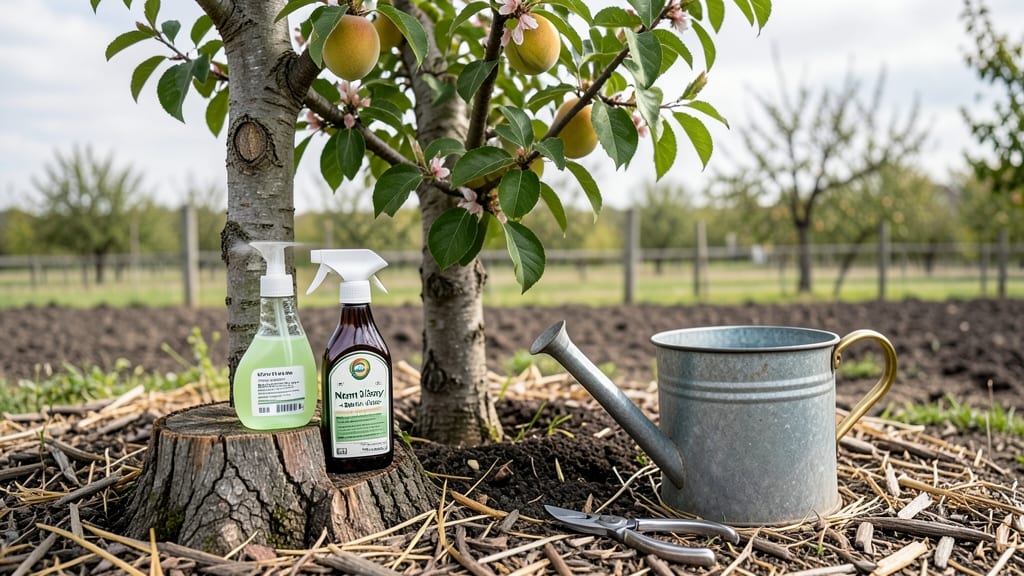
My peach tree treatment routine starts with a single question: why is your tree struggling? 🌿 Whether it's brown rot spots on fruit, sticky aphid trails on new leaves, or branches that refuse to bud, the solution begins with identifying the root cause—before it's too late.
The most common offenders are fungal diseases like brown rot (that telltale gray mold) and pests like peach tree borers hiding under cracked bark. I've seen both turn a thriving tree into a shadow of itself in just one season. The good news?
Catching these issues early means you can still salvage the canopy—and next year's harvest. You'll learn how to prune out infected branches, apply organic sprays like neem oil or copper fungicide, and even prevent future problems with proper winter care.
The goal isn't just to fix what's broken, but to build a tree that fights back naturally. Works for backyard trees, orchards, or even container-grown peaches. Let's get that canopy back to lush and productive!
Root Causes Of Peach Tree Struggles
Peach trees are resilient, but even the hardiest can decline when faced with specific stressors. Understanding the why behind common issues—like stunted growth, leaf discoloration, or fruit drop—helps you take targeted action. Below, we break down the most frequent culprits and their scientific roots.
---
Peach trees thrive in USDA Hardiness Zones 5-9, but they’re sensitive to sudden shifts in temperature and weather patterns. Here’s how extremes disrupt their health:
- Late Frosts or Early Freezes 🥶 Peach blossoms are extremely frost-sensitive, with damage occurring at 28°F (-2°C). When frost hits during bloom, it kills pollen, leading to poor fruit set or entirely barren branches.
Even if buds survive, blackened or mushy fruit may develop due to cellular damage.
- Heat Stress & Drought Prolonged temperatures above 90°F (32°C) combined with low humidity can cause: - Leaf scorch (brown, crispy edges) from transpiration overload—roots can’t absorb enough water to replace what’s lost through leaves. - Sunburn on young bark, which cracks and peels, creating entry points for bacterial infections. - Fruit sunscald, where exposed skin turns white or leathery under intense sun.
- Windburn & Physical Stress Strong winds desiccate leaves (dry them out) and abrasion bark, especially on young trees. This weakens the tree’s defenses, making it susceptible to pests and disease.
Pro Tip: 🌡️ Use frost cloths in spring and mulch heavily in summer to regulate soil temperature. Drip irrigation at dawn helps combat heat stress.
---
Peach trees are prone to pathogen attacks, particularly when environmental conditions favor microbial growth. Here’s how these invaders take hold:
- **Brown Rot (Monilinia fructicola) 🍑⚠️ This fungus thrives in humid, rainy springs and infects blossoms, fruit, and twigs.
It spreads via spores, causing: - Blossom blight (blackened, mummified flowers). - Fruit rot (brown, mushy lesions that exude pink spores). - Cankers on branches (sunken, discolored areas that girdle and kill wood).
- Peach Leaf Curl (Taphrina deformans) 🍃🌀 A fungal infection that distorts leaves into thick, puckered, reddish-green sheets. It overwinters in buds and bark, erupting in spring when moisture is high. Infected leaves drop prematurely, starving the tree of energy for fruit production.
- Bacterial Leaf Spot (Xanthomonas spp.) 🔬💀 Warm, wet conditions (75–85°F / 24–29°C) trigger this bacterium, causing: - Water-soaked spots on leaves that turn yellow-brown with dark borders. - Premature defoliation, weakening the tree for winter.
Pro Tip: 💡 Prune in dry weather to reduce spore spread, and apply copper fungicide (like Copper Sulfate) at bud swell to prevent leaf curl.
---
Pests don’t just nibble—they sap nutrients, transmit diseases, and disrupt growth. Here’s how they sabotage peach trees:
- Peach Tree Borers (Synanthedon exitiosa) 🪲💥 These larvae bore into bark and cambium, creating S-shaped tunnels that girdle branches.
Infested trees show: - Oozing sap or sawdust-like frass (insect waste). - Wilting leaves despite moist soil (the tree can’t transport water). - Sudden branch dieback.
- Aphids & Scale Insects 🐜🍯 These sap-sucking pests cluster on new growth, excreting sticky honeydew that attracts sooty mold (a black fungal growth). Symptoms include: - Curled, yellowing leaves (from toxin injection). - Stunted shoots (nutrients diverted to pest reproduction). - Ant trails (aphids "farm" them for honeydew).
- Nematodes (Root-Knot & Lesion) 🌱🐛 Microscopic worms that penetrate roots, causing: - Galls (lumpy root growths) that restrict water uptake. - Yellowing leaves despite fertilization (roots can’t absorb nutrients). - Stunted, weak top growth.
Pro Tip: 🔥 Encourage beneficial insects (ladybugs, lacewings) with neem oil sprays. For borers, wrap trunks with Tanglefoot to trap adults.
---
Peach trees are heavy feeders but hate soggy or nutrient-poor soil. Here’s how imbalances derail growth:
- Compacted or Waterlogged Soil 💦🚫 Peach roots need aeration—compacted soil strangles roots, leading to: - Yellowing leaves (chlorosis) from oxygen starvation. - Poor fruit set (stressed trees can’t support blooms). - Fungal root rot** (Phytophthora) in waterlogged conditions.
- Nitrogen Deficiency 💡🌱 Pale green leaves (especially on younger growth) signal low nitrogen. While essential for leafy growth, too little causes: - Slow recovery after pruning. - Small, sparse fruit (energy diverted to survival).
- Potassium & Calcium Deficiencies 🧂⚖️ - Potassium (K) deficiency: Weakens disease resistance and fruit quality (soft, mealy peaches). Look for yellowing leaf edges with green veins. - Calcium (Ca) deficiency: Causes blossom end rot (brown, leathery spots on fruit) and bitter pit (dimples in peaches).
Pro Tip: 🌡️ Test soil pH (6.0–7.0 is ideal) and amend with compost + balanced fertilizer (e.g., 10-10-10) in early spring.
--- Incorrect pruning weakens the tree’s framework, inviting disease and reducing yield. Common mistakes include:
- Over-Pruning ❌🪓 Removing >25% of canopy in one season stresses the tree, leading to: - Reduced photosynthesis (fewer leaves = less energy for fruit). - Weak regrowth (water sprouts that are prone to breakage).
- Improper Cuts ⚠️✂️ - Topping (cutting back to a stub) creates entry points for disease. - Leaving stubs (not cutting flush to the branch collar) invites rot. - Over-thinning removes scaffold branches, destabilizing the tree.
- Pruning at the Wrong Time ⏳🌸 Cutting during dormancy (late winter) risks frost damage to fresh cuts, while pruning after harvest can stimulate late-season growth vulnerable to frost.
Pro Tip: ✨ Use sharp bypass pruners and sterilize tools with rubbing alcohol between cuts to prevent disease spread. Aim for open-centered pruning to improve airflow.
Quick Fixes for Peach Tree
Reviving a struggling peach tree starts with identifying the root cause—whether it’s pests, disease, nutrient deficiencies, or poor pruning. Below are practical, step-by-step solutions tailored to common issues, plus prevention tips to keep your tree thriving all season long. Let’s get your peach tree back to its lush, fruiting best!
---
Peach trees are magnets for aphids, borers, and scale insects. If you spot sticky residue (honeydew), wilting leaves, or holes in bark, pests are likely the culprit.
#### 🔥 How to Treat It 1. Handpick or Blast Off Soft-Bodied Pests (like aphids or mites): - Spray the tree with a strong stream of water from a hose to dislodge insects. - Use a neem oil solution (1 tbsp neem oil + 1 tsp mild soap per quart of water).
Spray early morning or late evening to avoid harming bees. Repeat every 5–7 days for 2–3 weeks.
2. Target Borers and Beetles: - Scrape out borer tunnels with a screwdriver or chisel, then fill with diatomaceous earth or insecticidal soap. - For peach tree borers, wrap the trunk with sticky tree bands in late spring to trap emerging adults.
3. Encourage Natural Predators: - Plant marigolds, dill, or fennel nearby to attract ladybugs and lacewings, which devour pests.
#### 💡 Prevention Tips - Inspect trees weekly during peak pest seasons (spring and summer). - Prune in winter to remove hiding spots for pests. - Avoid over-fertilizing with nitrogen, which attracts soft-bodied insects.
---
Brown spots, yellowing leaves, or powdery white growth? Fungal infections like peach leaf curl, brown rot, or powdery mildew are likely to blame.
#### 🍳 How to Treat It 1. Prune Infected Branches Immediately: - Cut out any leaves or fruit showing signs of disease (especially brown rot). Sterilize pruners with rubbing alcohol between cuts.
2. Apply Fungicide: - Preventative spray: Use a copper fungicide (like Bordeaux mixture) or sulfur-based spray in late winter (before buds swell) and again in early spring. - For active infections: Switch to a fixed copper fungicide (e.g., Copper Soap) and reapply every 10–14 days until new growth appears.
3. Improve Airflow: - Thin out dense branches to reduce humidity near the canopy.
#### 🌡️ Prevention Tips - Water at the base (not overhead) to keep leaves dry. - Remove fallen leaves/fruit from the ground to prevent spore spread. - Plant resistant varieties (e.g., ‘Redhaven’ or ‘Elberta’) if fungal diseases are recurrent.
---
Yellowing leaves, weak stems, or small, sparse fruit? Your peach tree might be hungry for key nutrients.
#### 👨🍳 How to Treat It | Symptom | Likely Deficiency | Solution | |---------------------------|-----------------------|--------------| | Yellow leaves (oldest first) | Nitrogen (N) | Apply balanced fertilizer (10-10-10) in early spring.
Use compost or aged manure for organic boost. | | Yellow between veins | Iron (Fe) or Chlorosis | Sprinkle chelated iron on soil and water deeply.
Add sulfur if soil is alkaline. | | Purple stems/leaves | Phosphorus (P) | Work in bone meal or rock phosphate in early spring. | | Weak, brittle branches | Potassium (K) | Use potassium sulfate or wood ash in late summer. | | Small, poor-quality fruit | Calcium (Ca) or Magnesium (Mg) | Apply lime (for Ca) or Epsom salt (for Mg) in early spring. |
#### ✨ Prevention Tips - Test soil every 2–3 years (pH should be 6.0–7.0 for peaches). - Mulch with compost to slowly release nutrients. - Avoid over-fertilizing—peach trees prefer moderate feeding over heavy doses.
---
If your tree has too many suckers, dead wood, or overcrowded branches, it struggles to produce fruit efficiently.
#### 🔪 How to Treat It 1. Prune for an Open Center: - Remove suckers (shoots from the base) and water sprouts (vertical shoots). - Thin branches to allow sunlight into the center (aim for a vase-like shape).
2. Cut Out Dead/Diseased Wood: - Use clean, sharp pruners to make 45-degree cuts just above a bud or branch collar.
3. Shape for Airflow: - Keep the lowest branches 3–4 feet off the ground to prevent disease. - Avoid topping (cutting the main stem)—this stresses the tree.
#### ⏰ Best Time to Prune - Dormant season (late winter/early spring) – Best for major pruning. - Light pruning after harvest – Remove only dead or diseased branches.
#### 🎯 Prevention Tips - Prune annually to maintain shape and health. - Disinfect tools between cuts to prevent disease spread. - Avoid pruning in wet weather to reduce fungal risks.
--- Final Thought: A little early intervention goes a long way! Combine treatment + prevention for a peach tree that’s strong, productive, and pest-free all season. 🌿🍑
Frequently asked questions
How often should I apply fungicide to prevent peach leaf curl?
Apply a copper-based fungicide like Bordeaux mixture twice: once in late winter (before buds swell) and again in early spring (just as buds begin to open). For severe cases, add a third application 4-6 weeks later. Always spray in dry conditions to avoid spreading spores.
What’s the fastest way to get rid of peach tree borers?
Start by scraping out larvae from tunnels with a screwdriver, then fill them with diatomaceous earth or insecticidal soap. Wrap the trunk with sticky tree bands in late spring to catch emerging adults. For severe infestations, apply Bacillus thuringiensis (Bt) spray during larval stages.
Can I use neem oil on peach trees with fruit?
Yes, but avoid spraying directly on fruit—focus on leaves and bark. Use a 1% neem oil solution (1 tbsp neem oil + 1 tsp mild soap per quart of water) in the evening to protect bees. Stop applications 2-3 weeks before harvest to prevent residue on fruit.
Why are my peach tree leaves turning yellow even after fertilizing?
Yellowing leaves could signal iron deficiency (chlorosis), which often occurs in alkaline soils. Test your soil pH—peaches thrive at 6.0-7.0. If pH is high, apply chelated iron and add sulfur to lower pH. Also check for root issues like nematodes or compacted soil.
Is it safe to prune peach trees during rainy weather?
No—wet conditions increase the risk of fungal infections like brown rot. Prune on dry, sunny days when temperatures are above 50°F (10°C). Sterilize tools with rubbing alcohol between cuts to prevent disease spread. Early morning is ideal for reduced stress on the tree.