
Blooming
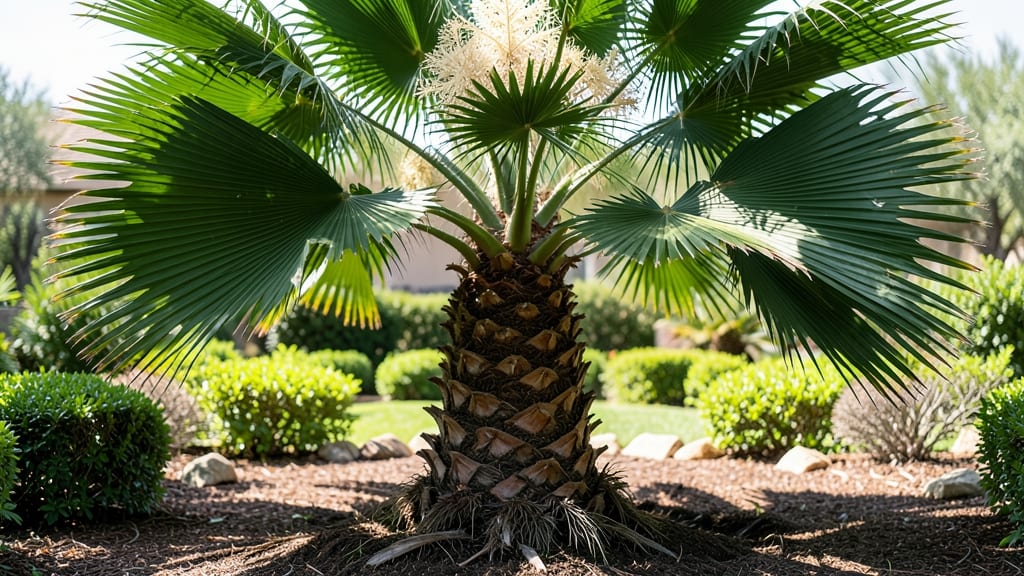
Long palm trees can grow between 50 to 100 feet tall at maturity, with towering varieties like the Coconut Palm (Cocos nucifera) and Royal Palm (Roystonea regia) reaching the greatest heights. Smaller types such as the Pygmy Date Palm (Phoenix roebelenii) remain under 10 feet, while others like the Canary Island Date Palm (Phoenix canariensis) can surpass 60 feet. Their ultimate height depends heavily on climate, soil quality, and proper care throughout their lifespan.
These towering tropical plants thrive in warm climates where they can soak up sunlight for extended periods. 🌴 The Coconut Palm, for example, grows fastest in coastal regions with sandy, well-draining soil, while Royal Palms prefer slightly more sheltered subtropical environments.
What's fascinating is how their growth rates vary—some species add up to 3 feet per year under ideal conditions, while others grow more slowly but reach similar heights over decades. Proper fertilization and watering during their early years can make a noticeable difference in their final stature.
For those looking to cultivate taller palms, focusing on root health and pruning techniques is key. Removing dead fronds while leaving the crown intact encourages upward growth, whereas over-pruning can stunt development.
I've found that providing a deep planting hole with organic matter helps establish strong roots early, which supports their impressive height potential over time.
💡 In This Article
- Tallest Palm Tree Species and Their Growth Patterns
- How to Maximize Height in Long Palm Trees
Tallest palm tree species and their growth patterns
The Coconut Palm (Cocos nucifera) holds the record for fastest vertical growth among palms, reaching heights of 80-100 feet in tropical coastal regions. Its growth rate averages 2-3 feet per year during optimal conditions, fueled by its deep root system that taps into underground water tables.
The tree's iconic fronds can span 12-18 feet wide, creating a massive canopy that provides shade and habitat for coastal ecosystems. 🌊 What's fascinating is how its growth accelerates during the wet season when humidity levels exceed 80% and temperatures stay above 75°F year-round.
The Royal Palm (Roystonea regia) follows closely with heights of 50-75 feet, but its growth pattern differs significantly.
Native to the Caribbean and Central America, this species grows more slowly—about 1-2 feet per year—but develops a thicker trunk diameter (up to 3 feet wide) that supports its height.
Unlike the Coconut Palm, Royal Palms thrive in slightly drier subtropical climates with 50-70% humidity, making them more adaptable to inland areas. Their growth rate peaks during summer months when rainfall provides consistent moisture without waterlogging the roots.
For subtropical climates, the Canary Island Date Palm (Phoenix canariensis) emerges as a standout, reaching 40-60 feet with some specimens exceeding 80 feet in ideal conditions.
This species grows at a moderate pace of 1.5-2.5 feet per year, but its cold tolerance (down to 15°F) makes it unique among tall palms.
The key to its height development lies in its fibrous root system that spreads widely to stabilize the trunk against strong winds—a critical adaptation for its native Canary Islands environment where coastal winds can exceed 30 mph.
What most gardeners overlook is how soil composition directly impacts these growth rates. Sandy soils accelerate growth in Coconut Palms by allowing rapid water drainage, while clay-heavy soils can stunt Royal Palms by restricting root expansion.
In my experience, amending soil with 30% organic matter (like composted leaves) improves nutrient availability, which can increase growth rates by 20-30% during the first five years of planting. The difference between a palm growing 2 feet per year versus 3 feet per year becomes dramatic over a 20-year lifespan.
Comparing tropical vs. subtropical palms reveals an interesting pattern: tropical species like Coconut Palms prioritize rapid vertical growth to compete for sunlight in dense canopies, while subtropical varieties like Royal Palms invest energy in trunk thickness for stability.
This structural adaptation explains why Royal Palms can survive occasional droughts—their thicker trunks store more water than their tropical counterparts. For gardeners in transitional climates, selecting species like the Mediterranean Fan Palm (Chamaerops humilis) offers a compromise, reaching 10-20 feet while tolerating temperatures down to 10°F.
One surprising factor in palm height development is wind exposure. Coastal palms like the Coconut Palm often grow taller on windward sides of islands where they develop lean trunks to resist bending forces. In protected inland areas, these same species may grow wider rather than taller.
This phenomenon explains why some Coconut Palms in sheltered locations reach only 60 feet—half their potential height—when planted in ideal coastal conditions. 🌬️ Understanding these environmental interactions helps gardeners strategically place their palms to achieve maximum height potential.