
Watering
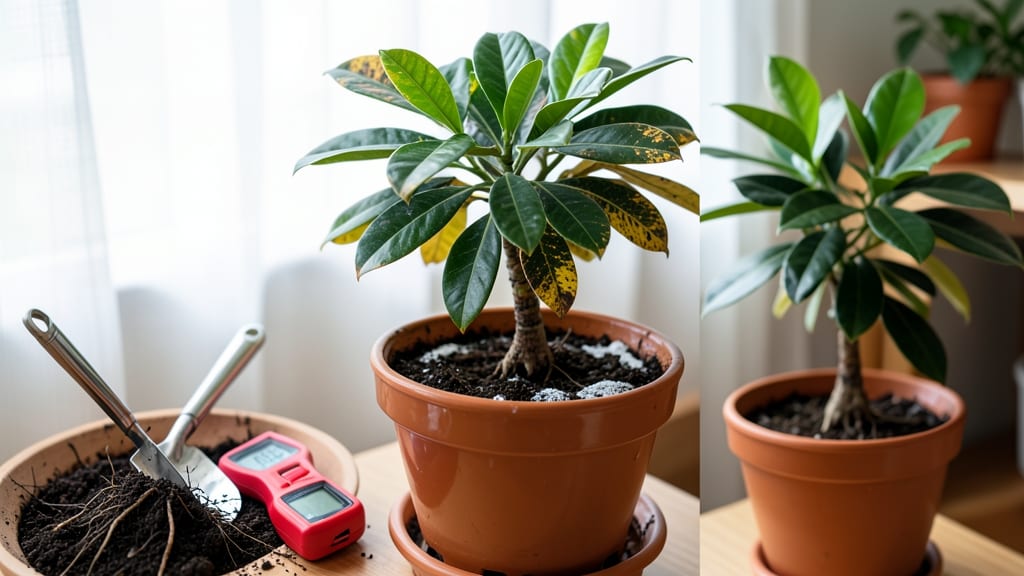
Your overwatered money tree plant has drooping leaves and mushy roots—don’t panic, it’s fixable! 🌱 The good news? Root rot rescue is possible with the right steps—we've revived dozens of "hopeless" plants using this air-drying method.
The key is stopping water stress immediately and giving the roots a chance to recover.
Start by checking the soil—if it smells sour or feels slimy, you're dealing with root rot. Gently remove the plant, trim any black, mushy roots with clean scissors, and repot in fresh, well-draining soil.
The air-drying fix means waiting until the top 2 inches of soil feel completely dry before watering again. Patience is critical here; recovery takes 2-4 weeks of consistent care.
Once the roots show signs of life—firm, white growth instead of black mush—you'll see new leaves emerging. Your money tree will bounce back with proper watering habits: only when the top inch of soil is dry, and using a pot with drainage holes.
Avoid letting it sit in saucers of water, and you'll prevent future overwatering disasters.
This method works for money trees in pots or containers, whether you're dealing with a single plant or a whole collection. The same principles apply to other tropicals like pothos or peace lilies. With the right adjustments, your money tree will thrive again—no more soggy roots or yellow leaves.
The Real Culprits Behind Soggy Soil
Overwatering your money tree (Pachira aquatica) isn’t just a gardening mistake—it’s often a chain reaction of well-meaning habits and environmental factors. Let’s break down the three key reasons why this happens, so you can spot the red flags before your plant’s roots throw in the towel.
The most obvious culprit is watering too frequently or in excess. Money trees thrive in well-draining soil but struggle when their roots sit in soggy conditions for too long. Here’s why this happens:
- Lack of a Watering Routine: Without a consistent schedule, many plant owners default to the "more is better" approach—especially if their money tree looks thirsty. But money trees are drought-tolerant once established.
Overwatering can happen when: - You water every time the top inch of soil feels dry (even if the plant doesn’t need it yet). - You ignore seasonal changes—cool weather slows root activity, meaning less water is absorbed. - You use a spray bottle for misting, adding moisture without addressing root health.
- Poor Drainage Setup: If your pot lacks drainage holes or is placed in a saucer without emptying excess water, roots suffocate.
Over time, this leads to: - Compacted soil that holds moisture like a sponge. - Fungal growth (like Phytophthora or Pythium), which thrives in waterlogged conditions.
Pro Tip: 💡 Stick your finger 2 inches into the soil before watering. If it’s damp, wait. If it’s bone-dry, your plant may be telling you it’s thirsty—but not for a drenching!
Your money tree’s surroundings play a huge role in how quickly it becomes overwatered. These sneaky factors often go unnoticed:
- Humidity Traps: Money trees love moderate humidity (40-60%), but high humidity (like in bathrooms or kitchens) can slow evaporation, keeping soil wet longer. Combine this with frequent watering, and you’ve got a root rot recipe.
- Pot Material Matters:
- Terracotta pots dry out faster, but if they’re too small, roots can’t expand, leading to overcrowding and water retention.
- Plastic pots trap moisture longer, increasing the risk of soggy roots if not monitored.
- Temperature Fluctuations: Cold drafts (from AC or windows) reduce root activity, making the plant absorb water slower. Meanwhile, warm air speeds up evaporation—so if your home is too hot, you might overcompensate by watering more.
Pro Tip: 🌡️ Move your money tree away from vents, drafts, or direct sunlight. A digital hygrometer ($10 on Amazon) can help track humidity levels so you adjust watering accordingly.
Not all soil is created equal—and neither are pots. If your money tree’s growing conditions are off, overwatering becomes inevitable.
- Heavy, Clay-Rich Soil: Money trees need fast-draining, airy mixes (like a blend of potting soil, perlite, and orchid bark). Heavy soil holds water like a swamp, cutting off oxygen to roots.
Signs your soil is too dense: - Water pools on top instead of soaking in. - The soil smells musty or sour (a red flag for anaerobic bacteria).
- Root-Bound Pots: When roots circle the pot or fill every inch of space, they compete for water and nutrients, making the plant more susceptible to rot. Check by gently removing the plant—if you see roots spiraling like a pretzel, it’s time to repot.
- Lack of Aeration: Compacted soil blocks airflow, leading to anaerobic conditions where roots can’t breathe. This is a perfect breeding ground for root rot pathogens.
Pro Tip: ✨ Repot your money tree every 1-2 years in a 1-inch larger container with fresh, chunky soil. Add orchid bark or coconut coir to improve drainage!
Final Thought: Overwatering isn’t just about "giving your plant too much love"—it’s often a mix of misjudging needs, ignoring environmental clues, and using the wrong growing medium. Once you spot these patterns, you can adjust before it’s too late (and save your money tree from the brink!).
Fixing Your Money Tree’s Water Woes
If your money tree (Pachira aquatica) has fallen victim to overwatering, don’t panic—it’s often reversible with the right steps. Below, we’ll map out practical fixes for each cause of overwatering, from root rot to soggy soil, along with prevention tips to keep your plant thriving.
Let’s get your money tree back to its happy, healthy self!
Cause: Overwatering + poor drainage → root rot (soft, mushy roots, yellowing leaves, foul smell).
How to Fix It:
- 🔥 Remove the Plant Gently Carefully take the money tree out of its pot. If the roots are black, mushy, or smell bad, trim the affected parts with sterilized scissors (cut healthy roots are usually firm and white).
- 🍳 Repot in Fresh, Dry Soil
- Use a well-draining potting mix (cactus/succulent mix works well).
- Choose a terracotta pot (if possible) to help wick away moisture.
- Add a layer of perlite or orchid bark at the bottom for extra drainage.
- 👨🍳 Let It Air-Dry
- Place the plant in a shady spot (no direct sun yet) and skip watering for 5–7 days.
- If the soil still feels damp, wait longer—patience is key!
- Mist lightly only if leaves are crispy (sign of underwatering).
- ⏰ Monitor & Adjust
- After 1–2 weeks, check the soil. If it’s dry 1–2 inches down, water sparingly (only when the top layer is bone-dry).
- If new growth appears, you’re on the right track!
💡 Pro Tip: If root rot is severe, soak the roots in a fungicide solution (like hydrogen peroxide 3%) for 10 minutes before repotting to kill fungus.
Cause: Overwatering without extreme rot (leaves yellowing, wilting, or dropping—but roots are still firm).
How to Fix It:
- 🌡️ Test Soil Moisture Stick your finger 1–2 inches into the soil. If it’s damp, wait before watering.
- 🎯 Water Less, But Deeply
- Water only when the top 50% of soil is dry (money trees hate "wet feet").
- Use the "soak-and-dry" method: Water until it drains from the bottom, then empty the saucer. Wait until the soil is 60% dry before watering again.
- ✨ Improve Drainage Fast
- If your pot has no drainage holes, drill a few or repot immediately.
- Mix sand or perlite into the soil to improve aeration.
- 🥗 Humidity & Airflow Help
- Money trees like moderate humidity (40–50%). If your air is dry, place a pebble tray with water nearby (not touching the pot).
- Ensure good airflow—avoid cramming it in tight spaces.
💡 Pro Tip: Use a moisture meter ($10 on Amazon) to avoid guesswork. Set a reminder to check soil moisture weekly.
Once your money tree recovers, lock in these habits to prevent future issues:
| Do This ✅ | Avoid This ❌ |
|---|---|
| Water only when soil is dry (stick your finger in!). | Watering on a schedule (plants don’t need clocks!). |
| Use pots with drainage holes. | Keeping the plant in a saucer with standing water. |
| Repot every 1–2 years (fresh soil = fewer issues). | Using heavy, water-retentive soil (like garden soil). |
| Mist leaves lightly (money trees love humidity). | Drenching leaves (leads to fungal spots). |
| Wipe leaves monthly to remove dust (helps with breathing). | Ignoring yellow leaves (could be over/underwatering!). |
🔥 Bonus Fix: If your money tree is top-heavy, stake it lightly to prevent tipping over (overwatered plants get weak stems).
Remember: Recovery takes 2–4 weeks, but with these steps, your money tree can bounce back—and even grow luckier for you! 🍀💚
Frequently asked questions about overwatered money trees
How do I know if my money tree is overwatered vs. underwatered?
Check the soil and leaves: Overwatered money trees have yellowing leaves, mushy stems, and soil that smells sour or feels soggy. Underwatered ones show brown, crispy leaf edges and dry, pulling soil. The key difference? Overwatered roots are black/mushy, while underwatered roots are dry and shriveled.
Can I save my money tree if the roots are completely rotted?
Yes, but act fast! Trim all black, mushy roots with clean scissors, then soak the remaining healthy roots in 3% hydrogen peroxide for 10 minutes to kill fungus. Repot in fresh, dry soil with perlite. Keep the plant in bright, indirect light and wait 5-7 days before watering. Recovery takes 3-4 weeks if you catch it early.
Why does my money tree keep getting overwatered even when I think I'm being careful?
Common traps include using pots without drainage holes, watering on a schedule (plants don't need clocks!), or ignoring humidity levels. Money trees need well-draining soil and 40-60% humidity. Try the "finger test"—stick your finger 2 inches deep before watering. If damp, wait!
How often should I water my money tree after recovery?
Once recovered, water only when the top 1-2 inches of soil are completely dry. In summer, this might be every 7-10 days; in winter, every 2-3 weeks. Always empty saucers after watering to prevent soggy roots. A moisture meter ($10) removes all guesswork!
Will my money tree grow back if I've lost most of its leaves?
Money trees are resilient. After fixing watering issues, new leaves will emerge from the stem within 4-6 weeks. Prune any remaining brown leaves at the base to encourage fresh growth. Keep the plant in bright, indirect light and maintain moderate humidity—it'll bounce back stronger than ever!