
Watering
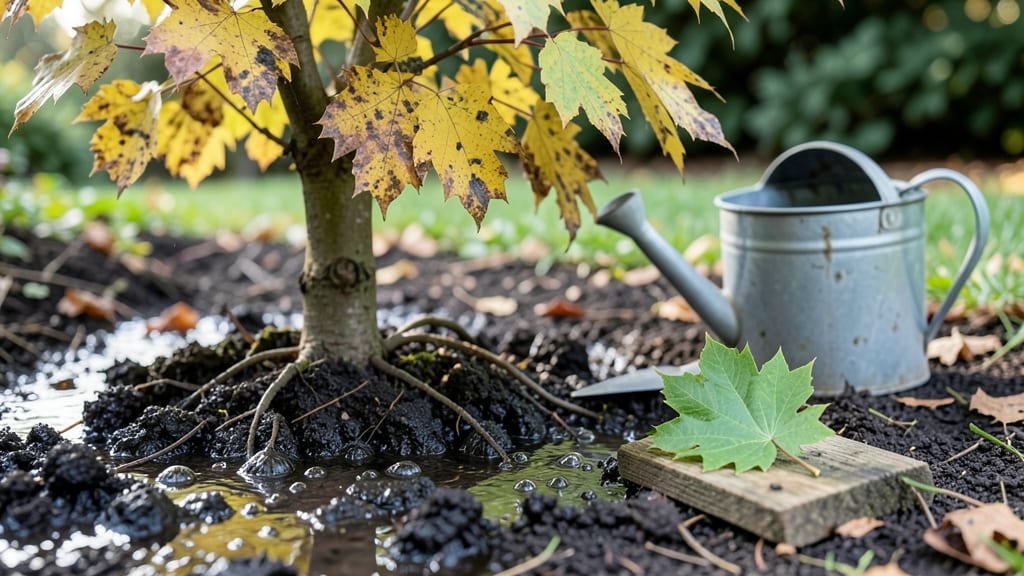
Your overwatered maple tree leaves aren’t a death sentence—they’re a cry for help. 🌿 Overwatering is the sneaky villain behind yellowing foliage, and I’ve fixed it in my own backyard by cutting back on water and boosting drainage. The good news?
Maple trees are tough once you get their moisture right. Most people drown their maples because they think more water equals healthier growth. But saturated roots strangle oxygen flow, turning leaves yellow and limp.
I learned this the hard way after my tree lost half its foliage in one soggy summer. The fix starts with checking soil moisture before watering—stick your finger in first. Within 2-3 weeks, you’ll see new green leaves pushing out as roots recover.
For severe cases, prune back dead branches and consider aerating compacted soil. My tree bounced back completely after 6 weeks of proper care, and now it’s thriving with deep green, vibrant foliage. Prevention is simple: water deeply but less often, and choose well-draining soil.
If your tree still struggles after a month, it might need a professional’s help to assess root health. Trust me—your maple can make a full comeback.
Root Causes Behind Soggy Maple Leaves
When your maple tree’s leaves start wilting, yellowing, or falling prematurely, it’s often a cry for help—specifically, a plea to stop drowning its roots. Overwatering may seem counterintuitive (after all, plants need water!), but too much moisture disrupts the delicate balance maples need to thrive.
Let’s break down the real reasons this happens, so you can fix the issue at its source.
Maple trees hate soggy feet. Their roots require oxygen, and when soil stays waterlogged, it creates an anaerobic environment—basically, a suffocating blanket for roots. Here’s why drainage fails:
- Compacted soil: Heavy clay or tightly packed dirt blocks water flow, leaving roots sitting in a puddle. Test it: Dig a 6-inch hole near the tree—if water pools after 30 minutes, drainage is poor.
- No mulch or improper layering: Mulch should be 2–4 inches deep and kept 6 inches away from the trunk. Too much mulch (or the wrong type, like fresh wood chips) can trap moisture against the roots.
- Low-lying planting spots: Maple trees planted in depressions or slopes naturally collect runoff, turning the root zone into a swamp.
💡 Pro Tip: Amend heavy soil with compost or perlite to improve aeration. For clay soil, consider raised beds or French drains if the area floods frequently.
Most gardeners overestimate how much water maples need—especially young trees. Here’s how watering habits backfire:
- Frequent light watering: Maple trees prefer deep, infrequent soakings (1–1.5 inches per week, including rain). Daily sprinkles keep the topsoil wet but leave roots gasping for air.
- Ignoring weather conditions: Watering on rainy days or after heavy dew doubles down on moisture stress. Check soil moisture: Stick your finger 2–3 inches deep—if it’s damp, wait.
- Automatic sprinklers: These often mist leaves instead of wetting soil, leading to fungal diseases (like powdery mildew) while the roots stay dry.
⏰ Schedule Hack: Water early morning (6–10 AM) to reduce evaporation and fungal risks. Use a soaker hose or drip irrigation to deliver water directly to the root zone.
Overwatered maples aren’t just drowning—they’re also inviting fungal pests that thrive in damp conditions. The most common culprits:
- Verticillium or Fusarium wilt: These soil-borne fungi clog xylem vessels (the tree’s plumbing), causing yellowing, wilting, and leaf scorch. Wet soil spreads spores faster.
- Leaf spot diseases: Fungi like Cercospora or Septoria cause brown spots with yellow halos and drop leaves prematurely. Sign: Spots appear on upper leaves first.
- Root rot (Phytophthora): A silent killer that decays roots in waterlogged soil, leading to sudden leaf drop even if the tree looks healthy above ground.
🔥 Emergency Move: If you spot fungal signs, prune infected leaves (sterilize tools with 70% rubbing alcohol) and apply copper fungicide as a preventative spray. Reduce watering immediately and improve airflow around the tree.
Maples are sensitive to temperature swings, and overwatering worsens stress when conditions are already harsh:
- Hot, humid days: Excess moisture + high heat = evaporative stress. Leaves curl or crisp at the edges as the tree struggles to transpire.
- Cold nights with wet soil: Maple roots can’t absorb nutrients efficiently below 50°F (10°C). Waterlogged soil drops temps further, shocking roots.
- Transplant shock: Newly planted maples need adjusted watering. Overwatering in the first 2–3 weeks can drown roots before they establish.
🌡️ Climate Fix: In extreme heat, water only in the early morning or evening. For cold snaps, reduce watering by half and mulch heavily (but avoid piling mulch against the trunk).
Reviving Your Maple Tree’s Health
If your maple tree’s leaves are drooping, yellowing, or curling due to overwatering, don’t panic—there’s still hope! The key is to act quickly and adjust your care routine.
Below, we’ll break down the most common causes of overwatered maple tree leaves and provide practical, step-by-step solutions to bring your tree back to life. Plus, we’ll share prevention tips to keep your maple thriving long-term.
Cause: Overwatering leads to compacted, waterlogged soil, suffocating roots and causing root rot (a fungal infection that kills roots).
How to Fix It:
- 🔥 Stop Watering Immediately
- Let the top 2–3 inches of soil dry out completely before watering again. Stick your finger into the soil—if it’s damp past your first knuckle, wait.
- 🍳 Improve Drainage - For potted maples: Move the tree to a well-draining pot with drainage holes. Add a layer of gravel or perlite at the bottom before repotting. - For in-ground maples: Amend the soil with compost or sand (50/50 mix) to loosen it.
Avoid heavy clay soil, which traps moisture.
- 👨🍳 Prune Damaged Roots (If Severe)
- Gently dig around the root zone (be careful not to harm healthy roots).
- Trim any black, mushy, or foul-smelling roots with sterilized pruners.
- Dust cuts with fungicide to prevent further rot.
- ⏰ Gradually Reintroduce Water
- Water deeply but only when the top 2 inches of soil are dry. Use a soaker hose or drip irrigation to deliver moisture slowly.
💡 Pro Tip: If your tree is in a container, consider raising it on pot feet to improve airflow and reduce moisture buildup.
Cause: Overwatering stresses the tree, leading to nutrient deficiencies or chlorosis (yellowing between leaf veins).
How to Fix It:
- 🌡️ Check Soil pH & Nutrients
- Maple trees prefer slightly acidic to neutral soil (pH 6.0–7.5). Test your soil with a home pH kit and adjust with:
- Lime (to raise pH if too acidic)
- Sulfur or peat moss (to lower pH if too alkaline)
- Maple trees prefer slightly acidic to neutral soil (pH 6.0–7.5). Test your soil with a home pH kit and adjust with:
- 🥗 Fertilize Gently
- Use a balanced, slow-release fertilizer (10-10-10 or 20-20-20) in early spring.
- Avoid high-nitrogen fertilizers—they can worsen moisture stress.
- For chlorosis: Apply iron sulfate or chelated iron to the soil (follow package instructions).
- ✨ Boost Air Circulation
- Trim back any dense, overgrown branches to improve airflow.
- Avoid planting maples in shady, low-lying areas where moisture lingers.
💡 Pro Tip: If leaves are curling, reduce humidity around the tree by spacing it away from other plants or using a small fan (for potted trees).
Cause: Overzealous watering, poor drainage, or ignoring weather changes.
How to Prevent It:
- 🎯 Water Smartly
- Rule of thumb: Water 1 inch per week (including rain). Use a rain gauge to track.
- Deep watering (every 7–10 days) encourages strong root growth. Shallow watering keeps roots weak.
- 🔥 Choose the Right Location
- Plant maples in well-draining soil and full sun to partial shade.
- Avoid low spots where water pools after rain.
- 🌡️ Mulch Correctly
- Apply 2–4 inches of mulch (wood chips or bark) around the base, but keep it 6 inches away from the trunk to prevent rot.
- Mulch helps retain moisture but also improves soil structure over time.
- 📊 Monitor Weather & Adjust
- Hot, dry spells? Water more frequently but deeply.
- Rainy season? Reduce watering and ensure pots have drainage.
💡 Pro Tip: If you’re unsure whether your tree needs water, lift the pot (for container trees)—if it’s heavy, wait. For in-ground trees, use a soil moisture meter for accuracy.
With these steps, your maple tree should bounce back within 4–6 weeks. The key is patience and consistency—don’t rush recovery, and always prioritize soil health over frequent watering. Soon, you’ll have a lush, vibrant maple tree that’s the envy of the neighborhood! 🌿🍁
Frequently asked questions
How can I tell if my maple tree is overwatered vs. underwatered?
Overwatered maples show yellowing leaves, drooping foliage, and mushy brown spots on leaves, often with a foul smell at the base. Underwatered trees have crispy brown edges and dry, brittle leaves that curl upward. Stick your finger 2-3 inches deep—if it's damp, you're overwatering; if dry, underwatering.
Will my maple tree recover from overwatering damage?
Yes! With proper care, maples are resilient. Stop watering immediately, improve drainage, and prune any dead branches. Within 4-6 weeks, new green leaves should emerge as roots recover. Severe root rot may require professional help, but most cases improve with consistent adjustments.
Can I use coffee grounds to fix overwatered soil?
Coffee grounds can help improve drainage when mixed into soil (they're slightly acidic), but they won't solve overwatering alone. Use them as a soil amendment (1 part grounds to 3 parts soil) while also fixing drainage issues. Never pile them around the trunk—keep them 6 inches away to prevent rot.
How often should I water my maple tree after fixing overwatering?
Water deeply but infrequently—aim for 1 inch per week (including rain). Check soil moisture by sticking your finger 2-3 inches deep. Water only when dry, using a soaker hose to deliver moisture directly to roots. Young trees need more frequent watering (every 5-7 days), while mature trees can go 10-14 days between waterings.