
Trees
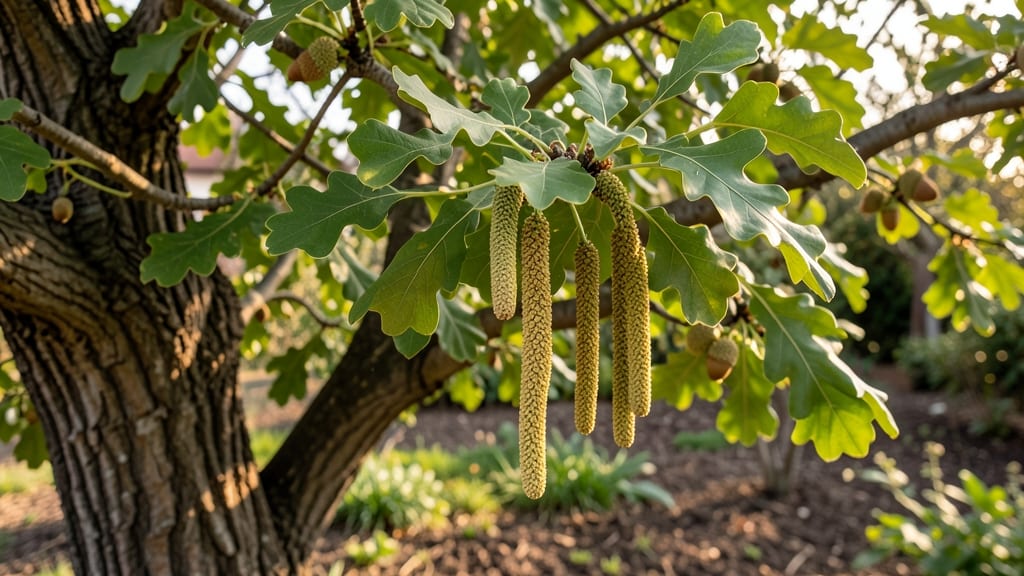
Oak tree pollen tassels—those long, dangling catkins—signal the tree's spring reproductive phase, releasing pollen before leaves appear and drying out after fertilization. Their appearance marks both the tree's growth cycle and potential allergy season for nearby areas.
These distinctive oak tree pollen tassels are nature's way of ensuring cross-pollination, with each species (red or white oak) following its own timing schedule. 🌳 Red oaks typically release pollen in late winter to early spring, while white oaks follow a few weeks later—this staggered approach helps prevent over-reliance on a single pollination window.
The tassels' presence also serves as an early warning for allergy sufferers, as oak pollen can trigger seasonal reactions in sensitive individuals.
From a gardening perspective, these tassels are completely normal and shouldn't be removed unless they pose a safety hazard. If you're concerned about pollen spread in your yard, consider planting pollen-tolerant ground covers beneath oak trees to help contain the issue naturally.
The tassels will eventually wither and drop once their pollination work is complete, typically by late spring.
💡 In This Article
- Oak Tree Pollen Tassels: Reproductive Cycle and Environmental Impact
- Identifying and Managing Oak Tree Pollen Tassels in Landscapes
Oak tree pollen tassels: reproductive cycle and environmental impact
Oak tree pollen tassels, or catkins, are the tree's specialized reproductive structures designed for wind pollination. These elongated clusters form from buds that develop during the previous growing season, remaining dormant until environmental cues—like increasing daylight and temperature—trigger their growth.
The catkins contain both male (pollen-producing) and female (ovule-bearing) flowers, though they're often separated on the same tree or different trees depending on the species. 🌿
The timing of tassel emergence varies significantly between oak species. Red oaks (like Quercus rubra) typically release pollen in late winter to early spring, often between February and March, while white oaks (like Quercus alba) follow about 2-4 weeks later.
This staggered schedule creates what botanists call "pollination windows," ensuring cross-pollination even if weather conditions vary. The tassels can reach lengths of 3-6 inches and hang prominently from branches before leaves appear—a visual cue that the tree is preparing for reproduction.
From an ecological perspective, oak pollen plays a crucial role in forest ecosystems. The wind-dispersed pollen fertilizes female flowers, which develop into acorns—the primary food source for wildlife like squirrels, deer, and birds.
However, this same pollen becomes a seasonal allergen for humans, triggering reactions in about 10-20% of allergy sufferers during peak pollen months. The high protein content in oak pollen (including Bet v 1 proteins) is what causes immune system overreactions, leading to symptoms like sneezing, itchy eyes, and nasal congestion.
What makes oak pollen particularly potent is its size—typically 20-30 microns in diameter—small enough to become airborne and travel long distances. Unlike tree species that release pollen in clumps, oaks produce it in fine, powdery grains that can linger in the air for days.
This is why allergy sufferers often experience heightened symptoms on dry, windy days when pollen concentrations spike. The environmental impact extends beyond allergies, though, as oak trees are foundational species in many forests, supporting hundreds of insect and animal species through their reproductive cycle.
Interestingly, the tassels themselves serve as a biological clock for the tree. After releasing pollen—usually over a 2-4 week period—the catkins dry out and turn brown, falling to the ground by late spring.
This natural lifecycle prevents the tree from wasting energy on non-functional structures, allowing it to focus on leaf development and growth. The timing of this process is also influenced by the tree's age and health, with younger or stressed oaks sometimes exhibiting delayed or reduced tassel production.
For gardeners and homeowners, understanding this cycle helps explain why oak trees seem to "wake up" before other plants. The tassels' appearance is nature's way of announcing the tree's reproductive intentions long before the rest of the foliage emerges.
This early activity also explains why oak pollen often arrives before many other spring allergens, giving allergy sufferers little warning before symptoms begin. 🌳