
Trees
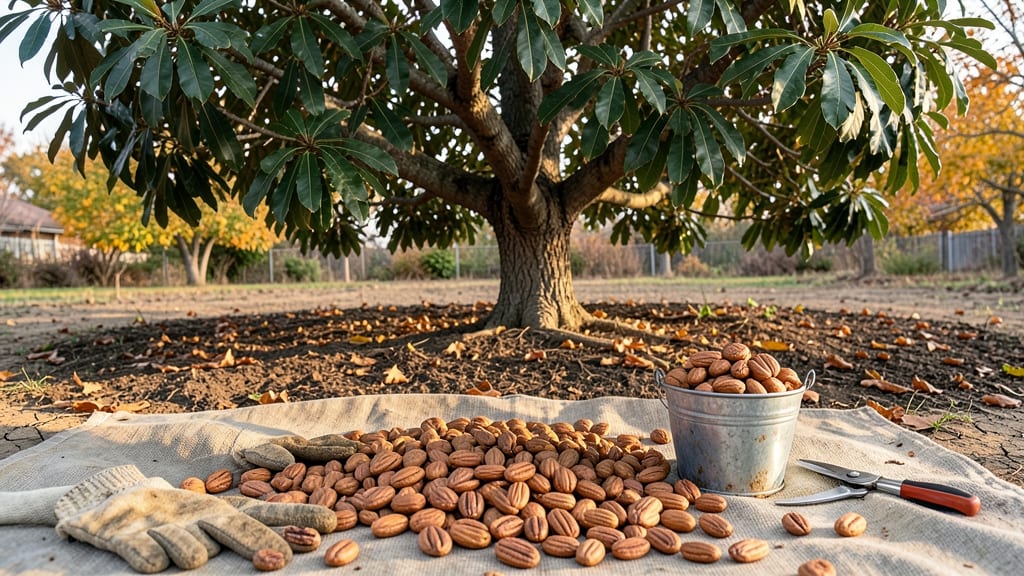
Pecan tree nuts are indeed true tree nuts, belonging to the same botanical family as hickory nuts, with a rich, buttery flavor and high nutritional value, including healthy fats and antioxidants.
Pecans stand out among tree nuts because they grow on Carya illinoinensis trees, which are part of the hickory family.
Unlike almonds or cashews, their compound leaves and hard shells make them distinct in both appearance and growth patterns. 🌳 What sets them apart from other nuts is their unique combination of texture—crunchy yet buttery—and their impressive nutrient profile, including more antioxidants than many other nuts.
This makes them a favorite for both culinary and health-conscious applications.
When comparing pecans to other popular tree nuts like walnuts or almonds, you'll notice they pack a more concentrated dose of heart-healthy fats and minerals like manganese and copper. Their versatility in both sweet and savory dishes also makes them a standout choice for chefs and home cooks alike.
The key difference lies in their flavor intensity—pecans offer a deeper, caramel-like sweetness that pairs exceptionally well with both baked goods and savory dishes.
💡 In This Article
- Botanical Classification of Pecans vs Other Tree Nuts
- Nutritional Comparison: Pecans Against Almonds, Walnuts, and Cashews
Botanical classification of pecans vs other tree nuts
Pecans belong to the Carya illinoinensis species, part of the hickory family (Juglandaceae), which also includes hickory nuts. This classification sets them apart from almonds (Prunus dulcis) or walnuts (Juglans regia), which belong to entirely different botanical families.
What makes pecans unique is their compound leaves—each leaf consists of 9 to 17 leaflets arranged in pairs along a central stem, unlike the simple leaves of walnuts or the scale-like leaves of cashews.
The hard, woody husk surrounding pecans is another distinguishing feature. This protective shell develops from the ovary wall and splits open when mature, revealing the edible seed inside. In contrast, walnuts have a smooth, hard shell, while almonds grow in a papery, fibrous husk.
The pecan's shell also contains juglone, a compound that gives it a slightly bitter taste when unripe, which disappears as the nut matures. 🌿 This chemical process is unique to the hickory family and contributes to pecans' distinct flavor profile.
Botanically, pecans are classified as true nuts because they develop from a single ovary with one seed, enclosed in a hard shell. This differs from cashews, which are technically seeds, not nuts, and grow from a false fruit.
The pecan tree's growth habit—with its sprawling branches and dense canopy—also influences how the nuts develop. Unlike almonds, which grow in clusters, pecans form individually along the branches, requiring careful harvesting to avoid damage.
When comparing pecans to other tree nuts, their growth environment plays a key role.
Pecans thrive in well-drained, slightly acidic soils with full sun exposure, often found in the southeastern U.S. This specific habitat contributes to their rich, buttery flavor, which is less common in nuts like almonds, grown primarily in Mediterranean climates.
The combination of soil, climate, and botanical structure creates a nut that's both visually and gastronomically distinct.
One fascinating detail is how pecans' compound leaves help them adapt to their environment. The multiple leaflets increase surface area for photosynthesis, allowing the tree to produce more energy for nut development.
This adaptation is less pronounced in walnuts, which have simpler leaves. The result? Pecans often yield larger, more flavorful nuts due to this efficient energy production. 🌱
For those curious about the science, pecans' botanical classification also explains their culinary versatility. The high oil content in the seed (about 72%) is a direct result of their growth conditions and genetic makeup.
This oil content is higher than in walnuts (65%) but lower than in macadamia nuts (76%), contributing to pecans' signature rich, buttery taste that's so beloved in both sweet and savory dishes.