
Trees
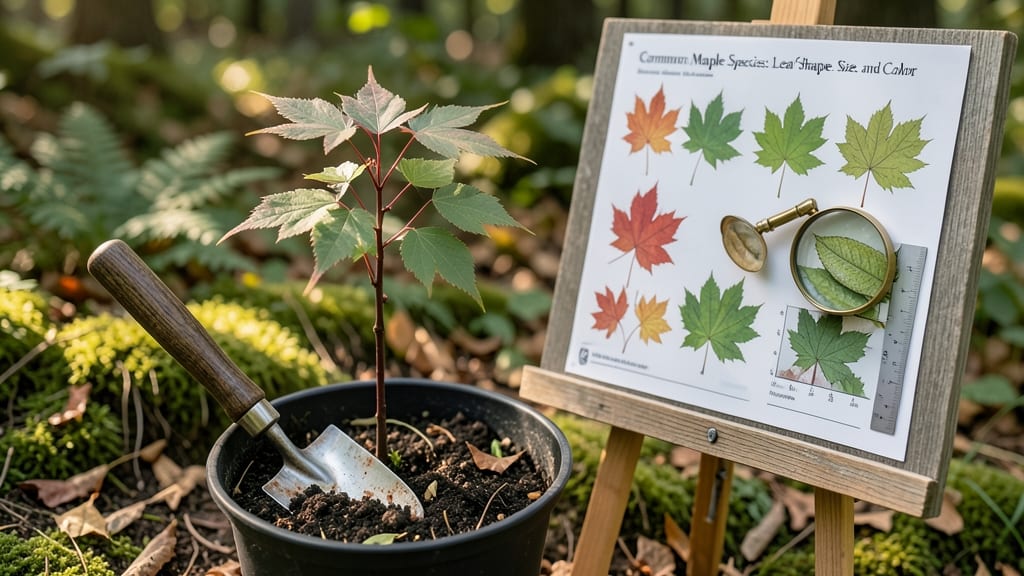
Maple tree seedling identification starts with those signature lobed leaves—five points for sugar maples, three to seven for red maples. 🌿 I’ve spent years spotting these tiny trees in my yard, and the key is examining the twigs, buds, and bark up close. A hand lens makes all the difference when distinguishing between species. The bark on young maples is smooth and silvery-gray, but sugar maples develop a more pronounced ridged pattern as they mature. Look for opposite branching and the way the buds cluster—sugar maples have pointed buds, while red maples are more rounded. Misidentifying these can lead to planting the wrong tree, so take your time. Once you master these features, you’ll spot seedlings everywhere—along fences, in forest edges, or even in unexpected spots like old fields. The thrill of finding a sugar maple seedling is unmatched, knowing it could grow into a stunning shade tree for decades. This skill saves money (no need for nursery plants) and helps conserve native species. Grab a notebook and start observing—you’ll be an expert in no time.
What Triggers Seedling Confusion
Identifying maple tree seedlings can feel like solving a botanical puzzle—especially when similar species share overlapping traits. But why does this confusion happen in the first place? The answer lies in a mix of natural biology, environmental factors, and human perception.
Let’s break down the key reasons why distinguishing young maples can be tricky, even for experienced gardeners.
Maples belong to the Acer genus, which includes over 125 species, many of which produce seedlings with strikingly alike features. For example:
- Leaf Shape: Sugar maples (Acer saccharum) and silver maples (Acer saccharinum) both have lobed leaves, but their seedling leaves may appear nearly identical until they mature.
- Bud Structure: Some maples, like the red maple (Acer rubrum) and Norway maple (Acer platanoides), have buds that are hard to differentiate without close inspection.
- Bark Texture: Young seedlings often have smooth, thin bark that lacks the distinctive ridges or colors seen in mature trees.
Since these traits develop slowly, seedlings can look deceptively alike, making identification a challenge. Pro Tip: 🔍 Focus on subtle differences, like the angle of leaf lobes or the shape of terminal buds—these are often the first clues!
Seedlings don’t grow in a vacuum—their environment shapes their development in ways that can obscure identification. Key factors include:
| Factor | How It Affects Seedlings | Example |
|---|---|---|
| Light Exposure | Low light can stunt growth, making leaves smaller or less lobed, while full sun may accelerate development but alter coloration. | A sugar maple seedling in shade might resemble a boxelder (Acer negundo) due to its simpler leaf structure. |
| Soil Conditions | Poor drainage or nutrient deficiencies can stress seedlings, causing abnormal leaf shapes or discoloration. | Iron-deficient soil may turn leaves yellow, masking natural color differences between species. |
| Climate Variations | Temperature and humidity affect growth rates—cooler climates may delay bud development, while warm, wet springs can spur rapid (but uneven) growth. | A red maple seedling in a northern climate might have delayed bud break, mimicking a slower-growing species. |
💡 Actionable Tip: Compare seedlings from the same microclimate (e.g., same soil type and sunlight) to spot consistent traits that cut through environmental noise.
Even with clear biological differences, misidentification often stems from:
- Lack of Familiarity: If you’re not familiar with a species in its early stages, you might overlook key details. For instance, the samara (winged seed) of a boxelder looks different from a sugar maple’s, but many people focus only on the seedling’s leaves.
- Seasonal Blind Spots: Buds, bark, and leaf color change dramatically with the seasons. A seedling’s winter buds might look identical to another species, but its spring foliage could reveal all.
- Over-Reliance on One Trait: Focusing solely on leaf shape (e.g., "all maples have lobed leaves") ignores critical differences like leaf arrangement (opposite vs. alternate) or twig hairiness.
✨ Pro Tip: Use a checklist of traits (e.g., bud shape, twig color, leaf base symmetry) to avoid tunnel vision. Snap photos at different stages—spring buds, summer leaves, and fall color—to build a full picture.
Some maple seedlings are hybrids, blending traits from two parent species. For example:
- The Freeman maple (Acer × freemanii) is a hybrid of white and red maples and can have seedlings that defy easy classification.
- Even within a single species, seedlings may exhibit sport mutations—unexpected variations in leaf shape or growth habit.
🔥 Key Insight: If a seedling doesn’t fit neatly into known species, consider hybridization or genetic quirks. Cross-reference with local botanical resources or university extension guides for regional hybrids.
Diagnose and Correct Seedling Issues
Accurate maple tree seedling identification is just the first step—knowing how to address common problems ensures your young trees thrive. Below, we’ve mapped practical solutions to the most frequent challenges, from misidentification to environmental stress, along with prevention tips to keep your seedlings healthy long-term.
Cause: Confusing maple seedlings with other species (e.g., boxelder, ash, or birch) can lead to incorrect care. Fix:
- 🔥 Compare Key Features: Use a magnifying glass to inspect:
- Leaf shape: Maple leaves have opposite branching (two leaves per node) and palmate lobes (3–5 pointed fingers).
- Bark texture: Young maples have smooth, grayish bark with subtle ridges.
- Seedling structure: Look for samara pairs (helicopter seeds) near the base—maples produce these in clusters.
- 📊 Cross-reference with a guide: Use a field manual or app like PictureThis to double-check.
- 🌱 Transplant if wrong: If it’s not a maple, research its needs (e.g., boxelder tolerates wetter soil than sugar maples).
Prevention: ✨ Label seedlings immediately after planting with a small wooden tag. ✨ Grow from known sources (nursery-bought or grafted seedlings) to avoid surprises.
Cause: Poor soil, overcrowding, or disease (e.g., verticillium wilt or root rot). Fix:
- 👨🌾 Improve soil conditions:
- Test soil pH (maples prefer 6.0–7.5). Amend with compost or lime if acidic.
- Ensure well-draining soil—maples hate soggy roots. Mix in perlite or sand if needed.
- 🌿 Thin seedlings: Space them 10–15 feet apart to reduce competition.
- 💊 Treat fungal issues:
- Prune blackened or mushy stems with sterilized shears.
- Apply copper fungicide (follow label rates) if wilt or spots appear.
Prevention: 💡 Mulch properly: Use 2–3 inches of wood chips, keeping mulch 6 inches away from the trunk to prevent rot. 🌡️ Water deeply but infrequently—1–2 inches per week—avoiding overhead sprinklers.
Cause: Lack of magnesium, nitrogen, or iron, often from poor soil or overwatering. Fix:
- 📊 Soil test first: Identify deficiencies with a home test kit (e.g., LaMotte).
- 🍎 Apply targeted fertilizers:
- Yellow between veins? → Iron chelate (for chlorosis).
- Pale green overall? → Balanced 10-10-10 fertilizer in early spring.
- Slow growth? → Slow-release nitrogen (e.g., blood meal).
- 💧 Adjust watering: Yellow leaves can signal overwatering—let soil dry slightly between waterings.
Prevention: ✨ Fertilize in early spring (before buds swell) and fall (for root growth). ✨ Avoid compacted soil—aerate with a garden fork if the area feels hard.
Cause: Aphids, Japanese beetles, or maple leaf cutters (larvae that skeletonize leaves). Fix:
- 🔪 Mechanical control:
- Handpick beetles into soapy water (do this in the early morning when they’re sluggish).
- Blast aphids off with a strong spray of water.
- 🍎 Chemical options (last resort):
- Neem oil (for aphids/mites—spray every 7–10 days).
- Bacillus thuringiensis (Bt) for leaf-cutting larvae (safe for pollinators).
- 🌿 Encourage predators: Plant marigolds or dill nearby to attract ladybugs and lacewings.
Prevention: 🎯 Monitor seedlings weekly—catch pests early! 🌡️ Prune heavily infested leaves and dispose of them in a sealed bag.
Cause: Freeze-thaw cycles, salt spray (near roads), or dehydration. Fix:
- 🌡️ Protect young trees:
- Wrap the trunk in tree guard or burlap to shield from windburn.
- Water deeply before frost (but avoid soggy soil).
- 🔄 Prune dead branches in late winter (after the worst cold passes).
- 💧 Rehydrate in spring: If buds look shriveled, soak the root zone with warm water.
Prevention: ✨ Plant in sheltered spots (e.g., near a fence or building). ✨ Mulch heavily (4–6 inches) in late fall to insulate roots.
Use this quick-reference table to troubleshoot:
| Problem | Quick Fix | Prevention Tip |
|---|---|---|
| Slow growth | Fertilize + thin seedlings | Test soil annually |
| Yellow leaves | Iron chelate or nitrogen boost | Mulch and aerate soil |
| Pest infestation | Neem oil or handpicking | Plant companion flowers |
| Winter dieback | Water deeply + wrap trunk | Choose a wind-protected site |
Final Pro Tip: 🌱 Patience is key! Maple seedlings grow 6–12 inches per year—focus on consistent care, not speed. With the right identification and maintenance, your young maple will mature into a stately, shade-providing giant in no time.
Frequently asked questions
How can I tell if a young tree is a maple seedling before it grows leaves?
Look for the samara pairs (helicopter seeds) still attached near the base—these are a dead giveaway. Young maples also have opposite branching (two buds at each node) and smooth, silvery-gray bark even without leaves. Check for tiny bud scales that overlap like shingles.
Why do some maple seedlings have leaves with fewer lobes than others?
This is normal! Seedling leaves often have simpler shapes (fewer lobes) until the tree matures. For example, a sugar maple seedling might start with 3-lobed leaves that develop into the classic 5-lobed shape. Light exposure also plays a role—shady seedlings may have less pronounced lobes.
Can I transplant a maple seedling I found in the wild?
Yes, but only if it's 1–2 years old with a well-developed root system. Dig a wide hole (twice as wide as the root ball) and water thoroughly after transplanting. Avoid transplanting in late summer or fall—spring or early summer is ideal. Check local regulations first, as some areas protect native seedlings.
How do I distinguish a sugar maple seedling from a red maple seedling?
Compare these key traits: sugar maples have pointed terminal buds and deeper leaf notches, while red maples have rounded buds and shallower sinuses. Also check the twig color—sugar maple twigs are greenish, while red maple twigs are reddish-brown. Seedlings often show these differences more clearly than mature trees.
What should I do if my maple seedling has strange growth patterns?
First check for pests (aphids, beetles) or disease (fungal spots). If the leaves are skeletonized (only veins remain), you may have leaf-cutting larvae. For abnormal growth, examine the root zone—compacted soil or girdling roots can cause stunted growth. Prune affected areas and improve soil drainage if needed.