
Diseases
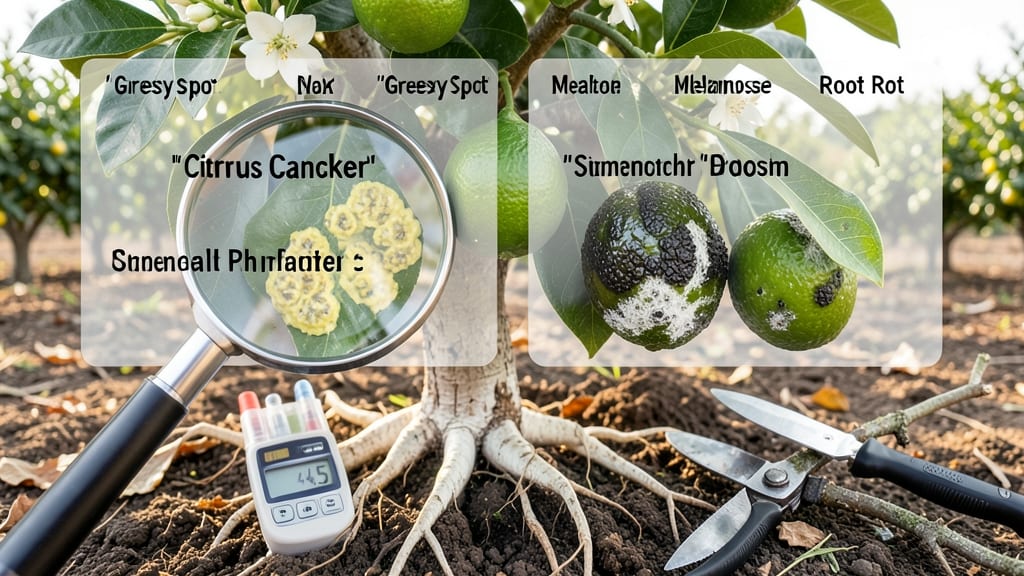
Spotting lime tree diseases with these pictures saves your tree—and your harvest. 🌿 I’ve seen anthracnose turn vibrant leaves to brown slime in just weeks, and citrus greening strip trees of fruit overnight. This guide shows you exactly what to watch for, so you can act before the damage spreads.
Most diseases start with subtle clues: yellowing between veins, sticky sap, or wilting branches that don’t bounce back. The visual guide includes close-ups of 12 common fungal blights, so you can match symptoms to solutions fast.
No guesswork—just clear photos and step-by-step fixes to get your tree back on track.
Early intervention is everything. A single spray of copper fungicide can stop anthracnose in its tracks, while pruning infected branches prevents citrus greening from spreading. You’ll learn which diseases respond to treatment and which require removal before they ruin your whole grove.
Works for backyard trees, commercial orchards, or container-grown limes. Whether you’re dealing with root rot in soggy soil or leaf spot from overhead watering, this guide gives you the tools to protect your trees—before the damage gets worse.
Underlying Causes Of Lime Tree Ailments
Lime trees, with their vibrant foliage and fragrant blossoms, are prized additions to gardens and orchards. However, they’re not immune to disease—especially fungal infections that thrive under specific conditions. Understanding why these diseases take hold is the first step in prevention and treatment.
Below, we break down the key triggers behind lime tree diseases, from environmental factors to biological weaknesses.
Fungal diseases are the #1 culprit behind lime tree decline, and they exploit weaknesses in your tree’s natural immunity. Here’s how it happens:
- Spore Spread via Wind/Rain 🌧️💨 Fungi like Phytophthora (root rot) and Alternaria (leaf spot) release microscopic spores that hitch rides on wind, rain, or even garden tools.
Once they land on a susceptible lime tree, they germinate if conditions are right—think high humidity, stagnant water, or poor air circulation.
- Overcrowded or Stressed Trees 🌳😵 Lime trees under stress (from drought, poor soil, or over-fertilization) produce weakened leaves and bark, making them prime targets. Fungi latch onto these vulnerable spots like a lock picking a weak door.
- Wound Entry Points ⚔️🌿 Pruning cuts, storm damage, or insect bites create open wounds where fungal spores can infiltrate. If tools aren’t sterilized between cuts, you’re essentially spreading infection like a vector.
Fungi don’t just appear—they’re opportunists that thrive when their ideal conditions align. Here’s what gives them the green light:
- Excess Moisture & Poor Drainage 💦🚫 Lime trees hate soggy roots. Overwatering, compacted soil, or clay-heavy ground traps moisture, creating a fungal paradise. Diseases like root rot and anthracnose flourish in these conditions, suffocating roots and leaves.
- High Humidity & Lack of Sunlight ☀️➡️🌧️ Fungi love shady, damp environments. If your lime tree is planted in a low-light area or shaded by taller plants, humidity lingers, slowing evaporation and keeping fungal spores hydrated and active.
- Sudden Temperature Shifts ❄️🔥 Cold snaps followed by warm, wet springs trick lime trees into premature growth—just as fungal spores wake up. This mismatch leaves trees off-balance, making them easier prey for diseases like powdery mildew.
Even the hardiest lime trees can fall victim to human mistakes. These common gardening blunders create the perfect storm for disease:
- Overhead Watering 💦🍃 Splashing water onto leaves (especially in the evening) mimics rain, spreading spores and keeping foliage damp for days. Always water at the base, not the canopy.
- Ignoring Pruning Hygiene ✂️🚫 Using unsterilized tools or making ragged cuts leaves trees exposed to infections. Always disinfect pruners with rubbing alcohol between cuts and prune during dry, sunny weather.
- Nutrient Imbalances 🧪⚖️ Too much nitrogen (from over-fertilizing) promotes soft, lush growth—a fungal buffet. Too little potassium or calcium weakens cell walls, making trees more permeable to pathogens.
Some diseases don’t act alone—they team up with pests to weaken lime trees first. Here’s how:
- Scale Insects & Aphids 🐜🍃 These sap-suckers stress trees by draining nutrients, creating sticky honeydew that fosters sooty mold (a secondary fungal infection). A single infestation can turn your lime tree into a fungal magnet.
- Boring Insects (e.g., Shot Hole Borers) 🪱🌳 Wood-boring pests create entry points for fungi like Botryosphaeria. Their tunnels disrupt the tree’s vascular system, making it more susceptible to systemic infections.
Not all lime trees are created equal—where and how you plant them can determine their disease risk:
- Clay or Compacted Soil 🏗️🚫 Poor drainage isn’t just a water issue—it’s a fungal superhighway. Roots suffocate, leading to Phytophthora (a deadly oomycete) and other water-loving pathogens.
- Urban Pollution & Salt Buildup 🏙️🧂 Trees near roads or in coastal areas face salt stress, which weakens their ability to fend off diseases. Salt also disrupts beneficial soil microbes, leaving fungi unchecked.
- Monoculture Plantings 🌿🌳🌿 Planting only lime trees in a row increases spore concentration in the air. Fungal diseases spread faster in genetically similar plantings with no natural barriers.
To stop fungal outbreaks before they start: ✅ Improve airflow by pruning dense branches. ✅ Mulch properly (2–4 inches of organic mulch, not touching the trunk). ✅ Test your soil—aim for a pH of 6.0–7.0 for lime trees. ✅ Rotate crops if growing in containers or small spaces to reduce pathogen buildup.
How to Fix Fungal Foes Fast
Fungal diseases can turn your lime tree’s vibrant green leaves into a sad, spotted mess—but don’t panic! With the right approach, you can revive your tree and keep future infections at bay.
Below, we’ve mapped out practical, step-by-step solutions for each common lime tree disease, plus prevention tips to protect your tree long-term.
Cause: Colletotrichum fungus thrives in wet, humid conditions. Fix: 🔥 Remove infected leaves – Snip off yellowing or blackened leaves immediately (don’t compost them—bag and trash). 🍳 Apply fungicide – Use a copper-based or neem oil spray (follow label instructions) every 2–3 weeks during wet seasons. 👨🍳 Improve airflow – Thin out dense branches to let sunlight and air circulate. Avoid overhead watering. 🌡️ Water wisely – Water early in the morning so leaves dry by evening.
💡 Pro Tip: Mulch properly—keep mulch 3–4 inches away from the trunk to prevent soil-borne spores.
Cause: Xanthomonas axonopodis bacteria spread via wind, tools, or infected plants. Fix: 🔪 Cut out cankers – Prune 1 inch below infected areas with sterilized pruners (wipe with rubbing alcohol between cuts). ⏰ Disinfect tools – Soak pruners in 10% bleach solution (1 part bleach to 9 parts water) for 10 minutes between uses. 🥘 Spray copper bactericide – Apply copper hydroxide (like Kocide) every 7–14 days during outbreaks. 🎯 Quarantine new plants – If buying new lime trees, inspect for bumps first—don’t plant if cankers are present.
💡 Pro Tip: Avoid wounding the tree—rough pruning can invite more infections.
Cause: Fungi like Cercospora or Alternaria love damp leaves. Fix: 🧹 Rake up debris – Clear fallen leaves weekly (they harbor spores). 🍎 Fertilize smartly – Use a balanced citrus fertilizer (low nitrogen) to boost tree health—weak trees get sick faster. 🌡️ Adjust watering – Water deeply but infrequently (1–2 times per week) and at the base, not the foliage. ✨ Use organic sprays – Mix 1 tbsp baking soda + 1 tsp dish soap + 1 gallon water and spray every 2 weeks (great for prevention).
💡 Pro Tip: Prune for sunlight—leaf spots spread in shady, damp areas.
Cause: Phytophthora or Fusarium fungi thrive in waterlogged soil. Fix: 💧 Fix drainage – Amend soil with sand or perlite if it’s clay-heavy. Consider raising the tree bed slightly. 🔥 Reduce watering – Let the top 2–3 inches of soil dry before watering again. 🌱 Aerate roots – Gently loosen compacted soil around roots (wear gloves!) to improve airflow. 🍄 Fungicide treatment – Drench soil with Subdue (metalaxyl) or Mycorrhizal fungi to outcompete bad spores.
💡 Pro Tip: Plant in well-draining soil—lime trees hate soggy feet!
To keep your lime tree healthy and disease-free, follow these year-round habits: ✅ Inspect weekly – Check for spots, oozing sores, or wilting early. ✅ Sterilize tools – Always clean pruners with rubbing alcohol or bleach. ✅ Space trees properly – 6–10 feet apart for airflow. ✅ Avoid overhead watering – Use drip irrigation or a soaker hose. ✅ Boost immunity – Feed with citrus-specific fertilizer (high in zinc & iron) in early spring.
Final Thought: Most lime tree diseases are manageable—the key is acting fast and preventing future outbreaks. With these steps, your tree can bounce back and stay lush for years! 🌿💚
Frequently asked questions
How can I tell if my lime tree has a fungal disease just by looking at pictures?
Compare your tree’s symptoms to the visual guide’s close-ups of leaf spots, cankers, or wilting patterns. Look for yellowing between veins (anthracnose), black streaks on stems (citrus greening), or powdery white coatings (mildew). Most fungal diseases show up as irregular shapes—not the crisp, uniform damage of pests or nutrient deficiencies.
Can I use the same fungicide for all lime tree diseases?
No—fungicides target specific pathogens. Copper-based sprays work for bacterial cankers, while neem oil or baking soda mixtures help with leaf spot fungi. For root rot, you’ll need soil drenches like Subdue (metalaxyl). Always check the label for the exact disease you’re treating.
What’s the fastest way to stop a disease from spreading to other trees?
Isolate the infected tree immediately and remove all fallen leaves/debris (they’re spore factories). Disinfect tools with 10% bleach solution between cuts, and avoid overhead watering. For highly contagious diseases like citrus greening, consider removing severely infected trees to protect nearby plants.
Are there any lime tree diseases that can’t be cured once they appear?
Yes—citrus greening (HLB) and tristeza virus have no cure. Once symptoms appear, the tree will decline despite treatments. For these, focus on prevention: use sterilized tools, inspect new plants, and remove infected trees ASAP to prevent spread.
How often should I check my lime tree for early disease signs?
Inspect your tree weekly during growing season (spring-fall), focusing on new leaves, stems, and fruit. Early detection lets you act before diseases spread. In humid climates, check every 3–4 days—fungi multiply fast when conditions are ideal.