
Container Gardens
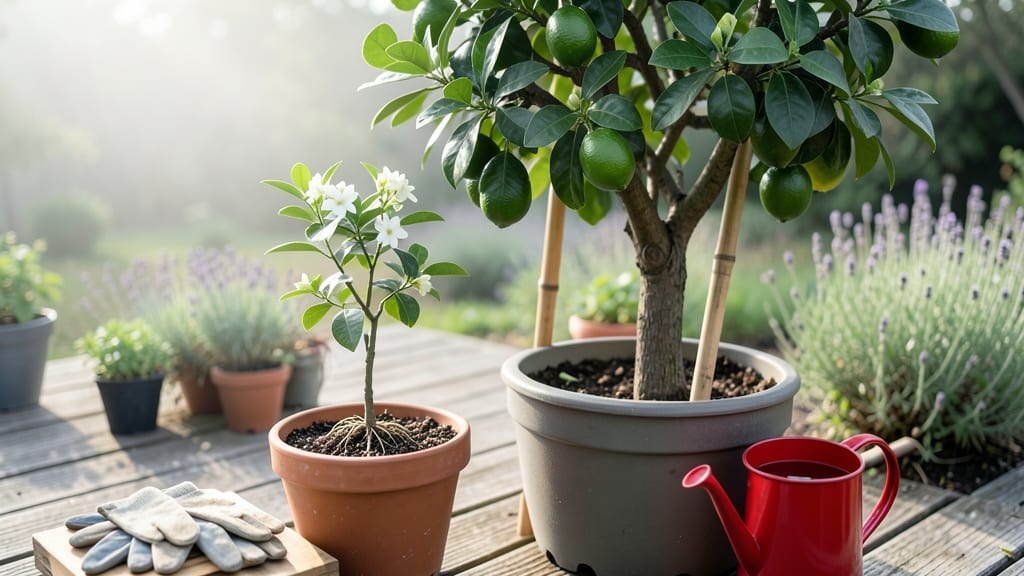
Planting a Meyer lemon tree in a container means fresh citrus year-round, even on a tiny balcony. 🌱 The dwarf variety stays small enough for pots but produces hundreds of lemons if you nail the basics—soil, drainage, and sunlight.
I’ve grown mine for three winters now, and the secret isn’t fancy equipment but matching the tree’s Mediterranean roots to your container setup.
Start with a 15- to 20-gallon pot (bigger is better for longevity) and a mix of potting soil, perlite, and compost—this combo drains well but holds moisture. Drainage holes are non-negotiable; without them, roots rot faster than you can say “sour lemons.”
Plant the tree just deep enough so the graft line (that bump near the base) sits above soil level—this keeps the tree healthy and productive.
Within weeks, you’ll see new growth if you keep it in 6+ hours of sunlight daily and water when the top inch of soil feels dry.
The first lemons arrive in 2-3 years, but the real magic is how the tree’s glossy leaves and fragrant blossoms transform any space into a mini orchard. Just avoid overwatering—Meyer lemons hate soggy roots.
This method works for patios, sunrooms, or even a sunny windowsill with a grow light. The only trade-off? You’ll need to fertilize every 4-6 weeks in growing months to replace nutrients the tree loses in containers.
Trust me, the first time you peel a homegrown lemon is worth every extra step.
📚 In This Guide
- What you need
- Instructions
- Tips and common mistakes
- Wrapping up and next steps
What you need
- ● Container: A 5-gallon or larger pot with drainage holes (minimum 18" diameter for dwarf varieties). Terracotta or fabric pots work best.
- ● Well-draining potting mix: A blend of 50% cactus/succulent mix, 30% perlite or pumice, and 20% compost (avoid garden soil—it compacts!).
- ● Meyer lemon tree: A dwarf or semi-dwarf variety (2–4 years old) from a nursery (check for healthy roots and no pests!).
- ● Slow-release fertilizer: A balanced citrus fertilizer (10-10-10 or 8-3-9) or organic options like fish emulsion.
- ● Drainage tray or saucer: To catch excess water and prevent root rot.
- ○ Mulch (optional but helpful): A light layer of gravel or bark chips to retain moisture and regulate temperature.
- ● Trowel or small shovel: For planting and mixing soil.
- ● Watering can with a narrow spout: To avoid disturbing the soil.
- ○ pH test kit (optional): Ideal soil pH for lemons is 6.0–7.0.
- ○ Support stake (optional): If your tree grows tall, a bamboo stake can provide stability.
- ● Spray bottle (for humidity): Helpful in dry climates to mimic tropical conditions.
Step-by-step instructions for planting a Meyer lemon tree in a container
Here’s the foolproof method I’ve used to grow thriving Meyer lemon trees in pots—no greenhouse required.
🪴 Step 1: Choose the Right Container and Drainage
Select a container at least 12-15 inches deep with multiple drainage holes—Meyer lemons hate soggy roots. I prefer unglazed ceramic or fabric pots because they allow excess moisture to evaporate through the walls. If your pot has only one small hole, drill 2-3 additional holes near the bottom to prevent waterlogging.
Place a 2-inch layer of gravel or broken pottery at the bottom before adding soil. This creates an air pocket that prevents root rot while still allowing water to drain freely. The key is never letting water pool—Meyer lemons are drought-tolerant once established, but they’ll drop leaves if their roots sit in water.
🌱 Step 2: Use Fast-Draining Soil and a Well-Placed Seedling
Fill the pot with a well-draining citrus potting mix—never garden soil. I blend equal parts potting mix, perlite, and coarse sand to ensure aeration. Fill the container to 1 inch below the rim, leaving room for watering. Press the soil down lightly to remove air pockets but don’t compact it too tightly.
Place your dwarf Meyer lemon tree in the center of the pot, ensuring the root flare (where roots meet the trunk) sits just above the soil line. If the tree came in a nursery pot, gently loosen the roots before planting—this encourages them to spread into the new container. Water deeply until it drains from the holes below.
☀️ Step 3: Position for Maximum Sunlight and Temperature Control
Meyer lemons need full sun (6-8 hours daily) but will scorch in direct afternoon heat—especially in summer. Place your container in a south- or west-facing spot where it gets morning sun and afternoon shade. If you’re in a hot climate, move it under a 50% shade cloth during peak afternoon hours.
Keep temperatures between 65-85°F—they’ll drop leaves if exposed to below 50°F or above 90°F. In winter, bring potted trees indoors near a sunny window or under grow lights for 12-14 hours of light daily. A heat mat can help maintain root warmth if your home runs cool.
💧 Step 4: Water Deeply and Fertilize for Year-Round Growth
Water when the top 2 inches of soil feel dry—stick your finger in to check. Water deeply until it runs out the drainage holes, then empty the saucer to prevent root rot. Meyer lemons are drought-tolerant once established, but young trees need consistent moisture. Overwatering is the #1 killer—yellow leaves usually mean you’re watering too much.
Feed every 4-6 weeks with a citrus-specific fertilizer (high in nitrogen in spring, balanced in summer, and potassium-rich in fall). I use a slow-release granular fertilizer mixed into the top inch of soil—this prevents burn from over-fertilizing. In winter, cut back to once every 8-10 weeks unless the tree is flowering or fruiting.
✂️ Step 5: Prune for Shape and Encourage Fruit Production
Prune in late winter or early spring before new growth begins. Remove dead, crossing, or inward-growing branches first—this improves air circulation and prevents disease. Then, trim back overly long branches by ⅓ to encourage bushier growth. Always cut just above a leaf node (the bump where leaves attach).
Pinch off new growth tips in late spring to redirect energy into fruit production. If your tree is flowering but not fruiting, it may need more sunlight or a balanced fertilizer. Thin heavy fruit clusters to 2-3 lemons per stem—this ensures larger, sweeter fruit. Harvest when the lemon turns fully yellow and yields slightly to gentle pressure.
Tips & tricks for perfect container-grown Meyer lemon trees
These are the hard-earned lessons from years of growing thriving Meyer lemon trees in pots—no green thumb required.
Container Selection: The 12-15 inch depth requirement is non-negotiable for dwarf varieties, but don't overlook the material. Fabric pots actually allow roots to breathe better than ceramic because they're breathable—they'll give you healthier growth with less root-bound stress. If you must use ceramic, choose unglazed varieties to prevent moisture buildup in the walls.
Soil Mix Matters: That equal parts potting mix, perlite, and coarse sand blend isn't just arbitrary—it's the perfect balance for citrus. The perlite prevents compaction while the sand ensures rapid drainage. I've found adding 10% worm castings (optional) boosts microbial activity without risking over-moisture. The key is maintaining that air-to-water ratio—citrus roots need oxygen almost as much as they need water.
Sunlight Strategy: The 6-8 hours of sunlight is your baseline, but here's the pro move: rotate your container quarter-turn every 2-3 weeks to ensure even growth. This prevents the tree from leaning toward the light. In summer, I've seen trees scorch in direct afternoon sun even with shade cloth—watch for leaf edges turning crispy, which means it's time to move it to filtered light immediately.
Winter Transition: That 12-14 hours of light requirement indoors is tricky—standard household lighting won't cut it. Invest in a full-spectrum LED grow light placed 12-18 inches above the tree. I keep mine on a timer for exactly 12 hours daily, and my trees stay healthy through winter without dropping leaves. The heat mat recommendation is especially important if your home stays below 65°F—root warmth is crucial for winter survival.
Pro Tips for Plant Meyer Lemon Tree In Container
- These are the hard-earned lessons from years of growing thriving Meyer lemon trees in pots—no green thumb required.
- Container Selection: The 12-15 inch depth requirement is non-negotiable for dwarf varieties, but don't overlook the material.
- Soil Mix Matters: That equal parts potting mix, perlite, and coarse sand blend isn't just arbitrary—it's the perfect balance for citrus.
Frequently asked questions
Got questions about growing your Meyer lemon tree in a container? You’re not alone—here are some of the most common ones, answered for your peace of mind!
What’s the best temperature range for a container-grown Meyer lemon tree?
A Meyer lemon tree thrives in temperatures between 60–85°F (15–30°C). It’s sensitive to frost (<32°F/0°C) and cold drafts, so move it indoors or to a sheltered spot when temps drop. If you live in a colder climate, a sunny windowsill or grow light setup works well during winter!
How long does it take for a Meyer lemon tree to bear fruit in a container?
With proper care, your container-grown Meyer lemon tree can produce fruit in 2–5 years. Dwarf varieties often fruit faster (sometimes even in 1–2 years!) if they receive full sun, regular watering, and balanced fertilizer. Patience is key—your first lemons might be small, but they’ll improve with age!
Why are the leaves on my Meyer lemon tree turning yellow?
Yellow leaves usually signal overwatering, underwatering, or nutrient deficiencies. Check the soil moisture—it should be slightly dry on top before watering. Yellowing with brown edges? Too much salt or chlorine in tap water. For a quick fix, flush the soil with distilled or rainwater and adjust your watering routine.
Can I grow a Meyer lemon tree from a cutting instead of buying a sapling?
Yes! Propagating from a cutting is budget-friendly and fun. Take a 4–6 inch (10–15 cm) healthy stem with leaves, dip it in rooting hormone, and place it in moist perlite or sand. Keep it warm and humid (like under a plastic bag) until roots form (4–8 weeks). Transplant to soil once established—just be patient, as cuttings take longer to fruit than nursery plants.
What’s the largest container size I can use for a Meyer lemon tree?
While a 15–20 gallon container is ideal for dwarf varieties, you can go up to 30 gallons if you’re committed to regular pruning and repotting every 2–3 years. Just ensure the pot has drainage holes and use lightweight, well-draining soil. Oversized containers retain too much moisture, risking root rot!
Wrapping up and next steps
Growing a Meyer lemon tree in a container is a rewarding journey that brings year-round citrus joy to your space! With the right dwarf variety, proper container setup, and consistent care, you’ll enjoy sweet, fragrant lemons—even indoors. 🌱✨
Now that you’re equipped with the know-how, take the next step: pick your pot, gather supplies, and plant your tree with confidence. Before you know it, you’ll be harvesting lemons for fresh lemonade, zesty dishes, or stunning centerpieces. Happy growing! 🍋💚