
Propagation
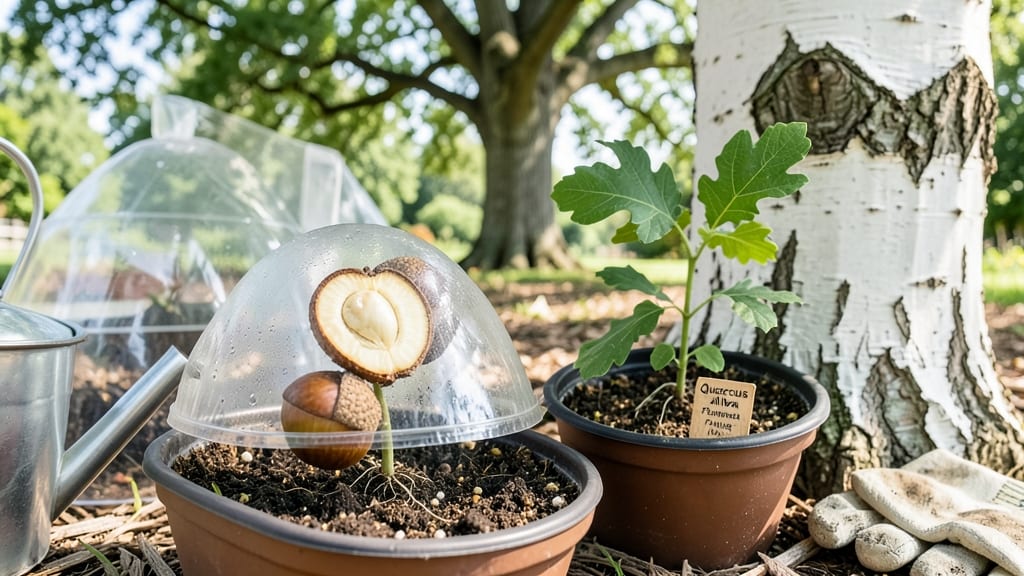
To grow a white oak tree from acorn, collect mature acorns in fall, plant them in moist, well-draining soil, and keep the soil consistently damp while shielding them from pests. Germination typically occurs in 1-3 months, and saplings will take 5-10 years to develop into mature, sturdy trees.
White oak acorns are notoriously difficult to germinate because they require specific conditions to break dormancy. 🌱 The key is replicating their natural forest environment—planting them in slightly acidic to neutral soil (pH 5.0-7.0) and maintaining temperatures between 60-70°F.
Many gardeners use a technique called stratification, where acorns are kept moist and cold (like winter) for 60-90 days to mimic nature's timing. This mimics how acorns would survive buried in leaf litter until spring, when they're ready to sprout.
Once your acorn sprouts, the real challenge begins. Young white oak seedlings are highly vulnerable to wildlife—squirrels, deer, and even birds will dig them up if given the chance.
I've found that planting in wire mesh cages or using chicken wire around the base gives them a fighting chance. 🦌 Transplanting becomes possible after the first year, but wait until the sapling is at least 12 inches tall and has developed a strong root system.
Patience is critical here; white oaks grow slowly but reward you with incredible strength and longevity.
💡 In This Article
- White Oak Acorn Germination Science and Best Conditions
- Step-by-Step White Oak Sapling Care Guide for Long-Term Growth
White oak acorn germination science and best conditions
The biological process behind white oak acorn germination is fascinating. These seeds enter a state called dormancy to survive harsh conditions until spring. The key trigger is a combination of moisture and cold—specifically, stratification, which mimics winter's natural chilling effect.
During stratification, the acorn's embryo undergoes biochemical changes that prepare it for growth. This process typically requires 60-90 days at 34-40°F, breaking down growth inhibitors in the seed coat while activating enzymes needed for sprouting.
Soil conditions play a critical role too. White oaks thrive in slightly acidic to neutral soil with a pH between 5.0-7.0. The ideal planting medium should be 60% sand, 30% peat moss, and 10% perlite to ensure proper drainage while retaining moisture.
Unlike many plants, white oak acorns need consistent moisture—never soggy—to prevent rot, yet they must have oxygen access for respiration.
Think of it like a damp sponge: just enough moisture to keep the seed hydrated but not waterlogged. 🌱 The germination rate improves dramatically when you replicate these forest floor conditions precisely.
Temperature is equally crucial. White oak acorns germinate best at 60-70°F during the day and 50-55°F at night. This range mirrors springtime conditions in their native habitats.
What most people don't realize is that acorns planted in fall (October-November) often germinate naturally the following spring because they experience this temperature fluctuation automatically. If you're planting indoors, use a seedling heat mat set to 70°F to simulate these conditions—this can cut germination time from months to weeks.
Light exposure also matters, though not in the way you might think. White oak acorns don't need light to germinate—they're hypogeal, meaning the seedling emerges from below the soil. However, once the sprout appears, it will seek light for photosynthesis.
This is why planting them at a 1-inch depth is ideal: shallow enough for the shoot to break through easily but deep enough to protect the tender root system from temperature swings and predators.
Here's what's actually happening chemically: The cold stratification process converts starches in the acorn into sugars through enzymatic action. These sugars provide the energy needed for root development. Without this process, many acorns would remain dormant indefinitely.
In nature, this is why you rarely see white oaks growing from acorns that fall in summer—they lack the cold treatment needed to break dormancy. 🔥
For best results, collect acorns from mature trees (at least 50 years old) as they're more likely to be viable. Look for plump, heavy acorns with intact caps—they should have a brown, wrinkled cap that doesn't come off easily.
Avoid any that show signs of insect damage or mold, as these won't germinate. The cap actually helps regulate moisture loss during stratification, so leaving it on is beneficial during the cold treatment phase.