
How To
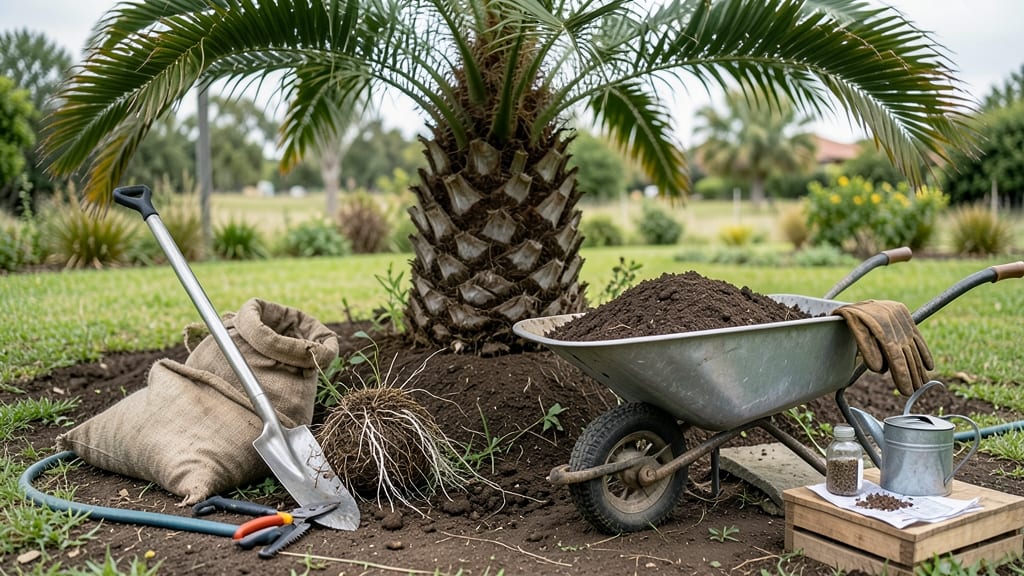
How to dig up a palm tree for transplant without killing it takes patience and the right approach. ✨ I’ve moved palms from my backyard to new spots, and the key is timing—spring or early fall when roots are active but not dormant. A mature palm’s root system is fragile, so you’ll need heavy-duty tools and a plan to protect those delicate fronds.
Start by clearing the area around the trunk and marking the root ball’s edge with stakes. For larger palms, rent a post-hole digger or hire help—this isn’t a solo job.
Water the tree 2-3 days before digging to soften the soil, and wrap the trunk in burlap to shield it from sunburn during transport. The goal? A clean, intact root ball that lets the palm settle into its new home without shock.
📚 In This Guide
- What you need
- Instructions
- Tips and common mistakes
- Wrapping up and next steps
What you need
- ● Shovel or spade: A sturdy, wide-blade shovel (24–30 inches) to dig deeply around the roots.
- ● Pruning saw or handsaw: For cutting thick roots or trimming the trunk if needed (12–16 inch blade).
- ● Wheelbarrow or tarp: To transport soil and roots (at least 3 cubic feet capacity).
- ● Garden fork or root saw: For prying roots loose without damaging them.
- ● Burlap or landscape fabric: 4x6 ft sheet to wrap the root ball for stability.
- ● Rope or twine: 50–100 ft to secure the wrapped root ball.
- ● Gloves (heavy-duty): To protect your hands from sharp roots and debris.
- ● Watering can or hose: For keeping roots moist during the process.
- ● Measuring tape: To assess root ball size and digging depth.
- ● Plastic sheeting: 6x8 ft to lay under the tree and catch soil.
- ● Root stimulator: To encourage faster regrowth after transplanting.
- ● Post-hole digger: For creating a perfect planting hole at the new location.
- ● Wheelbarrow dolly: To roll heavy root balls with ease.
- ● Safety goggles: To shield eyes from flying debris.
- ● Knee pads: For comfort during long digging sessions.
Step-by-step instructions for digging up a palm tree safely
Moving a mature palm tree takes patience and precision—but these steps make it manageable.
🪴 Step 1: Prepare the Work Area and Tools
Clear a 10-foot radius around the tree to give yourself room to work. Palm trees have extensive root systems, so you'll need a shovel, pruning saw, wheelbarrow, burlap or moving fabric, rope, and a sturdy helper. I like to lay down a tarp first to protect the lawn from flying debris during digging.
Check the weather forecast—digging in dry, warm conditions (between 65-85°F) gives roots time to heal before transplanting. Avoid moving during extreme heat or heavy rain, as both stress the tree. If your palm is large, consider renting a post-hole digger to save your back.
✂️ Step 2: Prune and Reduce the Canopy
Before digging, trim 1/3 of the fronds (leaves) to reduce weight and stress on the root ball. Use a pruning saw or loppers to cut fronds at their base, leaving 6-8 inches of stem. This step prevents the tree from losing too much energy during transplant.
Remove any dead or damaged fronds first—they weigh down the tree and can harbor pests. I always prune on a dry day to avoid fungal growth from wet cuts. Leave the healthiest fronds to help the palm recover faster after moving.
🌱 Step 3: Dig the Root Ball and Lift Carefully
Start digging a circular trench 12-18 inches from the trunk, working outward in a slow, wide spiral until you expose the roots. For small palms (under 15 feet tall), a 3-foot diameter root ball is ideal. Larger palms need a 4-5 foot ball to support the trunk and canopy.
Use a shovel or mattock to loosen the soil around the roots—don’t cut them unless necessary. If roots are deeply embedded, gently prune thick, woody roots with a saw, but leave finer roots intact. Once the root ball is free, wrap it in burlap or moving fabric, securing it with rope to keep soil contained.
💧 Step 4: Transport and Replant the Palm
Lift the wrapped root ball into a wheelbarrow or dolly and transport it to the new location immediately. Keep the root ball moist but not soggy—cover it with a damp burlap sheet if moving takes more than 30 minutes. Drive carefully to avoid jostling the roots.
Dig a hole twice as wide and just as deep as the root ball. Place the palm in the center, backfill with native soil, and tamp gently to remove air pockets. Water deeply to settle the soil and encourage root growth. Avoid fertilizing for 3-6 months—the tree needs time to recover.
☀️ Step 5: Post-Transplant Care for Recovery
Keep the soil consistently moist (not waterlogged) for the first 4-6 weeks, then gradually reduce watering as new growth appears. Stake the palm if it’s top-heavy or in a windy area, but remove stakes after 3-4 months to avoid girdling the trunk.
Watch for yellowing fronds—this is normal as the tree adjusts. If new fronds appear pale or stunted, it may need filtered sunlight for a few weeks. Most palms recover fully within 6-12 months, but larger specimens take longer. Patience is key!
Tips & tricks for safe palm tree transplanting
Moving a palm tree without damaging it takes more than just brute strength—it's all about technique and timing.
Weather Window Matters: The ideal transplanting window is during spring or early fall when temperatures stay between 65-85°F. I've learned this the hard way—moving in extreme heat or cold stresses the tree and slows recovery. Early morning transplanting helps too, as cooler temps reduce water loss from exposed roots.
Root Ball Size is Critical: For palms under 15 feet tall, aim for a 3-foot diameter root ball—any smaller risks damaging the root system. Larger palms need that 4-5 foot ball to support the trunk. I've seen people skimp here and end up with trees that struggle to establish in their new home. Use a string tied to the trunk as a guide when digging your circular trench.
Transport Hack: If moving takes longer than 30 minutes, keep the root ball wrapped in a damp burlap sheet and place it in the shade. I've used a damp towel draped over the wrapped root ball during transport—it keeps moisture levels perfect without making the soil soggy. Never let the root ball dry out during transport, as this can kill the tree.
Post-Transplant Staking: Most palms don't need staking, but if yours is top-heavy or in a windy area, use 3 stakes placed at 120-degree angles. Bury them 1/3 of their length and tie loosely with soft straps—not wire, which can cut into the trunk. Remove stakes after 3-4 months to prevent girdling, but check monthly to ensure they're not too tight as the trunk grows.
Pro Tips for Dig Up A Palm Tree For Transplant
- Moving a palm tree without damaging it takes more than just brute strength—it's all about technique and timing.
- Weather Window Matters: The ideal transplanting window is during spring or early fall when temperatures stay between 65-85°F.
- Root Ball Size is Critical: For palms under 15 feet tall, aim for a 3-foot diameter root ball—any smaller risks damaging the root system.
Frequently asked questions
Got questions about relocating your palm tree? You’re not alone! Here are some of the most common concerns—plus expert answers to keep your transplanting process smooth and stress-free.
When is the best time of year to dig up and transplant a palm tree?
The ideal window is late fall or early spring (before new growth starts). Avoid extreme heat or frost—palms are sensitive to temperature shocks. If you’re in a mild climate, November through March works best. Just skip winter in freezing zones!
How do I know if my palm tree is healthy enough to transplant?
Check for vibrant green fronds, minimal brown patches, and firm trunk tissue. Avoid transplanting if you see yellowing fronds, soft rot, or pest damage—these signs mean the tree’s struggling. A healthy palm recovers better from stress. When in doubt, consult an arborist!
Can I transplant a palm tree without professional help, or do I need heavy machinery?
Small palms (under 10 feet tall) can be moved with a team and basic tools (shovel, wheelbarrow, tarp). For larger specimens, rent a skid-steer loader or excavator to avoid root damage. Always call 811 before digging to check for underground utilities!
How often should I water my palm tree after transplanting?
Daily for the first 2 weeks
(light soaking), then taper to every 2–3 days for 2 months. Deep watering encourages root growth. Avoid soggy soil—palms hate “wet feet.” Mulch around the base to retain moisture and protect roots from temperature swings.
What if my palm tree’s fronds start turning brown after transplanting?
Brown tips are normal for 1–3 months as the tree adjusts. If most fronds yellow/brown or the trunk softens, it may be transplant shock or root damage. Prune dead fronds (but leave healthy ones!) and avoid fertilizing for 3 months. Shade the tree temporarily if it’s in direct sun.
Still stumped? Drop your question in the comments—we’re happy to help your palm thrive in its new home!
Wrapping up and next steps
Digging up a palm tree for transplant might seem daunting, but with the right tools, patience, and care, you can successfully relocate it to a new home. Remember, proper preparation—like choosing the right time, protecting the roots, and handling the tree gently—is key to ensuring its survival.
Once you’ve followed these steps, your palm will thrive in its new location with a little love and attention!
Now that you’re ready to take on the project, mark your calendar for the best transplanting season and gather your team. Whether you’re upgrading your landscape or saving a beloved tree, you’ve got this! 🌴✨