
Size
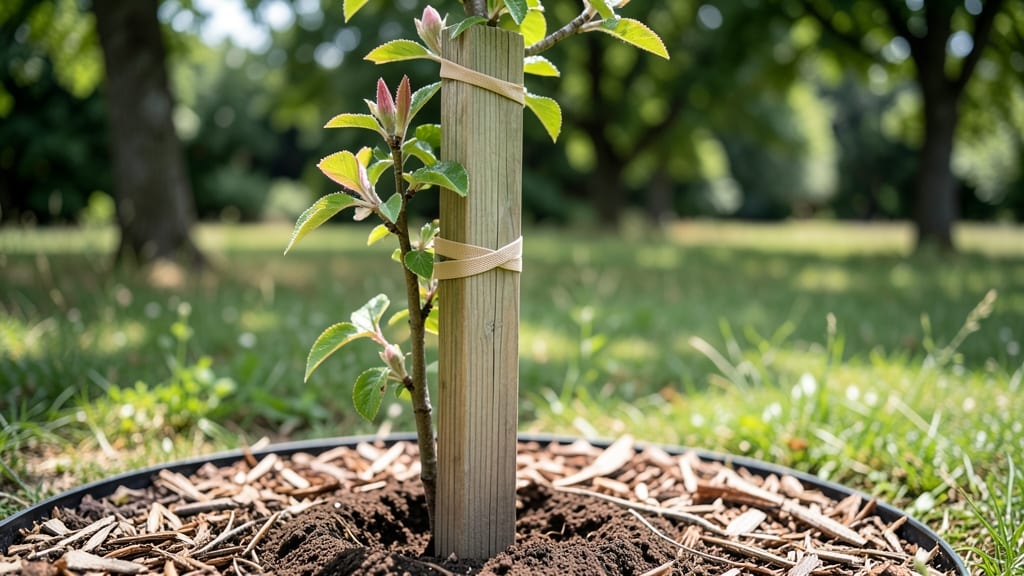
To stake a tree to grow straight, position a 45-degree angled stake 6-12 inches from the trunk, use soft tree ties for support, and loosen them periodically to prevent trunk damage. Plant in spring or fall when winds are calm, avoiding summer storms. Remove stakes after 1-2 years to allow natural trunk strengthening.
Staking isn't just about holding a tree upright—it's about guiding growth while letting the trunk develop strength naturally. 🌳 Young trees often lean because their roots haven't anchored deeply enough, and wind stress can cause permanent bending.
The key is balance: stakes should provide just enough support to prevent toppling, but not restrict movement completely. I've seen many gardeners make the mistake of leaving stakes on too long, which actually weakens the trunk by preventing natural swaying that builds resilience.
For best results, use flexible stakes (like bamboo or fiberglass) that won't damage the bark, and check ties every few months. The right technique turns temporary support into long-term stability without stunting growth.
💡 In This Article
- When and Why Trees Need Staking for Proper Growth
- Step-by-Step Tree Staking Guide for Beginners
When and why trees need staking for proper growth
Trees naturally sway in the wind, a movement that actually strengthens their trunks by developing thicker cell walls through a process called thigmomorphogenesis. When a tree leans, its trunk grows thicker on the windward side to resist bending forces, creating a natural support system.
Without this movement, the trunk remains weak and prone to snapping. Staking becomes necessary when young trees—especially those with shallow root systems—can't anchor themselves properly in high-wind conditions or loose soil.
The ideal time to stake is during spring or fall when winds are calmer and the tree is actively growing but not under extreme stress. Summer storms can exert sudden pressure, while winter's frozen ground limits root expansion.
A good rule of thumb is to stake trees planted in exposed areas (like lawns or open fields) where wind speeds exceed 10 mph.
You'll know a tree needs support if it leans more than 15 degrees from vertical or if the trunk shows signs of bending rather than straightening on its own.
Staking affects trunk development in two critical ways: it prevents permanent bending and allows controlled growth. When stakes are too tight, they restrict natural movement, leading to girdling (where the ties cut into the bark as the trunk thickens).
Loose ties, on the other hand, let the tree sway slightly, encouraging stronger wood formation. Studies show trees staked for 1-2 years develop 20-30% thicker trunks compared to unstaked counterparts, but only if the stakes are removed before the tree reaches 50% of its mature height.
Soil type plays a surprising role too. Trees in sandy or rocky soil need staking longer because their roots struggle to grip. In contrast, clay soils provide natural stability, reducing the need for support.
The key is to mimic the tree's natural growth patterns—just enough guidance to prevent damage, but not so much that it stunts development. Think of staking as training wheels: essential for balance, but temporary to build confidence.
Here's what happens if you stake incorrectly: Over-tightening can cause trunk constriction, while leaving stakes on too long (beyond 2-3 years) creates a "crutch effect," where the tree becomes dependent on external support.
The goal is to create a self-sufficient tree—one that can handle wind without permanent lean. This balance is why professional arborists recommend checking ties every 3-4 months and adjusting as the trunk grows.
For visual clues, watch how the tree responds to wind. If it bends but springs back, it's likely strong enough to stand alone. If it stays bent or the trunk shows S-shaped curves, it's time to intervene.
The right staking technique turns temporary support into a tool for long-term resilience, not just a quick fix.