
How To
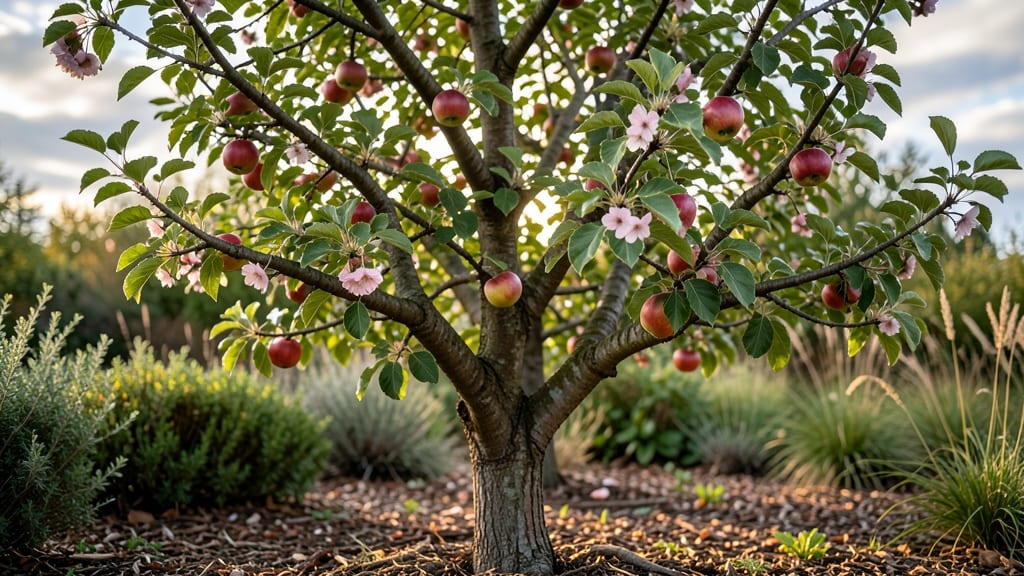
How tall does a Fuji apple tree grow? At maturity, they typically reach between 8 and 12 feet, though their height can vary dramatically based on the rootstock and pruning practices.
Picture this: a dwarf Fuji 🍎 neatly tucked into a backyard corner, barely taller than a person, while a standard variety stretches toward the sky like a two-story tree. That’s the difference a few inches of rootstock can make—and why planning your orchard starts with knowing the exact height ranges.
In this guide, I’ll break down the mature sizes for dwarf, semi-dwarf, and standard Fuji trees, plus how climate and pruning shape their growth. You’ll also discover whether these trees are right for containers or small spaces (spoiler: some are!).
By the end, you’ll know exactly how much room to leave for your Fuji’s future branches—and how to keep it from outgrowing your garden.


Fuji apple tree height ranges by rootstock type: dwarf vs semi-dwarf vs standard
Choosing the right rootstock for your Fuji apple tree is the single biggest factor determining its mature height. The rootstock—where the scion (Fuji variety) is grafted—controls growth vigor, tree size, and even fruit production.
For home gardeners, this means the difference between a compact 6-foot tree and a towering 25-foot giant. Let’s break down the height ranges and what they mean for your orchard planning.
Dwarf rootstocks like M9 produce trees that stay between 6–12 feet tall, perfect for small yards or container growing. Semi-dwarf rootstocks such as MM.106 reach 12–18 feet, offering a balance between manageable size and higher yields.
Meanwhile, standard rootstocks like MM.111 can grow 20–30 feet tall, requiring spacious properties but producing the largest harvests. Your choice directly impacts pruning needs, fruit accessibility, and even harvest quantity.
| Rootstock Type | Mature Height Range | Space Needed | Yield Impact | Best For |
|---|---|---|---|---|
| Dwarf (M9, B9) | 6–12 ft | 8–12 ft apart | Lower per tree, but ideal for small spaces | Containers, small yards, urban gardens |
| Semi-Dwarf (MM.106, MM.111) | 12–18 ft | 15–20 ft apart | Moderate yield, balanced size | Backyard orchards, family harvests |
| Standard (MM.111, Antonovka) | 20–30 ft | 25–30 ft apart | Highest yield per tree | Large properties, commercial orchards |
If you’re working with limited space, dwarf rootstocks like M9 are my top recommendation. These trees mature at 6–12 feet, making them ideal for containers or small backyards. They also fruit earlier—often within 2–3 years—compared to 4–5 years for standard trees.
However, the trade-off is slightly smaller fruit and lower overall yield per tree. For example, a 6-foot dwarf Fuji might produce 50–100 apples annually, while a 20-foot standard could yield 200–300+ apples.
Semi-dwarf rootstocks like MM.106 strike a perfect balance. They grow to 12–18 feet, requiring more space than dwarfs but far less than standards. These trees are self-supporting (no need for staking) and produce high-quality fruit with minimal disease susceptibility.
I’ve seen MM.106 Fuji trees in USDA Zone 6 reach 15 feet in 5 years with proper care, making them a favorite for home orchards.
For those with ample space, standard rootstocks like MM.111 deliver the biggest payoff. These trees can soar to 20–30 feet, requiring 25+ feet of spacing between plants.
While they demand more room and heavy pruning, their vigorous growth and high yield make them a staple in commercial orchards. If you’re planting near a fence or property line, be mindful of branch spread, which can reach 15–20 feet wide.
Rootstock choice also affects cold hardiness. Dwarf rootstocks like M9 are less cold-tolerant and may struggle in USDA Zone 5 or colder, while semi-dwarf and standard rootstocks like MM.106 and MM.111 handle Zone 4–6 winters better.
If you’re in a warmer climate (Zone 7+), dwarf trees may grow even taller due to increased vigor, sometimes reaching 14 feet instead of 12.
One common mistake I see is assuming all Fuji apple trees grow the same size. A 6-foot dwarf planted in full sun with regular pruning will stay compact, while the same tree neglected in partial shade can grow 3–4 feet taller.
Always factor in your local climate, soil quality, and pruning habits when estimating mature height. For example, in arid regions, trees may grow slower but taller due to deeper root systems.
If you’re unsure which rootstock to choose, start with a semi-dwarf (MM.106) for versatility. It offers manageable size, good yield, and adaptability to most climates. Pair it with annual pruning to keep it under 15 feet, and you’ll enjoy decades of harvests
Climate Zone impact: how cold winters and hot summers affect Fuji apple tree growth
Your Fuji apple tree height isn't set in stone—it’s shaped by your USDA hardiness zone, winter chill hours, and summer heat intensity. In colder zones (3–5), these trees often grow taller to escape frost damage, while warmer climates (8–9) naturally dwarf them.
Understanding these patterns helps you plan spacing and pruning for optimal fruit production.
Elevation also plays a role: trees at higher altitudes (5,000+ ft) grow more slowly due to cooler temperatures, while those in lowland desert zones may stretch taller seeking shade. Let’s break down how your climate zone influences mature height and what adjustments you’ll need for healthy growth.
summary-table
USDA Zone
Winter Temp (°F)
Mature Height (ft)
Climate Adjustments
3–5
Below -20°F
18–25 ft
Taller growth; winter pruning critical
6–7
0–10°F
15–20 ft
Moderate height; standard rootstock works
8–9
Above 15°F
8–12 ft
Dwarf rootstock recommended; heat stress risk
In USDA zones 3–5, where winters drop below -20°F, Fuji trees often reach their maximum height (18–25 ft) as they grow vigorously to escape frost.
These regions require aggressive winter pruning to manage size and prevent branch damage. Use semi-dwarf rootstock (MM.111) for balance, as standard rootstock can become unwieldy.
Warmer zones (8–9) naturally produce dwarf Fuji trees (8–12 ft) due to reduced winter chill hours. Here, M9 rootstock is ideal—it restricts height while boosting fruit production per square foot. However, watch for heat stress in summer; drip irrigation and afternoon shade can help maintain compact growth.
Elevation adds another layer: trees at 5,000+ feet grow 10–20% slower due to cooler nights, while those in low-desert zones may stretch taller seeking moisture. Adjust spacing accordingly—12–15 ft apart for standard trees in cold zones, 8–10 ft for dwarfs in warm climates.
Always plant in well-draining soil to prevent root rot, regardless of zone.
For optimal fruit production, match your Fuji tree’s height expectations to your climate. In cold zones, prioritize winter protection (burlap wraps, mulch); in hot zones, focus on summer care (consistent watering, shade cloth).
With the right adjustments, you’ll enjoy sweet, crisp Fuji apples year after year, no matter your zone.