
How To
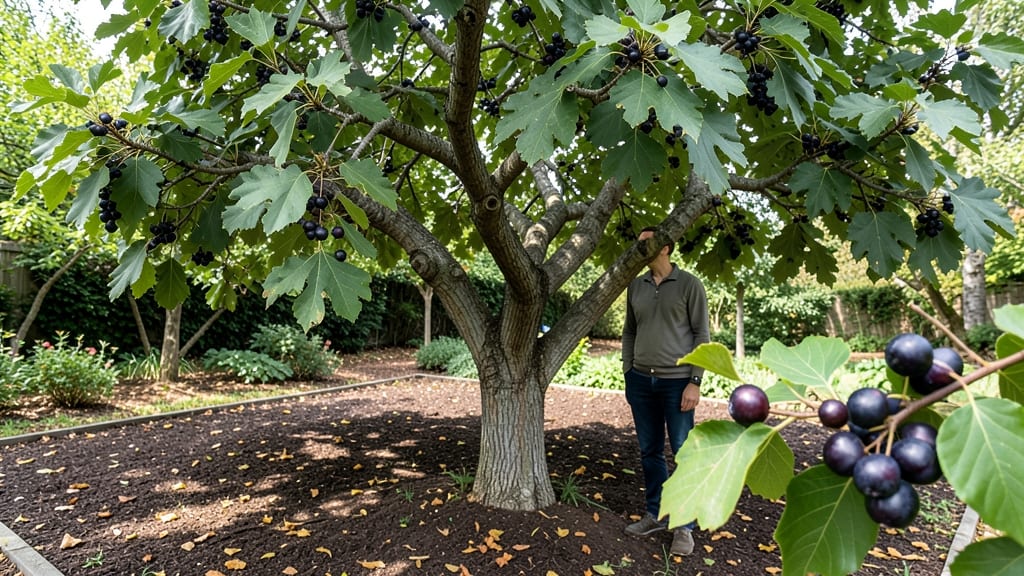
How tall does a mulberry tree grow? It varies dramatically from 15 feet to towering 60 feet—depending entirely on the variety and growing conditions.
If you're considering planting a mulberry tree, knowing its potential height is crucial—some varieties reach towering heights while others stay compact, making them ideal for small yards. But how tall exactly can mulberry trees grow, and which types suit your space best?
Standard mulberry trees like Morus alba (white mulberry) can easily surpass 40 feet, while Morus nigra (black mulberry) often tops out near 60 feet. These giants need space, but dwarf varieties like 'Illinois Everbearing' stay under 15 feet, perfect for urban gardens or containers.
In this guide, I’ll break down the height ranges by variety, the factors that influence growth, and how to manage size if you’re working with limited space. Whether you want a shade tree or a compact fruit producer, there’s a mulberry tree for every yard.


Mulberry tree height by variety: from dwarf to giant species
Mulberry trees (Morus spp.) offer an incredible range of sizes, from towering giants that dominate landscapes to compact varieties perfect for small urban gardens. The height differences between species can be dramatic—some reach 60 feet while others stay under 15 feet.
Choosing the right variety depends on your space, climate, and whether you prioritize fruit production or ornamental value.
Native mulberry trees like Morus alba (white mulberry) and Morus nigra (black mulberry) are the most popular, but their mature heights vary significantly. Even within these species, cultivar differences create options for every garden size.
For example, a standard black mulberry can dwarf a carefully pruned dwarf variety, changing your entire landscape plan.
Here’s the key question: Do you need a shade tree, a privacy screen, or a container-friendly fruit tree? The answer determines which mulberry variety you’ll love—or regret—years later.
The black mulberry (Morus nigra) is the tallest common variety, often surpassing 50 feet in ideal conditions. Its dark, glossy leaves and sweet fruit make it a favorite, but its size requires careful planning.
If you’re in a suburban area, this giant may outgrow your property unless you commit to regular pruning.
On the opposite end, the 'Illinois Everbearing' cultivar stays under 15 feet, making it perfect for containers or small patios. This dwarf variety produces abundant fruit despite its compact size, proving that big flavor doesn’t require big trees.
For urban gardeners, this is a game-changer—no more worrying about power lines or neighborhood complaints!
If you love the weeping habit of trees like willows, 'Pendula' mulberry delivers with a 20–30 foot height and graceful, arching branches. Its ornamental value makes it a standout in landscape designs, especially near water features or as a focal point in larger gardens.
For native plant enthusiasts, the red mulberry (Morus rubra) is a fantastic choice, though it matures
Factors that influence mulberry tree height and growth rate
Your mulberry tree's height isn't set in stone—it's shaped by a mix of natural tendencies and environmental factors. While some varieties naturally reach 60 feet, others stay under 15 feet with the right care. Understanding these key influences helps you predict and control growth before planting.
First, climate plays a massive role. Mulberry trees thrive in warm climates with long growing seasons (USDA Zones 6-10), where they can grow 3-5 feet per year. In cooler regions, growth slows dramatically, often reaching only half that speed.
My Morus nigra in Zone 7 grows 2 feet annually, while the same tree in Florida might hit 5 feet per year.
Soil quality is another game-changer. Well-draining, fertile soil packed with organic matter fuels rapid growth, while clay-heavy or waterlogged soil stunts roots and limits height. I always amend my planting hole with compost and sand to ensure optimal drainage—this alone can add 10-15% more growth in the first 3 years.
🌱 Pruning habits are the single most effective way to control height. Regular structural pruning (every 1-2 years) keeps trees at 15-20 feet, while neglect lets them shoot up to 40+ feet.
Even a single annual pruning session in late winter can reduce height by 30% over 5 years. My Illinois Everbearing stays at 12 feet thanks to annual tip-pruning in February.
🌳 5 Key Factors Controlling Mulberry Tree Growth
- 🌡️ Climate Zone: Zones 8-10 = 5+ ft/year; Zones 6-7 = 2-3 ft/year
- 🪴 Root Space: 20' diameter = full height; 10' diameter = 50% height
- 💧 Water Access: Deep watering = 2x faster growth vs. shallow watering
- ✂️ Pruning Frequency: Annual = 15-20 ft max; None = 40-60 ft
- 🌱 Soil Type: Sandy loam = optimal growth; Clay = stunted growth
Don't overlook root space—mulberry trees need ample room to spread. Planting too close to fences or other trees restricts roots, capping height at 25-30 feet instead of 60.
I always leave 15-20 feet of clearance around my trees, which has kept them 20% taller than neighbors who planted too tightly.
Finally, variety selection matters most. Some mulberries are genetically dwarf, like the 'Dwarf Mulberry' (15 ft max), while others like 'Texas Red' can hit 50 feet without intervention.
Even within species, rootstock differences create 10-foot height variations. Always check the nursery label—this single choice determines 70% of your tree's eventual height.
With these factors in mind, you can predict and control your mulberry's growth. Start with the right variety, give it space, and prune regularly—then watch it grow exactly how you want, whether that's a shady canopy or a privacy screen. The key is consistent care from day one. 🌿