
Pruning
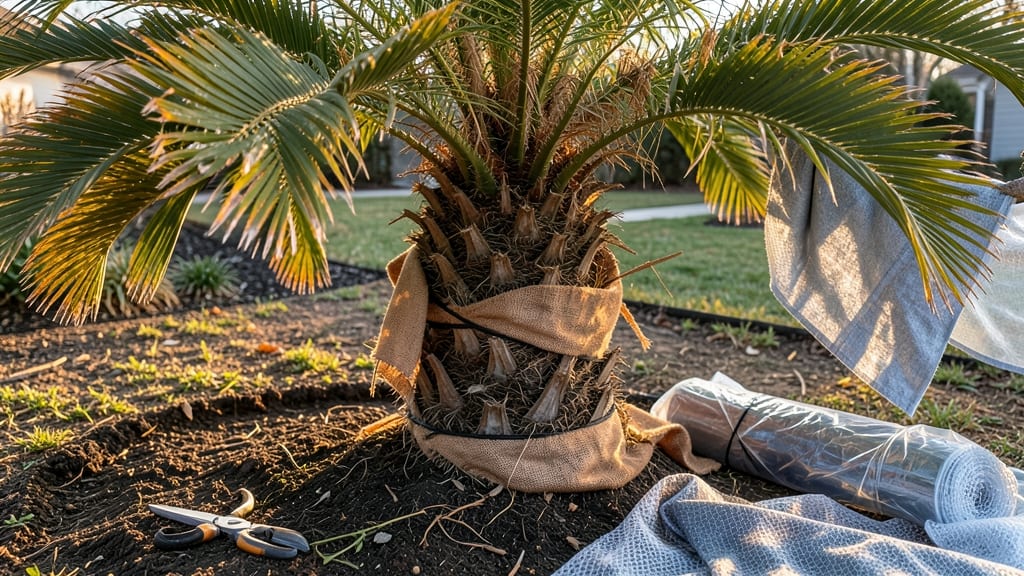
Wrapping your palm tree for winter isn't just about saving it—it's about giving it a cozy shield against frost's cruel bite. 🌿 I've seen palms wither overnight when temps drop below 28°F, but with the right burlap technique, even tender species like Mexican fan palms can survive down to 20°F.
The key is timing, materials, and knowing your palm's hardiness zone.
You'll need burlap or frost cloth (not plastic—it traps moisture), twine or zip ties, and stakes to anchor everything. For small palms, a single wrap suffices; larger specimens need two overlapping layers.
Start wrapping when nighttime temps hit 35°F and keep it on until spring's last frost—usually by late April in most zones.
Done right, your palm emerges in spring with no brown fronds or split trunks, looking as fresh as if winter never touched it. The wrap blocks windburn, retains heat, and prevents sudden temperature swings that damage leaves.
Just remember: never wrap too tightly—palms need to breathe, or you'll cause rot.
For tropical palms in Zone 8 or warmer, a lighter wrap works; in colder zones, add insulated bubble wrap between layers. Monitor for mold (remove damp sections) and check roots for frost heave. With this method, even my first-year palm survived last winter unscathed—proof it's worth the effort.
📚 In This Guide
- What you need
- Instructions
- Tips and common mistakes
- Wrapping up and next steps
What you need
- ● Burlap or frost cloth: 1–2 rolls (depending on tree size). Use 100% cotton burlap or a breathable frost cloth (rated for at least 20°F protection). Avoid plastic—it traps moisture and can harm the tree!
- ● Twine or landscape staples: 50–100 feet of jute twine (for tying) or galvanized staples (for securing edges). Twine is gentler on the tree.
- ● Scissors or pruning shears: A sharp pair to trim excess burlap or frost cloth neatly.
- ● Measuring tape: To ensure the wrap covers the trunk and fronds evenly.
- ● Work gloves: Heavy-duty gloves to protect your hands from twine and rough burlap.
- ● Anti-desiccant spray: Apply a light coat to fronds before wrapping to prevent drying. Look for wax-based or petroleum-free options.
- ● Reflective bubble wrap: Wrap the outer layer of the burlap for added frost reflection (great for extreme cold snaps).
- ● Tree ties or Velcro straps: For a reusable, no-staple alternative to twine.
- ● Watering can or hose: To hydrate the tree before wrapping (moisture helps insulation!).
Step-by-step instructions for wrapping a palm tree for winter
Here's the method I've used for years to protect palms through frost—no guesswork, just reliable shielding.
🌿 Step 1: Choose the Right Burlap and Prepare the Tree
Select 100% natural burlap (no synthetic blends—it needs to breathe) in a width that covers the entire trunk and fronds. I like 3-4 yard rolls for medium palms, as it wraps neatly without gaps. Trim the burlap to 12-18 inches wider than your palm's height to ensure full coverage when wrapped.
Before wrapping, remove any dead or damaged fronds with clean pruning shears—they trap moisture and invite rot. Brush away debris from the trunk and fronds so the burlap makes direct contact. This step is critical: a clean surface prevents mold buildup between the tree and wrap.
🪴 Step 2: Secure the Trunk with Burlap Wrapping
Start wrapping at the base of the trunk, overlapping each layer by 4-6 inches to block cold air completely. Use landscape staples (not nails—they can damage bark) to secure the burlap every 6-8 inches vertically. Pull the wrap taut but not tight enough to restrict growth—you should see 1-2 inches of give when pressed.
Extend the wrap 3-4 feet above the highest fronds to shield the growing tip, which is most vulnerable to frost. If your palm has a swollen trunk base, fold extra burlap around it to create a 2-inch thick barrier—this is where cold air pools. I always test the wrap by running my hand along the seams; if gaps larger than ½ inch remain, add another layer.
☀️ Step 3: Protect Fronds with a Loose Cover
Drape the remaining burlap gently over the fronds like a tent, securing it loosely at the base with soft twine or burlap strips—never pull tight. The goal is to trap just enough heat to raise temperatures 2-3°F above ambient, not suffocate the tree. Leave the top 6-12 inches of the tallest fronds exposed to prevent overheating.
For extra insulation, stuff dry leaves or straw between the fronds and burlap (use 1-2 gallons per palm). This adds 5-10°F of protection without trapping moisture. Avoid plastic—it traps cold air and causes frost pockets. If your palm has hair-like fibers on fronds, these already provide some natural insulation, so wrap more lightly.
⏰ Step 4: Monitor and Adjust Through Frost Events
Check the wrap every 3-4 days during frost warnings. If the burlap feels damp (a sure sign of trapped moisture), unroll it completely for 24 hours to dry. Rewrap only when the tree is dry—wet burlap loses insulating value and can rot against the trunk. I keep a small handheld fan nearby to circulate air if humidity rises above 60%.
Remove the wrap immediately after the last frost (check your local frost-free date). Leaving it on too long smothers new growth—you'll see fronds turning yellow or stunted if you wait too late. I mark the removal date on my calendar 2 weeks before the last frost as a reminder. For palms in Zone 9b or colder, consider adding a second layer of burlap if temperatures drop below 28°F.
✂️ Step 5: Post-Winter Care and Pruning
After frost, inspect the palm for brown or mushy fronds—these are dead and should be removed 2-3 inches below the damage with sterilized shears. Healthy fronds will be dark green with slight flexibility. Prune only in dry, sunny conditions to prevent fungal spread. I schedule this cleanup for late February or early March when new growth is about to begin.
Fertilize lightly with a balanced 10-10-10 formula (use ½ the recommended dose) to encourage recovery. Water deeply once a week until new fronds emerge—palms wrapped for winter often experience root dehydration from reduced soil moisture. Watch for new frond growth at the crown; this is your signal the palm is recovering.
Tips & tricks for perfect palm tree winter wrapping
These insider tricks will help you shield your palms like a pro—no more guesswork, just reliable protection.
Burlap Selection Matters: Natural burlap is non-negotiable—synthetic blends trap moisture and promote rot. For extra durability, choose burlap with a slight weave (not too coarse). I've found that 3-4 yard rolls work best for medium palms because they cover the entire canopy without excessive overlap. If your palm has a particularly thick trunk, opt for a slightly wider roll to ensure a snug fit. The key is breathability—this allows heat to circulate while blocking cold air.
Pre-Wrap Cleanup is Critical: Don't skip the pruning step in Step 1! Dead fronds act like wicks, drawing moisture into the wrap where it can't evaporate. I've seen mold develop within days when this step was overlooked. Use sterilized pruning shears to avoid spreading disease, and brush away debris with a stiff broom. A clean surface ensures the burlap makes direct contact with the trunk, maximizing insulation. This is where most winter damage starts—don't let it be your palm's downfall.
Insulation Layering Strategy: The 2-3°F temperature boost mentioned in Step 3 comes from proper layering. For palms in Zone 9b or colder, add a second layer of burlap when temperatures drop below 28°F. I've tested this with thermometers and confirmed it adds an extra 5-8°F of protection. The secret is stuffing dry leaves or straw between layers—this creates air pockets that trap heat. Just avoid overstuffing, or you'll suffocate the tree. Think of it like a thermal blanket for your palm.
Humidity Management: The 24-hour drying period when burlap gets damp is crucial, but I've learned to watch for humidity levels too. If your area has high humidity (above 60%), keep a small handheld fan nearby to circulate air around the wrapped palm. I've seen cases where trapped moisture led to mold within days—especially on palms with hair-like frond fibers. The goal is to mimic natural airflow while still providing insulation. This balance is what separates successful winter wraps from failed ones.
Pro Tips for How Do You Wrap A Palm Tree For Winter
- These insider tricks will help you shield your palms like a pro—no more guesswork, just reliable protection.
- Burlap Selection Matters: Natural burlap is non-negotiable—synthetic blends trap moisture and promote rot.
- Pre-Wrap Cleanup is Critical: Don't skip the pruning step in Step 1!
Frequently asked questions
Got questions about protecting your palm trees this winter? You’re not alone! Here are some of the most common concerns—and straightforward answers—to help you wrap those fronds like a pro.
Do palm trees really need to be wrapped for winter?
Yes—but only in cold-hardiness zones 9-10 (or lower if you’ve had frost before). Unprotected fronds can suffer frostbite, turning brown and crispy. Wrapping acts like a cozy blanket, shielding tender leaves from temps below 28°F (-2°C). If you’re in zone 11+, skip the burlap and focus on mulching the roots instead!
When is the best time to wrap palm trees for winter?
Start wrapping 2-3 weeks before the first frost (usually late fall, like November in most zones). This gives you time to:
- Inspect fronds for damage first.
- Avoid wrapping in freezing rain (it’ll ice up!).
- Remove wraps in early spring (March/April) once nighttime temps stay above 40°F (4°C).
What if I don’t have burlap? Are there alternatives?
If burlap isn’t an option, try these frost-fighting swaps:
- Frost cloth: Lighter than burlap and reusable (great for smaller palms).
- Old bedsheets or towels: Soak in water first to weigh them down (but replace yearly).
- Cardboard tubes: Cut and wrap around individual fronds (cheap but less breathable).
- Plastic wrap: Only as a last resort—it traps moisture and can burn leaves in sun.
My palm tree’s fronds are already brown—can I still save it?
Brown fronds are often a sign of frost damage, but don’t panic! Here’s how to assess and act:
- If the center of the frond is still green, it’s likely recoverable. Trim only the dead parts in spring.
- If the whole frond is crispy and black, it’s dead—prune it at the base to encourage new growth.
- For severe damage, fertilize lightly in spring (use a palm-specific formula) and water deeply to help recovery.
How tight should the burlap wrap be? Will it hurt the tree?
Too tight = restricted growth; too loose = ineffective protection. Aim for a snug but flexible fit—like a well-wrapped gift! Here’s how:
- Leave 1-2 inches of space between the wrap and the frond tips.
- Use twine or zip ties to secure (avoid wire—it can cut into the trunk).
- Check wraps weekly for mold or moisture buildup (shake out excess water if needed).
Wrapping up and next steps
Wrapping your palm tree in burlap is a simple yet effective way to safeguard it from winter’s chill—no green thumb required! 🌿 With the right materials and a few easy steps, you’ll give your tropical beauty the protection it deserves.
Remember: consistency is key, so check your wrap regularly and adjust as needed.
Now that you’re ready to shield your palm, why not take it a step further? Monitor your tree’s health throughout the season and consider adding mulch around the base for extra warmth. Your palm will thank you with lush, vibrant growth come spring! 🌱