
Trees
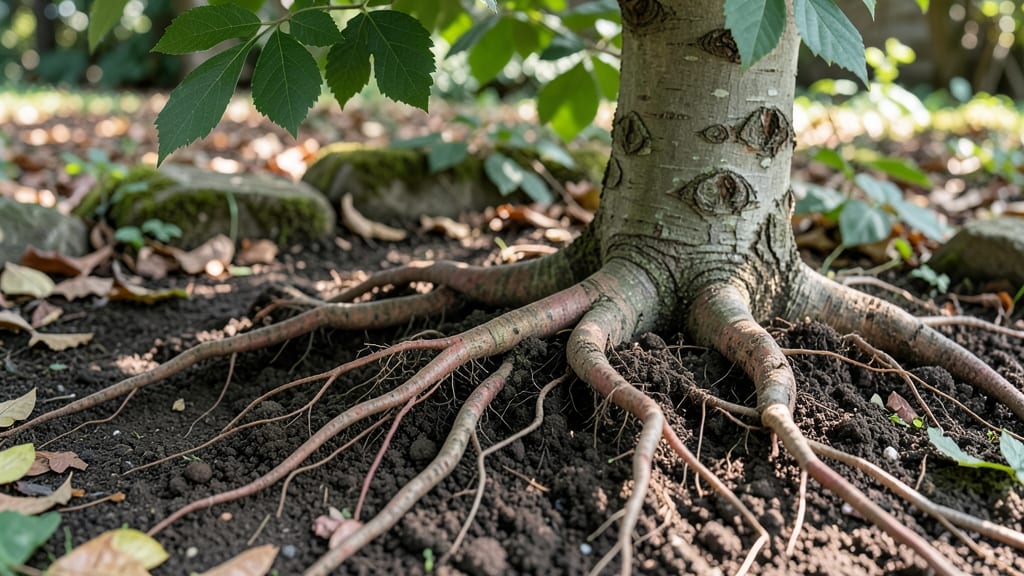
Understanding a hackberry tree's root system saves you from pruning mistakes and soil struggles. 🌳 These roots spread 2-3 times wider than the tree’s canopy while diving 3-5 feet deep, creating a sturdy anchor that resists storms—but also competes fiercely for nutrients in tight spaces.
The wide spread means planting hackberries at least 30 feet apart to avoid root competition. Shallow soil or rocky layers force roots to surface, making trees more vulnerable to drought. Amending planting holes with compost-rich soil encourages deeper growth and better stability.
Once established, hackberries rarely need pruning, but if you must trim, avoid cutting branches that feed the root system. The tree’s natural strength comes from its roots—don’t disrupt that balance unless absolutely necessary.
📚 In This Guide
- What you need
- Instructions
- Tips and common mistakes
- Wrapping up and next steps
What you need
- ● Measuring tape – 25-foot tape for accurate root spread assessments (preferably with metric/imperial markings).
- ● Shovel or spade – Heavy-duty, 12-inch-wide digging tool for shallow root inspections.
- ● Garden fork or root pruner – For carefully examining deeper root structures without causing damage.
- ● Notebook & pen – To document root depth, spread, and soil conditions.
- ● Water source (hose or bucket) – For hydrating soil during root checks or planting adjustments.
- ● Gloves (heavy-duty work gloves) – To protect hands from thorns, soil, or sharp roots.
- ○ Soil pH test kit – Optional but helpful for assessing root-friendly soil conditions (ideal pH: 6.0–7.5).
- ● Root viewer or clear plastic sheeting – For non-invasive root observation in container-grown hackberries.
- ● Auger or post-hole digger – For deeper root system analysis (if assessing mature trees).
- ● Camera or smartphone – To photograph root structures for future reference or expert consultation.
- ● Mulch (wood chips or straw) – To protect roots during soil amendments or landscaping adjustments.
- ● Tree growth regulator (if pruning roots) – Consult a local nursery for safe, root-friendly products.
Understanding and supporting a hackberry tree’s root system
Let’s break down how to nurture a hackberry tree’s natural strength—its deep, wide-reaching roots.
🌱 Step 1: Assess the Natural Root Spread and Depth
The hackberry tree develops a taproot system that extends 6-10 feet deep while spreading 20-30 feet wide at maturity. This anchors the tree against storms and drought. When planting, avoid disturbing the root ball more than necessary—hackberries resent root damage. I always dig a hole twice as wide as the root ball but only as deep as the root ball itself to prevent burying the trunk.
Look for the primary taproot when transplanting—this is the thick, central root that drives stability. If you see lateral roots circling the root ball, gently loosen them with your fingers. These girdling roots can strangle the tree over time if left intact. Water the hole thoroughly before planting to encourage root expansion into the surrounding soil.
💧 Step 2: Prepare the Soil for Optimal Root Penetration
Hackberries thrive in well-draining, slightly acidic soil (pH 6.0-7.5). Amend heavy clay or compacted soil with 2-3 inches of organic matter (like compost or leaf mold) mixed into the top 12 inches of the planting hole. Avoid fresh mulch directly against the trunk—keep it 3-4 inches away to prevent rot.
For urban or small-space planting, consider root-pruning the outer edges of the root ball before transplanting. This encourages new, fibrous roots to form outward rather than staying concentrated in the root ball. Water deeply once a week for the first 6-8 weeks to help roots establish beyond the planting zone.
☀️ Step 3: Provide Space for Root Expansion
Hackberries need plenty of room—their roots spread aggressively. Plant at least 30 feet from structures, sidewalks, or other trees to avoid root conflicts. If space is limited, opt for a container-grown specimen and prune roots annually in early spring to control spread.
Watch for root suckers—small shoots sprouting from exposed roots. These are common in hackberries and can be removed by cutting at the base with clean pruners. If left unchecked, they’ll compete with the main tree for nutrients. Mulch around the drip line (the edge of the tree’s canopy) to protect roots from temperature fluctuations and erosion.
✂️ Step 4: Monitor and Maintain Root Health Long-Term
Every 3-5 years, inspect the root zone for signs of stress—yellowing leaves, stunted growth, or mushrooms (a sign of root rot). Hackberries are drought-tolerant once established, but prolonged wilting signals deep-rooted issues. If soil is compacted, aerate the root zone with a hand auger to improve oxygen flow.
In urban settings, root barriers (buried vertically around the planting zone) can prevent roots from invading foundations or pavement. Install them 12-18 inches deep and extend 2 feet beyond the tree’s current canopy edge. Water deeply twice monthly during dry spells to encourage roots to grow deeper rather than surface-wide.
Tips & tricks for nurturing hackberry tree roots
Here's what I've learned after years of working with these resilient trees—details that make all the difference in establishing strong, healthy roots.
Root Ball Care: When transplanting, focus on preserving that primary taproot—it's the tree's lifeline. I've seen too many trees struggle because someone dug too deep or damaged this central root. After loosening any circling roots, soak the root ball thoroughly before planting. This jumpstarts root expansion into the surrounding soil, just like the instructions recommend. Think of it as giving your tree a hydration boost to start its new life.
Soil Preparation Insight: That 2-3 inches of organic matter in the top 12 inches isn't just about nutrients—it's about creating the perfect air-soil interface. I've found hackberries particularly appreciate leaf mold because it mimics their natural forest floor habitat. For compacted soils, consider adding perlite to improve drainage while maintaining that slightly acidic pH range (6.0-7.5). This combination prevents waterlogging that could lead to root rot.
Urban Planting Strategy: In tight spaces, I've had success with container-grown hackberries combined with annual root pruning. The key is to prune those outer roots in early spring before new growth begins. This encourages fibrous root development outward rather than staying concentrated in the root ball. Just remember—container roots need repotting every 2-3 years to prevent becoming root-bound, which can stunt growth.
Long-Term Monitoring: Those 3-5 year inspections are crucial, but I've learned to look for subtle signs even earlier. Watch for leaf edges that start yellowing before the whole leaf—this often indicates root stress before it becomes visible. For aeration, I recommend using a manual hand auger rather than mechanical tools that can damage deeper roots. The goal is to create channels for oxygen without disturbing that deep taproot system.
Pro Tips for Hackberry Tree Root System
- Here's what I've learned after years of working with these resilient trees—details that make all the difference in establishing strong, healthy roots.
- Root Ball Care: When transplanting, focus on preserving that primary taproot—it's the tree's lifeline.
- Soil Preparation Insight: That 2-3 inches of organic matter in the top 12 inches isn't just about nutrients—it's about creating the perfect air-soil interface.
Frequently asked questions
Got questions about the hackberry tree root system? You’re not alone! Here are some of the most common queries—plus straightforward answers to help you navigate planting, maintenance, and troubleshooting like a pro.
How deep and wide do hackberry tree roots spread?
The hackberry tree root system is deep and expansive, typically extending 3–5 feet deep but spreading 2–3 times the tree’s canopy width horizontally. Surface roots can also develop, so plan for ample space (at least 30–50 feet from structures or driveways) to avoid future conflicts.
Can hackberry tree roots damage sidewalks or foundations?
Yes, their aggressive lateral roots can lift pavements or crack foundations if planted too close. To prevent issues, keep them at least 20–30 feet away from buildings and 15 feet from sidewalks. If you’re in a tight space, consider a root barrier or a smaller cultivar like ‘Dwarf Hackberry.’
When is the best time to plant a hackberry tree to avoid root stress?
Plant in early spring or fall (3–4 weeks before the first frost) for optimal root establishment. Avoid summer heat or winter freezes, which can stress young roots. Amend the soil with compost and water deeply 1–2 times per week for the first year to encourage strong growth.
How can I control hackberry tree roots if they’re invasive?
Prune surface roots with a sharp spade or root saw in early spring, sealing cuts with pruning sealant. For severe cases, root barriers (buried 2–3 feet deep) or selective herbicides (applied to cut stumps) can help. Always consult a local arborist for chemical solutions.
Are there alternatives to hackberry trees with less aggressive roots?
If you love hackberry’s berries and shade but want lower-maintenance roots, try these alternatives:
- American Hornbeam – Compact roots, great for small yards.
- Serviceberry – Moderate spread, ornamental value.
- Persimmon – Deep but less lateral root growth.
Wrapping up and next steps
Understanding the hackberry tree root system reveals why these trees thrive with such resilience—thanks to their deep, wide-spreading roots that anchor them firmly and support their growth for decades.
Whether you're planting one or managing its space, knowing how these roots behave helps you make informed decisions for landscaping or conservation. 🌳
Ready to put this knowledge to use? Start by assessing your soil and space—then plant with confidence, knowing your hackberry will stand strong for years to come!