
Pruning
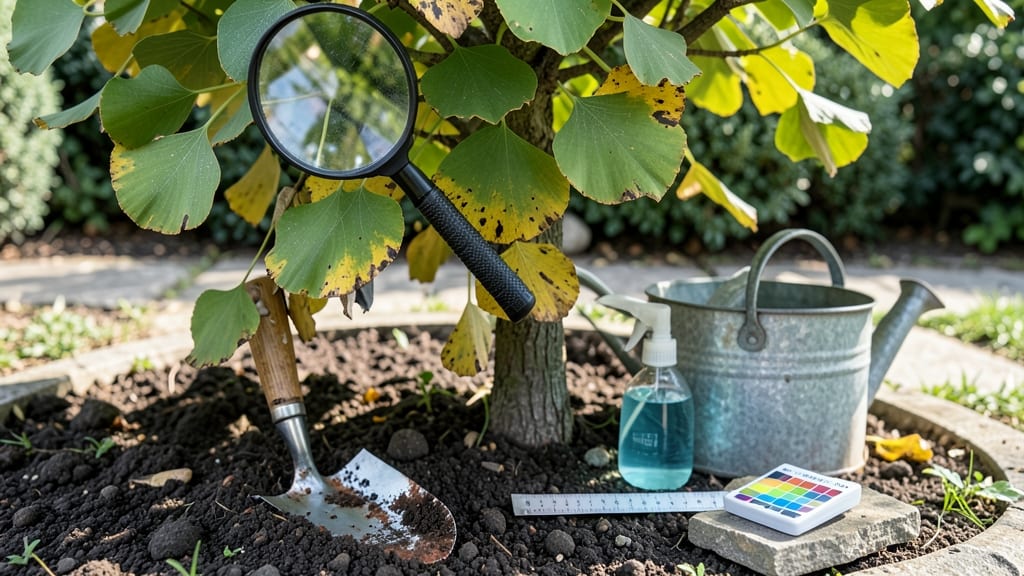
Your ginkgo tree’s leaf problems shouldn’t look like autumn arrived early. 🌿 Yellowing, spotting, or curling ginkgo leaves usually mean one of three things: a fungal infection, pest infestation, or nutrient imbalance—and fixing it starts with identifying the exact problem.
I’ve seen anthracnose turn ginkgo leaves into brown lace curtains, while spider mites create a fine webbing that looks like a spider’s bad hair day. The good news? Most issues respond to simple fixes once you know what’s wrong.
Fungal diseases like anthracnose or rust love damp leaves, so pruning for airflow and applying neem oil can turn things around. Pests like spider mites or scale thrive in dry conditions, so a strong spray of water or insecticidal soap often does the trick.
Nutrient deficiencies show up as pale or stunted leaves, and a balanced fertilizer can revive them faster than you’d think. By the end of this, your ginkgo will look like the majestic, disease-resistant tree it’s supposed to be—with fewer brown spots and more of those iconic fan-shaped leaves.
The key is acting fast, so let’s diagnose what’s really going on with your tree’s foliage. Here’s the thing—most ginkgo leaf problems start small. A few yellow spots here, a curl there, and suddenly your tree looks like it’s fighting for its life.
Anthracnose, for example, begins as tiny dark spots that expand into larger patches, while spider mites create a stippled, speckled look that’s easy to miss until it’s everywhere. The earlier you catch it, the easier the fix. Pruning isn’t just about shaping your tree—it’s about giving it room to breathe.
Thin out crowded branches to improve airflow, and remove any leaves showing signs of disease. For pests, a good blast of water can knock them off, and neem oil acts as both a fungicide and insecticide.
If you’re dealing with nutrient issues, a soil test will tell you exactly what’s missing—usually nitrogen, phosphorus, or potassium. Once you’ve identified the problem, the solution is usually straightforward. Fungal infections respond well to copper fungicides or baking soda sprays, while pests need regular monitoring and targeted treatments.
Nutrient deficiencies? A slow-release fertilizer in early spring keeps things balanced all season. The goal isn’t just to fix the leaves—it’s to give your ginkgo the best chance to thrive next year. Don’t let a few brown spots ruin your tree’s potential.
With the right approach, your ginkgo will bounce back stronger than ever—just like it’s done for thousands of years.
Root Causes Of Leaf Stress
Ginkgo trees (Ginkgo biloba) are resilient, but their fan-shaped leaves can still show distress due to a mix of environmental, biological, and cultural factors. Understanding why these issues arise is the first step to restoring your tree’s health.
Below, we break down the most common culprits—each with a clear scientific explanation and actionable insights.
Ginkgos thrive in full sun and well-draining soil, but push them beyond their comfort zone, and leaf problems follow. Here’s how:
🔥 Extreme Heat or Drought
Ginkgos are drought-tolerant, but prolonged heatwaves (especially above 90°F/32°C) or poor soil moisture trigger chlorosis (yellowing) and leaf scorch. Why?
- Water deficit: Roots struggle to uptake nutrients, leading to iron deficiency (even in iron-rich soil). Iron is crucial for chlorophyll production—without it, leaves turn pale yellow.
- Oxidative stress: Heat accelerates reactive oxygen species (ROS) in cells, damaging leaf membranes. This causes brown, crispy edges (a classic sign of heat scorch).
- Stomatal closure: Under drought, leaves seal pores to conserve water, but this also blocks gas exchange, leading to nutrient starvation.
Actionable fix: Deep water 1–2 times per week during dry spells (aim for 1–1.5 inches of water per week). Use mulch (3–4 inches of wood chips) to retain moisture and cool roots.
🌧️ Overwatering or Poor Drainage
Ginkgos hate "wet feet." Soggy soil leads to root asphyxiation and anaerobic conditions, which disrupt nutrient uptake and invite fungal pathogens.
- Root rot: Fungi like Phytophthora thrive in waterlogged soil, blocking xylem vessels that transport water/nutrients. Symptoms: Yellowing leaves, wilting, and blackened roots.
- Nutrient leaching: Excess water washes away magnesium, potassium, and calcium, causing interveinal chlorosis (yellowing between veins).
Actionable fix:
- Amend clay-heavy soil with compost or sand to improve drainage.
- Avoid watering until the top 2–3 inches of soil are dry.
- If planted in a low spot, consider a raised bed or berm.
❄️ Cold or Frost Damage
Young ginkgo leaves are frost-sensitive. Temperatures below 20°F (-7°C) can cause:
- Cell membrane rupture: Ice crystals form in leaf tissues, breaking cell walls and leading to brown, mushy spots.
- Delayed bud break: Severe cold can kill flower buds (ginkgos are dioecious, so male trees may lose ornamental value).
Actionable fix:
- Plant ginkgos in microclimates protected from late frosts (e.g., near south-facing walls).
- Use burlap wraps or frost cloth on young trees in USDA Zones 4–5.
- Mulch heavily in late fall to insulate roots.
Pests and diseases exploit stressed ginkgos. Here’s how they attack:
🐜 Ginkgo Psi (Scale Insects) & Spider Mites
These sap-sucking pests don’t kill the tree but cause:
- Honeydew buildup: Scale insects excrete sticky honeydew, which blocks sunlight and fosters sooty mold (black fungal growth on leaves).
- Nutrient theft: Mites pierce cells, causing stippling (white/yellow dots) and leaf curl due to jasmonic acid (a plant stress hormone).
Actionable fix:
- Blast off pests with a hose (100 PSI) in early spring before eggs hatch.
- Apply neem oil or insecticidal soap (repeat every 7–10 days).
- Introduce predatory mites (Phytoseiulus persimilis) for mite control.
🍄 Fungal Infections (Anthracnose, Rust)
Fungi like Gloeosporium (anthracnose) thrive in wet, humid conditions, causing:
- Leaf spots: Dark, target-like lesions with yellow halos (from fungal enzymes breaking down cell walls).
- Premature defoliation: Fungi clog stomata, preventing gas exchange and forcing leaves to drop early.
Actionable fix:
- Prune infected leaves immediately and sterilize tools with 70% rubbing alcohol.
- Apply copper fungicide (e.g., Copper Sulfate) at first signs of spots.
- Improve air circulation by thinning dense foliage.
Even with perfect weather, poor growing conditions can trigger leaf problems.
🏗️ Compacted or Nutrient-Poor Soil
Ginkgos need well-aerated, slightly acidic soil (pH 6.0–7.5). Compacted or depleted soil leads to:
- Manganese/iron deficiency: Poor aeration reduces root respiration, limiting nutrient uptake. Symptoms: Yellowing between veins (interveinal chlorosis).
- Slow growth: Roots can’t access phosphorus or nitrogen, causing stunted, pale leaves.
Actionable fix:
- Test soil pH and nutrients (use a home kit or lab test).
- Amend with compost + sulfur (to lower pH if >7.5) or lime (if <6.0).
- Top-dress with slow-release fertilizer (e.g., 10-10-10) in early spring.
✂️ Over-Pruning or Wrong Timing
Ginkgos bleed sap heavily when pruned in late winter/early spring. Poor cuts can:
- Create entry points for pathogens (e.g., Botryosphaeria canker).
Quick Fixes for Ginkgo Tree Leaf Issues
Revitalizing your ginkgo tree’s leaves starts with pinpointing the root cause—whether it’s fungal infections, nutrient deficiencies, pests, or environmental stress. Below, we break down practical, step-by-step solutions tailored to each problem, plus prevention tips to keep your tree thriving. No green thumb required—just follow along!
Fix it:
- 🔥 Prune Infected Foliage
- Use sterilized pruners (wipe with rubbing alcohol) to trim and remove all yellowed or spotted leaves. Dispose of them in the trash (not compost).
- Focus on lower branches first, where moisture lingers.
- 🍳 Apply Fungicide
- Spray with a copper-based fungicide (like Bordeaux mixture) or a neem oil solution (1 tbsp neem oil + 1 quart water + a drop of dish soap).
- Best time to treat: Early morning or late afternoon to avoid leaf burn from sunlight.
- 🌡️ Improve Airflow
- Thin out dense branches to reduce humidity near the foliage. Aim for 10–15% canopy reduction if the tree is overgrown.
💡 Prevention Tip:
- Water at the base (not overhead) to keep leaves dry.
- Mulch properly (2–3 inches of organic mulch) to prevent soil-borne fungi from splashing onto leaves.
Fix it:
- 📊 Soil Test First
- Grab a DIY soil test kit (or send a sample to your local extension office) to check for low nitrogen, iron, or magnesium.
- Common deficiencies in ginkgo trees:
- Yellow between veins? → Iron deficiency (chlorosis).
- Purple undersides? → Phosphorus or potassium lack.
- 👨🍳 Fertilize Smartly
- For iron deficiency: Sprinkle chelated iron granules around the root zone and water deeply.
- For general health: Use a balanced, slow-release fertilizer (10-10-10 or 8-3-9) in early spring before new growth starts.
- Avoid over-fertilizing—ginkgos are low-maintenance and can scorch roots if overfed.
- 🥗 Boost Organic Matter
- Mix compost or well-rotted manure into the top 6 inches of soil to improve nutrient availability.
💡 Prevention Tip:
- Test soil every 2–3 years to catch deficiencies early.
- Avoid heavy clay soils—amend with sand or peat moss if drainage is poor.
Fix it:
- 🔪 Identify the Culprit
- Ginkgo psyllids? → Tiny yellow insects on new shoots (they curl leaves).
- Japanese beetles? → Large green/golden beetles chewing leaves.
- Spider mites? → Fine webbing on undersides of leaves.
- 🌡️ Treat Accordingly
- For psyllids: Spray with horticultural oil (like Neem Oil) or insecticidal soap in early spring before eggs hatch.
- For beetles: Handpick them (drop into soapy water) or use milky spore powder for long-term control.
- For mites: Blast leaves with water (knocks them off) or apply neem oil + water mix.
- 🎯 Encourage Natural Predators
- Plant dill, fennel, or marigolds nearby to attract ladybugs and lacewings, which eat pests.
💡 Prevention Tip:
- Install fine mesh netting over young trees in late spring to block beetles.
- Avoid broad-spectrum pesticides—they kill beneficial insects too.
Fix it:
- 🌡️ Adjust Watering
- Too much water? → Let soil dry 2–3 inches deep before watering again.
- Too little water? → Deep-water once a week (1–1.5 inches per session) during dry spells.
- Pro tip: Use a moisture meter or the "squeeze test" (grab a handful of soil—if it crumbles, it’s dry).
- 🔥 Shield from Harsh Conditions
- Sunburn? → Provide afternoon shade (use shade cloth or plant near a wall).
- Wind damage? → Plant as a windbreak or stake young trees temporarily.
- ✨ Mulch Like a Pro
- Apply 3 inches of wood chips or straw mulch to retain moisture and regulate soil temp.
💡 Prevention Tip:
- Mature ginkgos (20+ years) are drought-tolerant—overwatering is more dangerous than underwatering!
- Avoid late-season fertilizing—it encourages tender new growth that can’t handle winter freezes.
Final Reminder: 🌟 Act fast—most leaf problems worsen if ignored. Once you’ve treated the issue, monitor your tree weekly for recurrence. With the right care, your ginkgo will bounce back with glossy, healthy leaves in no time!
Frequently asked questions
1Why are my ginkgo leaves turning yellow between the veins?
This classic sign usually means iron deficiency—even if your soil has plenty of iron. Ginkgos struggle to absorb it when soil is too alkaline (pH above 7.5). Test your soil and amend with chelated iron granules if needed. Water deeply after application to help roots absorb it.
2What causes those brown, crinkly spots on my ginkgo leaves?
Those are likely signs of anthracnose fungus, which thrives in wet conditions. Remove infected leaves immediately and apply a copper fungicide (like Bordeaux mixture) every 10-14 days during wet seasons. Prune for better airflow to prevent recurrence.
3Can I save my ginkgo if half the leaves are dropping early?
Yes! Early leaf drop often means nutrient stress or pest damage. First, check for scale insects or spider mites on leaf undersides. Treat with neem oil if pests are present. For nutrients, apply a balanced fertilizer (10-10-10) in spring and improve soil drainage if needed. Most trees recover fully within 2-3 weeks of proper care.
4Are ginkgo leaves supposed to curl like that?
No—healthy ginkgo leaves stay flat and fan-shaped. Curling usually means pest infestation (like ginkgo psyllids) or drought stress. Check leaf undersides for tiny insects or webbing. A strong hose spray (100 PSI) can knock off pests, followed by insecticidal soap. For drought, deep water once weekly during dry spells.
5How do I know if my ginkgo's leaf problems are from overwatering vs. underwatering?
Check the soil: If it's soggy (waterlogged), you're overwatering—this causes yellowing and wilting. If it's bone-dry below 2 inches deep, you're underwatering (leaves turn crispy/brown at edges). Ginkgos prefer well-draining soil—amend clay soil with compost or sand if needed. Water only when top 2-3 inches are dry.
- 🔥 Prune Infected Foliage