
Pruning
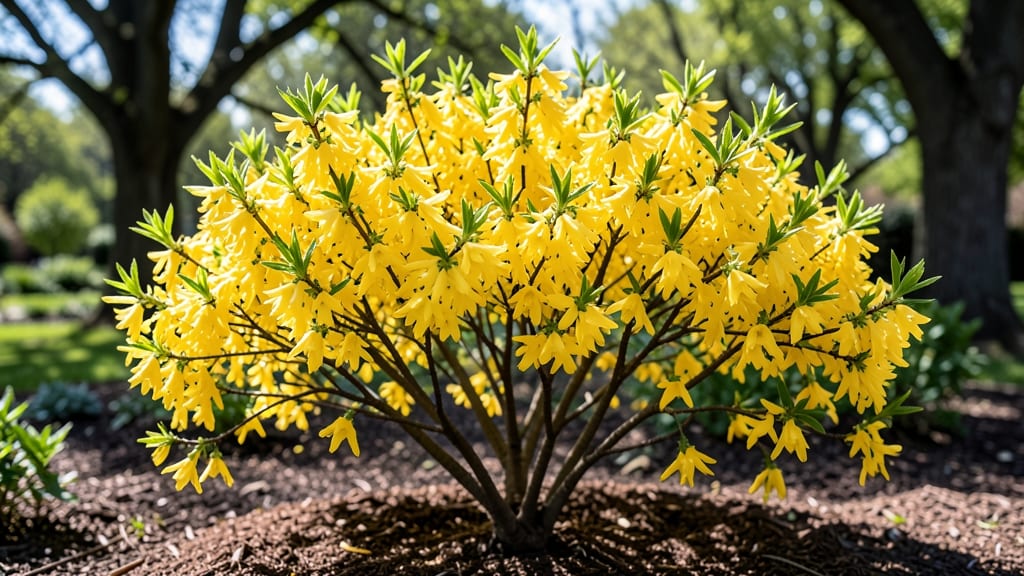
The forsythia tree form can transform your garden from ordinary to showstopping. 🌸 The way you prune determines whether it sprawls like a shrub, stands tall as a small tree, or even becomes an espaliered masterpiece against a wall.
I’ve shaped mine into all three—and the key is timing, cuts, and knowing when to stop. The secret isn’t aggressive pruning—it’s strategic. Prune right after flowering to encourage next year’s blooms, and shape gradually to avoid stressing the plant.
A multi-stemmed shrub stays bushy and full, while a single-trunk tree needs careful thinning to maintain an open center. For espaliered forms, patience is everything: it takes 2-3 years to train branches into clean horizontal lines.
By summer, you’ll see the difference: lush foliage, defined structure, and those iconic yellow blooms appearing exactly where you want them. The right form also makes pairing easier—tall forsythia trees frame entryways, while low shrubs highlight garden beds.
Works for any yard size and style, from cottage gardens to modern landscapes. Let’s get shaping!
📚 In This Guide
- What you need
- Instructions
- Tips and common mistakes
- Wrapping up and next steps
What you need
- ● Pruning shears: Bypass pruners (for small branches, 5–7 inches long) – 1 pair (ensure sharp blades for clean cuts!)
- ● Loppers: For medium branches (8–12 inches) – 1 pair (look for ratcheting or bypass styles for precision).
- ● Pruning saw: For thick branches (1.5+ inches) – 1 saw (curved blade for smooth cuts).
- ● Gloves: Heavy-duty gardening gloves (cut-resistant, size medium/large) – 1 pair (protects hands from thorns and debris).
- ● Disinfectant: 70% isopropyl alcohol or pruning sealant – small bottle (prevents disease spread).
- ○ Twine or zip ties: For temporary support if training new growth – 1 roll (optional but helpful for dramatic shapes).
- ● Extension pole: 3–6 ft. for high branches – 1 pole (saves your back!).
- ● Ladder: Sturdy, lightweight ladder (if tree is over 8 ft. tall) – 1 ladder (safety first!).
- ● Plant food: Balanced fertilizer (10-10-10 or similar) – small bag (boosts recovery post-pruning).
- ● Mulch: Organic mulch (shredded bark or pine straw) – 5–10 gallons (protects roots and retains moisture).
- ● Notebook & pen: For tracking pruning notes (dates, cuts, growth patterns) – 1 notebook (future-you will thank you!).
How to shape a forsythia tree for year-round structure
This is the method I’ve used for five seasons to keep forsythias compact, flowering, and healthy—no more unruly sprawl.
✂️ Step 1: Understand the Right Time for Structural Pruning
Forsythias bloom on old wood, so never prune after early spring when buds are forming. The best time is right after flowering, typically in late April or early May. This gives you a full season to shape before winter dormancy. I mark my calendar because missing this window means next year’s flowers will suffer.
If you must prune later in the season, do it immediately after blooming—waiting until summer or fall risks removing next year’s flower buds entirely. Look for the first yellow leaves on the ground as your cue that winter dormancy is approaching, signaling the last chance to shape.
✂️ Step 2: Remove Dead, Weak, or Crossing Branches First
Start by cutting out any dead wood—it’s easy to spot as dry, brittle branches that snap when bent. Next, remove branches growing inward or crossing others, as these create weak points and crowd the center. I use sharp bypass pruners for clean cuts just outside the branch collar (the swollen area where the branch meets the trunk).
Thin out 20-30% of the oldest stems at the base to encourage new growth. These are usually the thickest, woody branches. Cut them back to a strong outward-facing bud or side branch. This opens up the center and prevents a dense, unmanageable center that blocks light and air circulation.
✂️ Step 3: Shape the Outer Form with Selective Cuts
Step back and visualize your desired shape—whether that’s a rounded vase form, an open center, or a more formal silhouette. Focus on gradual reductions rather than drastic cuts. On each branch, look for outward-facing buds and cut just above them to encourage growth in the direction you want.
For a more compact form, shorten the longest branches by one-third at most. Avoid cutting back to stubs—this invites disease and weak regrowth. If a branch is too long, make the cut at a 45-degree angle just above a bud that faces outward. This creates a natural, strong growth point.
✂️ Step 4: Refine the Canopy for Light Penetration
Forsythias need light to reach the inner branches for consistent flowering. Thin the canopy by removing branches that cast too much shade on the center. Aim to keep the inner branches at least 3 feet from the ground to maintain an open, airy structure. I like to leave some vertical branches to add height and interest.
Use your hand as a guide—if you can’t see light through the center when standing 3 feet away, you need to thin more. Avoid heavy pruning of the top branches, as this can shift the plant’s balance and create a top-heavy appearance. Prune from the bottom up to maintain a natural, tapered shape.
⏰ Step 5: Maintain Year-Round with Light Trimming
After the initial shaping, perform light maintenance pruning twice a year: once in late winter (before buds swell) to remove any dead or damaged branches, and again in early summer to tidy up any straggly growth. Summer pruning should focus only on new growth—never cut back old wood after early spring.
Water deeply after pruning to help the tree recover, especially if you’ve made significant cuts. Mulch around the base with 2-3 inches of organic mulch to retain moisture and protect roots. Forsythias are tough, but they’ll reward you with vibrant blooms next spring if you keep them open and healthy.
Tips & tricks for perfect forsythia tree form
These pro-level strategies will help you maintain that picture-perfect forsythia structure season after season.
Timing Secret: The late April to early May window for pruning is non-negotiable for forsythias. I've learned this the hard way—pruning too late risks cutting off next year's flower buds entirely. Mark your calendar for the first yellow leaves in fall as your final chance to shape before winter dormancy. This timing ensures your tree stays healthy and flowering for years.
Pruning Technique: When shaping in Step 3, always cut at a 45-degree angle just above an outward-facing bud. This creates a natural growth point that maintains your desired shape. I've seen too many pruning jobs where cuts were made too close to the trunk or at the wrong angle, leading to weak regrowth. The key is patience—gradual reductions work better than drastic cuts.
Canopy Strategy: For Step 4, use your hand as a light meter—if you can't see daylight through the center when standing 3 feet away, you need to thin more. I like to leave some vertical branches for height while removing horizontal ones that block light. This balance keeps the center open for airflow and consistent flowering. Think of it like sculpting with light.
Pro Tips for Forsythia Tree Form
- These pro-level strategies will help you maintain that picture-perfect forsythia structure season after season.
- Timing Secret: The late April to early May window for pruning is non-negotiable for forsythias.
- Pruning Technique: When shaping in Step 3, always cut at a 45-degree angle just above an outward-facing bud.
Frequently asked questions
Got questions about shaping your forsythia’s tree form? You’re not alone! Here are answers to the most common concerns—from timing tricks to troubleshooting tricks—so you can keep your shrub or small tree looking its best year-round.
When is the best time to prune forsythia for a tree-like form?
Prune forsythia right after flowering (late spring) to encourage new growth and maintain its shape. Avoid heavy pruning in fall or winter, as it can stimulate tender shoots that may freeze. For gradual shaping, do light pruning in early summer too!
Can I turn a forsythia shrub into a tree?
Start by selecting 3–5 strong, upright stems near the base. Remove competing branches and prune to create a single trunk (or a short multi-trunk form). Thin out dense growth inside the canopy to improve airflow and sunlight penetration.
Why does my forsythia look leggy or sparse after pruning?
Leggy growth often happens from over-pruning or cutting back too late in the season. To fix it, prune just above a leaf bud (not bare wood) and avoid shearing. Fertilize lightly in spring to encourage bushier regrowth. Patience helps—forsythia recovers well!
Will pruning affect next year’s flowers?
Nope! Forsythia blooms on old wood, so pruning after flowering won’t harm next year’s flowers. However, avoid heavy cuts in late summer/fall, as new growth may not harden off before winter. Light shaping in summer is fine—just leave some branches to flower!
What’s the best way to revive an overgrown forsythia?
For a drastic reset, prune back one-third of the oldest stems to the ground in early spring. This stimulates fresh growth. Thin out crowded branches and water deeply. Over 2–3 years, your forsythia will recover its vigor—and you can refine its tree form!
| Quick Tip | Do This |
|---|---|
| Encourage blooms | Leave some mature branches unpruned to flower. |
| Avoid stress | Prune on a mild, dry day to prevent disease. |
| Shape gradually | Light pruning yearly > drastic cuts every few years. |
Wrapping up and next steps
Mastering the forsythia tree form is all about balance—pruning for structure while preserving its vibrant blooms. With the right tools, timing, and techniques, you can shape your forsythia into a stunning year-round feature. Don’t let overwhelm hold you back—start small, observe, and refine your approach over time!
🌱 Ready to transform your forsythia? Grab your pruners and schedule a session during late winter or early spring. Watch as your tree flourishes with confidence—and maybe even inspire your neighbors to give it a try!