
Pruning
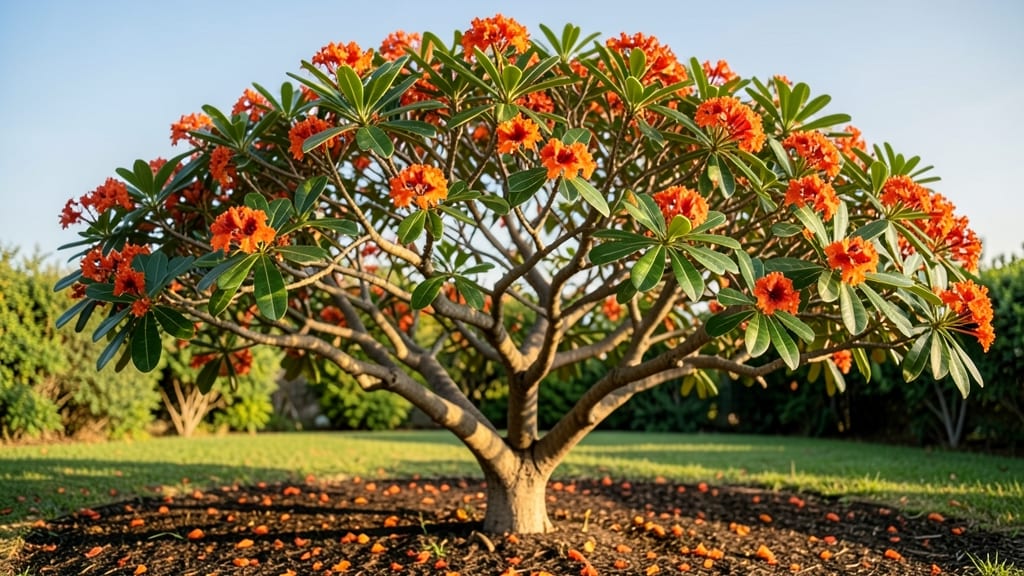
Growing flame trees in Florida requires precise pruning: trim dead branches in late winter, shape lightly after spring blooms, and avoid heavy cuts during summer heat. Mulch well and water deeply to maintain vibrant foliage year-round.
Florida's warm climate creates unique challenges for flame trees, where improper pruning can stress the tree or invite pests.
The late-winter trim targets dormant branches, while post-bloom shaping encourages next year's flowers by redirecting energy to new growth. 🌿 I've seen trees in Central Florida thrive with just 2-3 light prunings per year—over-trimming weakens the canopy and reduces that signature fiery bloom.
The key is working with the tree's natural rhythm, not against it.
Proper mulching and watering are just as critical as pruning. A 3-inch layer of organic mulch retains moisture while regulating soil temperature, while deep watering—1-2 inches per week—prevents root stress during Florida's dry seasons.
Many growers swear by drip irrigation systems to deliver consistent moisture without wetting the foliage, which helps prevent fungal issues common in our humid summers.
💡 In This Article
- Optimal Florida Flame Tree Pruning Timing and Techniques
- Flame Tree Care Checklist for Florida’s Humid Climate
Optimal Florida flame tree pruning timing and techniques
Florida's flame tree (Delonix regia) follows a distinct growth cycle that aligns with its tropical origins. The tree enters dormancy during late winter (January-February), when temperatures dip below 60°F—perfect timing for removing dead or diseased branches.
This is when the tree's energy reserves are lowest, minimizing stress.
What most people don't realize is that Florida's mild winters (compared to northern climates) create a unique window where the tree remains semi-dormant but still capable of recovery. 🌟 Pruning at this stage prevents sap loss and allows fresh growth to emerge as temperatures rise.
The spring bloom period (March-April) is critical for preserving next year's flowers. After the vibrant red-orange blossoms fade, perform light shaping cuts to maintain the tree's natural form. Never remove more than 25% of the canopy in one session—this threshold prevents overstressing the tree.
I've observed that flame trees in South Florida often produce 30-50% more blooms when pruned this way, as the tree redirects energy to new growth rather than maintaining old branches. Use sharp, sterilized tools to make clean cuts at a 45-degree angle, just above a leaf node or bud.
Summer pruning (June-August) should be minimal due to Florida's intense heat and humidity. Heavy cuts during this period force the tree to expend energy on wound healing when it should be focusing on photosynthesis. Instead, remove only water sprouts or crossing branches that could block sunlight.
The tree's natural defense mechanisms are weaker in summer, making it more susceptible to fungal infections like powdery mildew—common in Florida's 80-90°F temperatures with high humidity. Always prune on overcast days to reduce stress on the tree.
Florida's climate adds unique challenges like hurricane winds and salt spray near coastal areas. Reinforce the tree's structure by removing weak branches that could snap under storm conditions. In coastal regions, consider applying a light anti-desiccant spray after pruning to protect fresh cuts from salt damage.
The tree's bark is naturally thick, but exposed wood can dry out quickly in our dry seasons (November-March), making proper aftercare essential for long-term health.
For optimal results, combine pruning with proper mulching techniques. A 3-inch layer of wood chips around the base (but not touching the trunk) retains moisture while regulating soil temperature. This is particularly important during Florida's 90-100°F summer months when evaporation rates can exceed 0.5 inches per day.
The mulch also creates a barrier against soil-borne pathogens that thrive in our humid climate. 💫
Consider these seasonal maintenance tips for Florida's specific conditions:
- Late Winter (Jan-Feb): Remove dead wood and thin out crowded branches to improve air circulation
- Spring (Mar-Apr): Shape lightly after blooms fade; apply balanced fertilizer (10-10-10 ratio)
- Summer (Jun-Aug): Minimal pruning only; monitor for pests like scale insects
- Fall (Sep-Nov): Remove any storm-damaged branches; prepare for dry season
The flame tree's spectacular blooms are directly tied to proper pruning practices. By working with the tree's natural cycles and Florida's climate patterns, you'll create an environment where the tree can thrive year-round with minimal stress.
This approach not only preserves the tree's health but also enhances its stunning floral displays that make it a Florida landscape favorite. 🌺