
Pruning
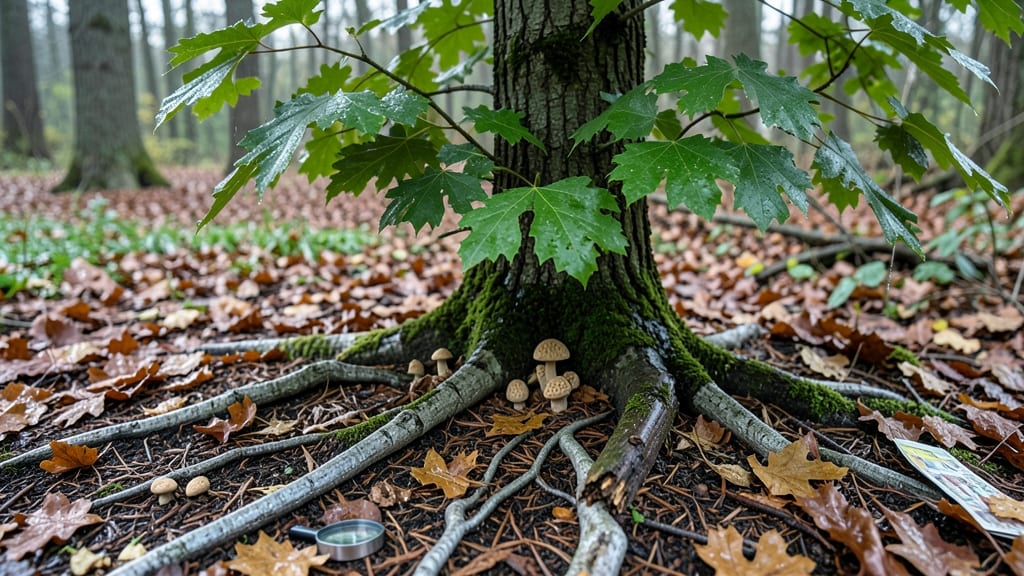
After heavy rain, your elm tree might be hiding a secret: morel mushrooms popping up at its roots. 🌱 These prized wild mushrooms love the damp, decaying wood and rich soil that elms provide—it’s not just luck, it’s ecology.
The relationship between elms and morels isn’t accidental; it’s a natural partnership where the tree’s decaying roots create the perfect microclimate for these fungi to thrive.
Here’s the thing—morels near elms aren’t always a red flag for tree health. While some decay is normal, excessive fungal growth can signal stress, especially if the tree is already weakened by Dutch elm disease or pests.
The key is balance: healthy elms support morels without compromising their own vitality. Think of it like a symbiotic dance—both benefit, but only if the tree stays strong.
If you’re foraging, focus on harvesting morels around the tree—not directly on the trunk or large roots. Use a knife to twist them free, leaving the mycelium intact for next year’s crop.
And always double-check your finds: morels growing near elms can sometimes be confused with false morels, which are toxic. A quick field guide or spore print test keeps you safe.
To keep your elm thriving, monitor for signs of stress—yellowing leaves, dead branches, or excessive fungal growth beyond the usual. Prune out dead wood in dry weather, and consider mulching to stabilize soil moisture.
The goal? A happy tree that keeps producing those elusive, golden morels year after year—without sacrificing its own health.
📚 In This Guide
- What you need
- Instructions
- Tips and common mistakes
- Wrapping up and next steps
What you need
- ● Basket or breathable bag (1 medium-sized, 12"+ capacity) – Avoid plastic to prevent bruising mushrooms.
- ● Sharp pocket knife or foraging knife (3-4" blade) – For carefully excavating morels from the soil.
- ○ Gloves (optional but recommended) – Protects hands from dirt, thorns, or rough bark.
- ● Notebook & pen – To log locations, tree types, and weather conditions for future trips.
- ● Water bottle (16 oz.) – Stay hydrated, especially in damp or wooded areas.
- ● Basic first-aid kit – Include bandages, antiseptic wipes, and tweezers for splinters or scrapes.
- ● Field guide or mushroom ID app (e.g., iNaturalist, Mushroom Identify) – Critical for positive identification to avoid toxic look-alikes.
- ● Handheld GPS or compass – If venturing into unfamiliar terrain.
- ● Knee pads or small stool – For comfort while searching near tree bases.
- ● Small trowel or digging tool – Helps loosen soil gently around morels.
- ● Ziploc bags (quart-sized, 2-3) – For transporting fresh finds home without crushing them.
- ● Insect repellent & sunscreen – Morel hunting often means long hours in the shade or sun!
Step-by-step guide to foraging morel mushrooms under elm trees
Morels love elm trees after heavy rain—here’s how to find them safely and ethically.
🌳 Step 1: Scout for Elm Trees After Heavy Rain
Morels thrive under elm trees, especially after 3+ days of steady rain when soil stays saturated. Focus on trees with thick, mature canopies and decaying wood—morels love rotting stumps or base areas where moisture lingers. I check north-facing slopes first, as they hold moisture longer. Look for dark, spongy soil with leaf litter—this is prime real estate.
Time your search for spring (April–May) when temperatures hover around 50–60°F. Avoid areas with recent construction or chemical runoff—morels absorb toxins like a sponge. Bring a small trowel to gently lift leaf litter and spot hidden caps.
🍄 Step 2: Identify Morels (and Avoid Deadly Look-Alikes)
Morels have a honeycomb-like cap and a sac-like stem—never eat anything that looks like a false morel (which can be deadly). True morels have pitted, brain-like ridges on the cap and a hollow stem. I always cut the mushroom lengthwise to confirm the hollow center before harvesting.
Skip any morels with white gills (a dead giveaway for false morels) or yellowish bruising—these are signs of toxicity. When in doubt, take a photo and consult a field guide or local mycology group. Never eat a mushroom you’re unsure about.
✂️ Step 3: Harvest Morels Without Damaging the Tree
Use a sharp knife to cut morels at the base, leaving the mycelium intact. Twisting can tear roots and reduce future yields. Harvest only what you’ll use—morels dry quickly, but overharvesting stresses the tree. I limit myself to 4–6 mushrooms per tree to ensure regrowth.
Morels dry best when clean and whole. Brush off debris with a soft brush (don’t wash—they absorb water like sponges). Lay them on a screen or mesh in a shady, well-ventilated spot for 3–5 days, flipping daily. Store dried morels in paper bags (plastic traps moisture and causes mold).
🌧️ Step 4: Predict Future Morel Spots Using Rain Patterns
Morels follow rain + warmth cycles. Track 3-day rain events followed by 50–60°F days—this is when they fruit. I jot down tree locations in a notebook after successful finds. Elm trees near creeks or low-lying areas produce morels more reliably because they stay damp longer.
Return to the same spots every 7–10 days after rain. Morels have a short window—miss it, and they’ll disappear. If a tree doesn’t produce, move on. Overharvesting one spot can kill the mycelium network for years.
🌿 Step 5: Preserve and Store Your Harvest
Fresh morels cook down to almost nothing—4–6 mushrooms make one meal. Sauté them in butter with a splash of cream for a restaurant-worthy dish. For long-term storage, freeze them raw in a single layer before bagging (they’ll last 6 months). Dried morels keep for 1–2 years in a cool, dark place.
Never store morels in the fridge raw—they spoil fast. If you find a large haul, share with friends or trade for other wild edibles. Morels are a temporary bounty—once the season ends, they’re gone until next spring.
Tips & tricks for perfect elm tree morel foraging
These practical tips will help you find and preserve morels like a seasoned forager—without the common mistakes.
Timing Secret: The 3-day rain rule is non-negotiable for morel hunting. I've learned this the hard way—after two failed trips during light rain, I finally realized morels need that saturated soil. Check weather forecasts and plan your foraging 3-5 days after a steady downpour. Morning dew is also your friend—morels stand out more when the ground is damp.
Identification Game-Changer: Never trust your eyes alone—always cut a morel lengthwise to check for the hollow stem. I've seen deadly false morels that look identical until you make that simple cut. When in doubt, take a photo and consult a local mycology expert. Remember, when it comes to wild mushrooms, "better safe than sorry" isn't just advice—it's survival.
Sustainable Harvesting: The 4-6 mushroom limit per tree is crucial for future yields. I've seen beginners take entire clusters, thinking they're helping themselves, only to return next year to find nothing. Leave at least 2-3 mushrooms on each tree to ensure the mycelium network can regenerate. Think of it as fishing—you catch your limit and let the rest grow.
Drying Wisdom: That 3-5 day drying period on a screen is where many foragers fail. I've ruined batches by using plastic containers that trap moisture. Use only breathable materials like mesh screens or even clean window screens. Flip them daily and keep them in shade—direct sunlight can cook the mushrooms instead of drying them properly. Paper bags are essential for storage too; they allow just enough airflow to prevent mold while keeping out pests.
Pro Tips for Elm Tree Morel Mushrooms
- These practical tips will help you find and preserve morels like a seasoned forager—without the common mistakes.
- Timing Secret: The 3-day rain rule is non-negotiable for morel hunting.
- Identification Game-Changer: Never trust your eyes alone—always cut a morel lengthwise to check for the hollow stem.
Frequently asked questions
about foraging morel mushrooms under elm trees after heavy rain—here’s what you need to know!When is the best time to find morels under elm trees after rain?
Morels thrive 2–7 days after heavy rain when soil temperatures are between 50–65°F (10–18°C). Focus on elm groves with leaf litter or decaying wood—these spots are prime real estate. Avoid foraging during frost or drought.
Are all morels under elm trees edible, or do I need to test them?
Not all morels are safe! Never eat a wild mushroom without 100% confidence in its ID. True morels have a honeycomb-like cap and a hollow stem. Cross-reference with a guide or expert. False morels (Gyromitra) can be toxic—when in doubt, toss it out!
What if I don’t have elm trees nearby? Where else should I look?
Morels love deciduous trees like ash, apple, or tulip poplar. Try disturbed soil (recently burned areas, logging sites, or garden beds) or oak/hickory forests. Avoid conifers—morels rarely grow under pines or spruces.
How do I avoid damaging the tree while foraging?
Morels grow on or near the ground, not on the tree itself. Use a small knife or your hands to gently twist them free—never dig or uproot. Leave at least 50% of the mushrooms to regrow and sustain the ecosystem. Ethical foraging = more morels next season!
What should I do if I accidentally pick a poisonous lookalike?
If you’re unsure, take a photo and consult a local mycologist or foraging group (like the North American Mycological Association). Never eat a mushroom unless you’re absolutely certain—when in doubt, discard it. Symptoms of poisoning (nausea, dizziness) can appear hours later.
Wrapping up and next steps
Discovering elm tree morel mushrooms after heavy rain is a thrilling adventure that connects you to nature’s hidden treasures! 🌧️🍄 Remember, patience and precision—like using the right tools and timing—are key to a successful (and safe) forage.
Now that you’re armed with knowledge, grab your basket and head outdoors. Keep an eye on those damp, wooded areas, and who knows? You might just stumble upon a bountiful harvest. Happy foraging! 🌿