
Flowers
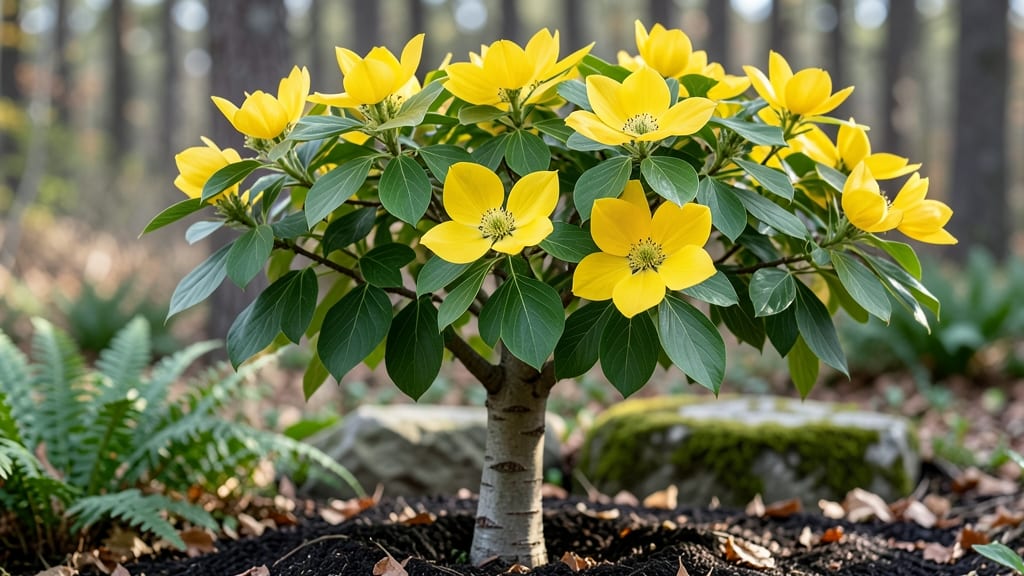
Growing dogwood trees with yellow flowers transforms your yard into a sunlit jewel box. 🌸 These trees—like the stunning Cornus florida 'Golden Age'—bloom with cheery, four-petaled flowers that outshine pink varieties, and they thrive in full sun with surprisingly little fuss.
My first one surprised me by flowering within three years of planting, and now neighbors ask for cuttings. The secret lies in well-drained soil and 6+ hours of sunlight daily. Dogwoods hate soggy roots, so amend heavy clay with compost before planting.
Prune spent blooms in late spring to encourage next year’s flowers, but avoid heavy cuts—they bloom on old wood. Mulch keeps roots cool in summer and prevents weeds from stealing nutrients. By midsummer, you’ll have lush foliage and clusters of buttery-yellow blooms that attract hummingbirds.
The tree’s layered branches create natural shade while letting sunlight filter through. Even in heat waves, these dogwoods stay vibrant, making them the star of any sunny landscape. Perfect for small yards, urban gardens, or as a focal point near patios.
Their compact size (15–25 feet) makes them ideal for mixed borders or as a statement plant alongside perennials. Let’s get yours growing!
Behind the Yellowing Blooms
If your dogwood tree’s flowers are turning yellow before their time, it’s often a sign of stress or imbalance. While vibrant pink or white blooms are classic, yellowing can happen for several specific reasons—each with a unique solution.
Understanding the root cause helps you restore your tree’s health and ensure those stunning spring displays for years to come.
Dogwood trees thrive in moderate climates (USDA Zones 5–9), but extreme heat, frost, or sudden temperature swings can shock the tree, causing premature yellowing. Here’s how it plays out:
- Late frosts: If flowers bloom early (e.g., in March) and a hard freeze hits, petals may yellow and drop within days. Cold damages cell membranes, disrupting nutrient flow.
- Heatwaves: Temperatures above 90°F (32°C) can scorch petals, turning them yellow or brown. The tree prioritizes survival over flowering, accelerating senescence.
- Rapid temperature shifts: A 20°F (11°C) drop in 24 hours stresses the tree, leading to chlorophyll breakdown in petals (which are technically modified leaves).
Actionable fix:
- Choose late-blooming cultivars (e.g., ‘Cherokee Brave’) for frost-prone areas.
- Apply a lightweight frost cloth on cold nights if flowers are already open.
- Mulch the root zone with 3–4 inches of organic mulch (wood chips or pine straw) to stabilize soil temps.
Dogwood trees are sensitive to moisture extremes. Yellowing flowers often signal hydraulic stress, where the tree can’t transport water efficiently to the blooms.
| Symptom | Cause | Solution |
|---|---|---|
| Yellow petals with crispy edges | Underwatering (soil dries out, roots can’t absorb water) | Water deeply 1–2x weekly (1–1.5 inches total) during dry spells. Use drip irrigation to avoid wetting foliage. |
| Yellowing + mushy stems or wilting | Overwatering (root rot from Phytophthora or Pythium fungi) | Improve drainage with sand or gravel in heavy clay soil. Let top 2 inches of soil dry between waterings. |
| Yellowing + drooping leaves | Transplant shock (newly planted trees struggle to establish roots) | Water every 2–3 days for the first month, then taper to weekly deep waterings. |
Pro tip: 🌡️ Check soil moisture with your finger—if the top 2 inches are dry, it’s time to water. Dogwoods hate “wet feet” but also despise drought stress!
Fungal pathogens like Anthracnose (Elsinoë spp.) and Powdery Mildew (Podosphaera spp.) thrive in damp conditions, causing yellowing, spotting, or premature leaf drop. These diseases attack both foliage and flowers, turning petals yellow or brown.
- Anthracnose: Dark, sunken spots on leaves/flowers; common in spring rains. The fungus clogs stomata, blocking nutrient uptake.
- Powdery Mildew: White, powdery coating on petals (turns yellow/brown as it spreads). Thrives in shady, humid areas.
- Root Rot: Yellowing flowers + mushroom-like growths at the base (sign of Armillaria or Phytophthora).
Actionable fix:
- Prune infected branches (sterilize tools with 70% alcohol) and dispose of debris.
- Apply copper fungicide (e.g., Copper Sulfate) at first signs of disease. For prevention, use neem oil in early spring.
- Space trees 10–15 feet apart for airflow and avoid overhead watering.
Warning: 🚨 If >50% of the canopy is infected, the tree may not recover—consider replacement.
Dogwoods need a balanced diet, but yellowing flowers often point to specific deficiencies. Unlike leaves, flowers show symptoms later in the deficiency cycle, making diagnosis tricky.
| Nutrient | Yellowing Pattern | Cause | Fix |
|---|---|---|---|
| Magnesium (Mg) | Yellow edges of petals (interveinal chlorosis) | Poor soil structure or high pH (>7.0) | Apply Epsom salt (1 tbsp/gallon water) every 4 weeks in growing season. |
| Potassium (K) | Yellowing + weak stems (flowers wilt easily) | Leaching from sandy soil or over-fertilizing with nitrogen | Use a balanced 10-10-10 fertilizer in early spring. Avoid high-nitrogen lawn fertilizers. |
| Iron (Fe) | Bright yellow petals (no green veins) | Alkaline soil (pH >7.0) locks out iron | Lower pH with sulfur or use chelated iron supplements. |
Soil test first: 💡 Send a sample to your local Cooperative Extension for a pH and nutrient analysis. Dogwoods prefer acidic soil (pH 5.5–6.5).
Yellowing dogwood flowers don’t always mean doom—often, they’re a call to action. Start with the most likely culprit (e.g., check soil moisture before blaming frost), and your tree will reward you with showstopping blooms next season.
Revive Your Dogwood’s Golden Glow
When your dogwood’s vibrant yellow blooms start fading or fail to appear, it’s time to take action. The good news? Most issues have simple fixes—whether it’s adjusting care, diagnosing pests, or tweaking the environment.
Below, we’ll break down the most common causes of dull or absent yellow flowers and provide practical, step-by-step solutions to bring back your tree’s radiant beauty.
Yellowing or sparse flowers often signal a hunger for key nutrients. Dogwoods thrive when their soil is rich in organic matter, phosphorus, and potassium—the trio that fuels blooms.
🔥 Step 1: Test Your Soil
Before adding amendments, grab a DIY soil test kit (or send a sample to your local extension office for ~$20). Look for:
- pH imbalance (ideal: 5.5–6.5 for dogwoods).
- Low phosphorus (P) or potassium (K)—critical for flowering.
🍳 Step 2: Amend the Soil
If your soil is lacking:
- Add compost (2–3 inches mixed into the top 6 inches of soil).
- Use a balanced fertilizer (10-10-10 or 5-10-5) in early spring before buds form.
- For acidic soil, sprinkle sulfur or peat moss and retest in 6 months.
👨🍳 Step 3: Mulch Like a Pro
- Spread 3–4 inches of mulch (wood chips or pine bark) around the base, keeping it 6 inches away from the trunk.
- Replenish annually to maintain nutrients and moisture.
💡 Pro Tip: Avoid fresh manure—it can burn roots! Composted options are safest.
Dogwoods crave dappled sunlight—too much shade or harsh sun can stunt flowering.
🌡️ Step 1: Assess Sun Exposure
- Too little light? Move nearby trees/shrubs or prune overgrowth to let in 4–6 hours of filtered sun daily.
- Too much direct sun? Plant near a fence or wall to diffuse harsh afternoon rays, or add a light shade cloth in peak summer.
🎯 Step 2: Transplant if Needed
If your dogwood is in a low-light spot (e.g., under dense evergreens), consider relocating it to a brighter, sheltered area in early spring or fall.
✨ Prevention Tip: Choose a south- or east-facing spot when planting new dogwoods.
Yellowing leaves or flowers can also mean pests or fungal infections are stealing your dogwood’s energy.
🔪 Step 1: Identify the Culprit
| Symptom | Likely Cause | Fix It Fast |
|---|---|---|
| Yellow leaves + sawdust-like frass | Borers (wood-boring insects) | Prune infested branches; apply neem oil or insecticidal soap. |
| Black spots on leaves | Anthracnose fungus | Remove infected leaves; spray with copper fungicide in spring. |
| Sticky residue on leaves | Aphids/scale insects | Blast off with water spray or use horticultural oil. |
⏰ Step 2: Prevent Future Attacks
- Water at the base (avoid wetting leaves to deter fungi).
- Prune for airflow—remove crowded branches to reduce humidity.
- Apply preventive sprays (neem oil or fungicide) every 4–6 weeks in spring/summer.
Overwatering or drought stress can cause yellowing leaves and poor blooms.
🌧️ Step 1: Check Moisture Levels
- Stick your finger 2 inches into the soil—if it’s dry, water deeply.
- Mature dogwoods need 1–1.5 inches of water per week (more in pots).
🚰 Step 2: Improve Drainage
- If your soil stays soggy, amend with perlite or sand to prevent root rot.
- Avoid watering schedules—instead, check soil moisture before watering.
💡 Pro Tip: Mulch retains moisture—keep it consistent to reduce watering frequency.
For consistent yellow flowers, combine these year-round habits:
- Prune in late winter/early spring to remove dead wood and shape the tree.
- Fertilize annually (spring is best for blooms).
- Monitor for pests—catch issues early!
- Protect from late frosts—cover young trees if frost is forecasted during bloom time.
By tackling these fixes, your dogwood should rebound with lush, golden-yellow blooms in just a few seasons. 🌼💛 Happy gardening!
Frequently asked questions
What’s the best dogwood variety for bright yellow flowers?
For stunning yellow blooms, try Cornus florida 'Golden Age' or Cornus kousa 'Milky Way'. These cultivars produce clusters of buttery-yellow flowers that stand out beautifully against their dark green foliage. 'Golden Age' is especially reliable, blooming abundantly even in partial shade.
Can dogwood trees with yellow flowers grow in containers?
Yes, but choose dwarf varieties like Cornus florida 'Rubra' (which has pink flowers but compact growth) or Cornus alternifolia 'Argentea' for yellowish foliage. Use a large container (20+ gallons) with well-draining soil and ensure it gets 6+ hours of sunlight daily. Container-grown dogwoods need regular watering and winter protection in cold climates.
Why do my dogwood flowers look yellow but smell bad?
This is likely anthracnose fungus, a common issue that causes yellowing petals with a foul odor. The fungus thrives in wet conditions and can spread quickly. Prune infected branches immediately, then apply copper fungicide to prevent further spread. Improve airflow around the tree by thinning dense branches and avoid overhead watering.
How long does it take for a dogwood tree to flower?
Most dogwood trees take 3–5 years to produce their first flowers after planting, depending on growing conditions. Young trees prioritize root establishment, so provide consistent moisture, mulch, and balanced fertilizer to encourage faster blooming. Varieties like 'Golden Age' often flower within 3 years when cared for properly.
Are yellow-flowering dogwoods deer-resistant?
Dogwoods are generally moderately deer-resistant, but hungry deer may nibble on young shoots or flowers. For extra protection, plant near deer-deterrent plants like boxwood or use deer repellent sprays during peak browsing seasons (spring and fall). Mature trees with thick bark are less appealing to deer.