
Watering
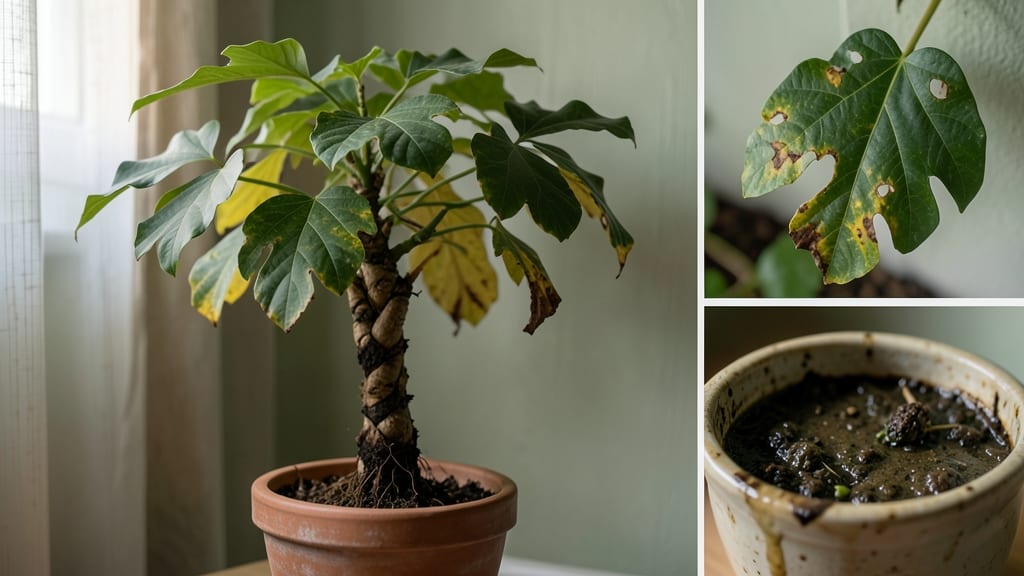
What does an overwatered money tree look like? Bright yellow leaves scream for help, starting at the tips and spreading inward like a sunburn. 🌱 I learned this the hard way after turning my thriving Pachira aquatica into a sad, droopy mess—until I caught the early signs. The leaves feel soft and mushy when you touch them, not crisp like healthy foliage, and the branches sag even when the soil feels damp.
The real giveaway? Mushy, brown roots that smell sour when you pull back the soil. Healthy roots should be firm and white, but overwatered ones rot from the center out, leaving hollow stems.
Even the pot gets heavy from waterlogged soil that stays clumpy instead of crumbly. My plant went from jungle vibes to swampy swamp in just two weeks of overzealous watering.
Here's the good news: recovery starts with letting the soil dry completely between waterings and upgrading to a pot with drainage holes. Snip off yellow leaves and any mushy stems—it’s not cruel, it’s necessary.
Within weeks, you’ll see fresh green growth pushing through, proving your money tree can bounce back with the right care.
This works for both potted plants and those growing in containers—just adjust watering based on your climate. My money tree now thrives with one watering every 10-14 days in summer, and I check the soil with my finger before ever reaching for the watering can.
The lesson? When in doubt, wait another day—your plant will thank you.
Common Causes Of Overwatering
Overwatering your money tree (Pachira aquatica) isn’t just a matter of giving it too much love—it’s often the result of well-intentioned but misinformed care. Let’s break down the real culprits behind this common issue, so you can avoid them like a pro.
---
The most obvious reason for overwatering is simply watering too often. Money trees are tropical plants, but they don’t thrive in soggy conditions—even if their native habitat is humid. Here’s why this happens:
- Misjudging the soil’s moisture level: Many growers check watering needs by lifting the pot or sticking a finger in the soil. If the top 1–2 inches still feel damp, hold off!
Money trees prefer slightly dry soil between waterings. - Ignoring seasonal changes: In cooler months (fall/winter), growth slows, and the plant needs far less water.
Yet, people often stick to summer watering schedules, leading to root suffocation. - Using the wrong pot material: Terracotta pots dry out faster than plastic or ceramic, tricking some growers into thinking the plant needs more water than it does.
Pro Tip: 🌡️ Test your soil’s moisture with a hygrometer or the "squeeze test"—if water drips out when you press the soil, you’ve overdone it.
---
If your money tree’s pot lacks proper drainage, water has nowhere to go—leading to waterlogged roots and yellowing leaves. Here’s how it happens:
- No drainage holes: Many decorative pots (especially cachepots) sit on top of plastic nursery pots without holes. Without escape routes, water pools at the bottom, drowning the roots. - Compacted or clay-heavy soil: Dense soils (like garden soil or pure clay) don’t allow water to drain efficiently.
Money trees need well-aerated, fast-draining mixes with perlite, orchid bark, or coconut coir. - Overpotting: A pot that’s too large holds excess moisture for weeks. Choose a container that’s only 1–2 inches wider than the root ball to encourage faster drying.
Pro Tip: ⚠️ Double-check your pot setup—if water sits in the saucer for more than 30 minutes after watering, your drainage is failing.
---
Money trees love humidity, but too much moisture in the air (combined with cool temps) can trick the plant into thinking it’s raining nonstop. Here’s the science:
- High humidity + low light = slower evaporation: In dim, humid conditions (like a steamy bathroom), water evaporates from the soil much slower, keeping roots wet longer. - Cold drafts or AC vents: Cool air reduces transpiration (the plant’s natural water release process).
If your money tree sits near a window with cold drafts or under an AC unit, it can’t dry out properly. - Misting too often: While money trees enjoy humidity, frequent misting (especially on leaves) can create a microclimate that traps moisture near the roots.
Pro Tip: 💡 Move your plant to a brighter spot with moderate humidity (40–60%) and avoid cold drafts. A pebble tray with water (not touching the pot) adds humidity without overwatering.
--- Even with perfect watering habits, root issues can make a money tree susceptible to overwatering. Here’s how:
- Circling or compacted roots: When roots grow in tight circles (from being root-bound), they can’t absorb oxygen efficiently, making them more prone to rot in wet soil. - Past overwatering damage: If roots have already rotted from previous overwatering, they lose their ability to regulate moisture, leading to a vicious cycle of soggy soil. - Freshly repotted plants: Newly transplanted money trees take 2–4 weeks to adjust.
During this time, they’re extra sensitive to water—overwatering can shock their recovering roots.
Pro Tip: 🔪 Check roots during repotting—if they’re mushy or black, trim the damaged parts with sterilized scissors and let the soil dry out completely before watering again.
--- Not all water is created equal—and some types actively harm your money tree by promoting root rot. Here’s why:
- Hard water (high in minerals): Calcium and magnesium buildup in the soil blocks drainage, making it harder for water to escape.
Over time, this creates a waterlogged, alkaline environment that roots despise. - Tap water with chlorine/fluoride: While not as harmful as hard water, chlorine can stress roots, reducing their resilience to overwatering. - Ice-cold water: Pouring frigid water directly onto roots can shock the plant, slowing its ability to process moisture efficiently.
Pro Tip: 💧 Use filtered, rainwater, or distilled water when possible. If you must use tap water, let it sit out for 24 hours to off-gas chlorine.
--- Money trees, like all plants, have growth rhythms. Forcing watering into their "rest periods" can lead to disaster. Here’s how timing plays a role:
- Forcing water in winter: Many growers assume plants need water year-round, but money trees enter a dormant-like state in cooler months.
Watering on a summer schedule during winter drowns the roots. - Overwatering after pruning: When you trim branches, the plant loses water-transporting tissue, making it harder to regulate moisture. Hold off on watering for 5–7 days post-prune. - New growth = more water needs? False! While new leaves look thirsty, they’re actually a sign the plant is stressed from past overwatering.
Focus on drying out the soil first.
Pro Tip: ⏰ Follow the "wait until it’s almost dry" rule—stick your finger in the soil before watering. If it’s damp below 1 inch, wait another week.
Fixing Overwatered Money Trees
Overwatering can turn your money tree into a sad, soggy mess—but don’t worry! With the right steps, you can revive it and keep it thriving.
Below, we’ll break down solutions based on the root causes of overwatering (literally and figuratively) and share practical fixes to get your plant back in shape.
---
Before treating symptoms, diagnose the damage. Gently remove the money tree from its pot and inspect the roots.
- 🔥 Healthy Roots: Firm, white, and slightly fibrous. - 💀 Rotten Roots: Dark, mushy, or smelly—these need immediate action.
Fix: - 🔪 Trim the Bad: Use sterilized scissors to snip off any black, squishy roots. Leave only the firm, healthy ones. - 🌡️ Let Them Dry: Spread the roots on a paper towel for 1–2 hours to prevent further rot.
---
Money trees (Pachira aquatica) hate soggy soil. Here’s how to water like a pro:
- 📅 Wait Until Dry: Stick your finger 1–2 inches into the soil.
Water only when it’s completely dry (usually every 2–3 weeks in warm weather, less in winter). - 🚰 Drain Excess: Ensure pots have drainage holes, and empty saucers after watering to avoid root suffocation. - 💡 Pro Tip: Use a moisture meter to avoid guesswork—no more drowned plants!
---
If the roots are severely damaged, repotting is a must.
- 🍳 Choose the Right Mix: Use a well-draining cactus or succulent mix (or amend regular potting soil with perlite/pumice for aeration). - 🏺 Upgrade the Pot (Sometimes): If the roots are circling or compacted, move to a slightly larger pot (but not too big—overpotting = more moisture retention). - 🌡️ Let It Acclimate: After repotting, skip watering for 5–7 days to help roots recover.
---
Overwatered plants often struggle because their environment doesn’t support recovery.
- ☀️ Bright, Indirect Light: Move your money tree to a sunny spot (east or west windowsill) but avoid harsh midday sun. - 💨 Improve Airflow: Place a small fan nearby (on low) to prevent fungal growth and encourage evaporation. - 🌡️ Humidity Check: Money trees love 40–60% humidity.
If your air is dry, use a pebble tray or humidifier.
---
An ounce of prevention is worth a pound of sad leaves!
- 📊 Track Your Watering: Keep a plant journal to note when you water and how the soil feels. - ✨ Use Self-Watering Tricks: Try terracotta pots (they dry faster) or moisture-control granules in the soil. - 🌱 Fertilize Lightly: Overwatered plants are stressed—wait 4–6 weeks before fertilizing again, and use a diluted, balanced fertilizer (like 10-10-10).
---
With proper care, your money tree should show signs of improvement in 2–4 weeks: - New growth (bright green leaves) - Firmer stems (no more drooping) - Healthy root expansion (if repotted)
If yellow leaves persist after a month, check for nutrient deficiencies (like nitrogen) or pests (like spider mites).
--- 💡 Final Pro Tip: Money trees are forgiving—they bounce back faster than you think! Stay consistent with the fixes above, and your plant will be back to its lucky, leafy self in no time. 🌟
Frequently asked questions
Why do the leaves turn yellow first at the tips?
Yellowing at the leaf tips is your money tree's first SOS signal! Overwatering causes nutrient leaching—excess water washes away essential minerals from the soil, starting with the oldest leaves. The tips turn yellow because they're furthest from the roots, so they get starved first. Think of it like a plant version of malnutrition!
Can I save my money tree if the stems feel mushy?
Yes, but act fast! Mushy stems mean root rot has spread—gently remove the plant, trim all black/mushy roots with sterilized scissors, and let the remaining roots air-dry for 1-2 hours. Repot in fresh, well-draining soil and hold off watering for 5-7 days. The plant can recover if at least 50% of roots are healthy.
How often should I water after fixing overwatering?
Start with a strict 2-week wait after repotting to let roots recover. Then water only when the top 2 inches of soil feel completely dry (use your finger!). In summer, this might mean every 10-14 days; in winter, stretch it to 3-4 weeks. Terracotta pots dry faster than plastic—adjust accordingly!
Will my money tree grow back new leaves?
Once you fix the root issues and adjust watering, your money tree will focus energy on new growth. You'll typically see bright green leaves emerging from the stem within 3-6 weeks. Prune any remaining yellow/brown leaves to redirect energy—this helps the plant bounce back faster!
Can I use hydrogen peroxide to treat overwatered roots?
Yes! Mix 1 part 3% hydrogen peroxide with 4 parts water and soak the roots for 10 minutes before repotting. This kills harmful bacteria/fungi while oxygenating the roots. Use it once during recovery—don't make it a regular treatment, as it can stress healthy roots over time.