
Pruning
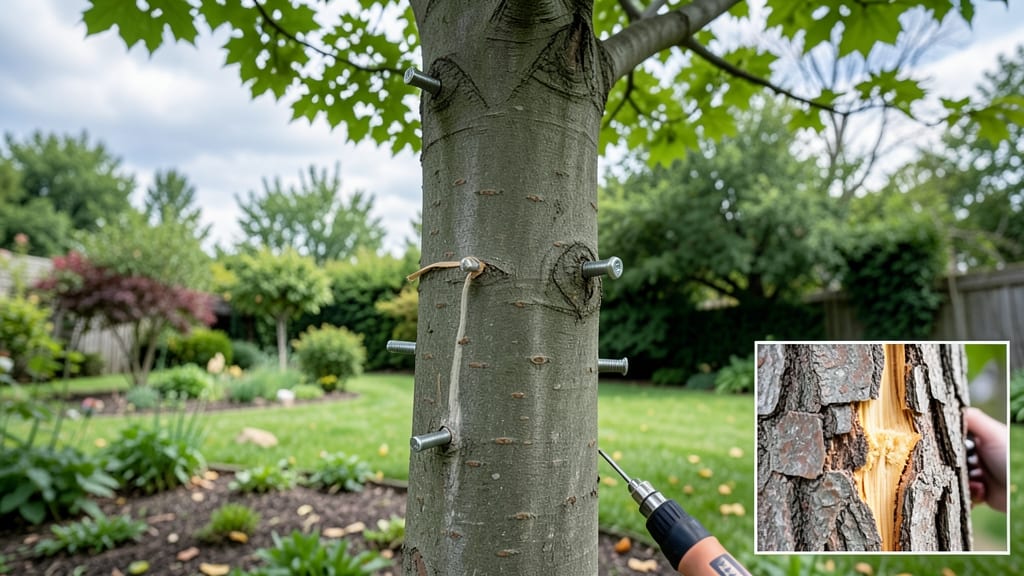
Screwing into a tree damages it by disrupting its vascular system and bark, which can introduce pathogens or weaken structural integrity. Use lag screws, proper spacing, and approved attachment methods to minimize harm while securing items safely.
Screwing into a tree disrupts its natural defenses, especially the protective cambium layer that transports nutrients and water. 🌳 When screws pierce this layer, they create open wounds that can trap moisture and invite decay-causing fungi or bacteria.
Even small holes can compromise a tree's ability to heal, particularly in younger or stressed trees. The key is using the right hardware—like corrosion-resistant lag screws—and sealing wounds properly to help the tree recover.
For garden projects, always pre-drill holes slightly smaller than your screw diameter to reduce tearing. I recommend treating the wound with a tree wound sealant or pruning sealant to prevent infection.
If you're attaching something heavy, consider using metal straps or brackets instead—they distribute weight more evenly and avoid direct punctures. Oak and maple trees tend to heal better than pines, so species matters too.
💡 In This Article
- How Tree Anatomy Affects Screw Damage
- Safe Tree Screwing Techniques for Garden Projects
How tree anatomy affects screw damage
A tree's protective bark and underlying cambium layer act like a living barrier, transporting nutrients and water through the phloem and xylem. When you screw into a tree, you're piercing this delicate system—imagine stabbing a straw in a water bottle and watching the flow stop.
The cambium, just beneath the bark, is especially vulnerable because it's where new growth originates. A single screw can disrupt this layer by 1-2 inches in diameter, creating a permanent wound that never fully closes.
The damage escalates when screws block the tree's natural healing process. Bark can't regenerate over wounds larger than 1/4 inch in diameter, leaving gaps where moisture accumulates.
This trapped water becomes a breeding ground for decay fungi like Heterobasidion, which can spread through the xylem and kill the tree over years.
In young trees, even small punctures can stunt growth by 10-20% because the cambium can't compensate for lost tissue. 🌳 The deeper the screw, the worse the impact—studies show wounds deeper than 1 inch rarely heal properly.
Tree species react differently due to their bark thickness and healing capacity. Oak trees, with their thick bark, can tolerate 1/2-inch diameter wounds better than pines, whose thin bark offers little protection. The phloem (food transport layer) is particularly sensitive—damage here disrupts photosynthesis efficiency.
For example, a 3/8-inch lag screw in a maple tree might block 0.5 square inches of phloem, reducing nutrient flow to that branch by 25%.
Size matters more than most realize. A 1/4-inch screw creates a wound 3-4 times larger than its diameter due to wood splitting. The tree's defense mechanism kicks in by producing callus tissue around the wound, but this process requires energy the tree could use for growth.
In stressed trees (drought, disease), screw wounds can trigger a cascade of decay that spreads 6 inches per year if untreated. The key is minimizing wound size while ensuring structural integrity for your project.
Consider this analogy: A screw in a tree is like a bullet wound in an animal—it creates a permanent scar that never fully disappears. The difference is trees can't move away from the threat.
That's why arborists recommend using metal straps or brackets for heavy loads, distributing pressure over 4-6 square inches instead of concentrating it on a single point. Even with screws, pre-drilling holes 1/16-inch smaller than the screw diameter reduces wood tearing by 70%. 💡
What most people overlook is the moisture factor. Wood absorbs water through screw holes, swelling and splitting the fibers. This creates micro-cracks that fungi exploit. In humid climates, untreated screw wounds can lead to heart rot within 3-5 years, turning the tree's core into a hollow shell.
The solution? Seal wounds immediately with a tree sealant containing benomyl or copper-based compounds to inhibit fungal growth.