
Light Requirements
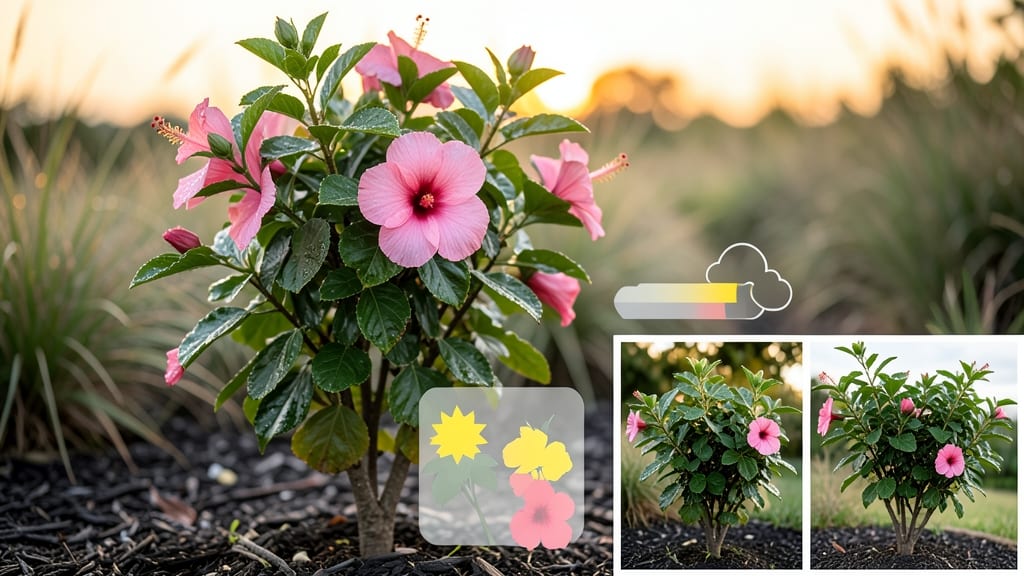
A hibiscus tree does need full sun to thrive, but it can adapt to partial shade—though the trade-off might surprise you with fewer blooms.
If you’ve ever wondered why your hibiscus tree isn’t blooming as expected, the answer might lie in its sunlight needs—because this tropical beauty thrives in more than just full sun.
In hot climates like USDA Zone 6a, a hibiscus tree can handle 4-6 hours of direct sunlight before needing shade to prevent leaf burn. Cooler regions may need even more sun to trigger those vibrant blooms.
Below, I’ll show you how to balance sunlight for your 🌺, spot signs of stress, and pick the right variety for your garden’s light conditions.

How much sunlight does a hibiscus tree actually need?
Hibiscus trees are stunning tropical plants known for their vibrant blooms, but their sunlight needs often spark confusion. While they prefer full sun, they can adapt to partial shade—especially in hot climates. The key lies in balancing exposure to maximize growth and blooms without causing stress.
In ideal conditions, hibiscus trees thrive with 6-8 hours of direct sunlight daily. This sunlight range supports optimal photosynthesis, leading to lush foliage and abundant flowers. However, regional climates and seasonal changes can alter these needs significantly.
Did you know? Hibiscus trees native to tropical regions naturally receive intense sunlight but can handle partial shade during peak afternoon heat. This adaptability makes them versatile for various garden settings.
| Sunlight Requirement | Daily Exposure | Best For | Seasonal Adjustments |
|---|---|---|---|
| Full Sun | 6-8 hours | Optimal blooms, vigorous growth | Spring/Fall: Ideal conditions |
| Partial Shade | 3-6 hours | Hot climates, afternoon shade | Summer: Protect from midday heat |
| Low Light | <2 hours | Indoor growth, minimal blooms | Year-round: Supplement with grow lights |
For gardeners in hot climates, providing afternoon shade can prevent leaf scorch while maintaining healthy growth. In cooler regions, full sun exposure ensures robust development and prolific flowering. Understanding these nuances helps tailor care to your specific location.
Seasonal adjustments are crucial. During summer, hibiscus trees may benefit from morning sun and afternoon shade to avoid heat stress. Conversely, in winter or cooler zones, they can handle more direct sunlight as the intensity decreases naturally.
If you're growing hibiscus indoors, place them near a south-facing window for maximum light exposure. Supplement with grow lights if natural light falls below 4 hours daily. This mimics outdoor conditions and supports consistent blooming.
Scientific studies show that hibiscus trees exhibit photosynthesis efficiency peaks at 6-8 hours of sunlight. Beyond this range, growth may slow, and blooms can become sparse. Monitoring your plant's response to light helps fine-tune its environment for peak performance.
When transitioning a hibiscus tree from shade to sun, do so gradually over 2-3 weeks. Sudden exposure can cause sunburn, evident as brown patches on leaves. This slow acclimation process ensures your plant adjusts without stress.
In summary, hibiscus trees are adaptable but thrive best with 6-8 hours of sunlight daily. By observing your plant's response and adjusting for seasonal changes, you can create an ideal environment for stunning blooms and healthy growth year-round.
Signs your hibiscus tree isn’t getting the right sunlight (and how to fix it)
Your hibiscus tree might be silently screaming for help if its sunlight needs aren’t met. While these tropical beauties love bright light, too little or too much can send distress signals through their leaves and blooms.
I’ve seen leaf scorch from harsh afternoon sun and sparse blooms from insufficient light—both clear signs your plant needs adjustment.
Start by checking your hibiscus’s current location. Is it basking in 6-8 hours of direct sunlight? Or is it tucked away where dappled shade dominates? The right balance is key—too little light weakens growth, while too much can burn delicate foliage.
Let’s decode the warning signs and fix them before your plant throws in the towel.
⚠️ Hibiscus Sunlight Shock
Your hibiscus NEEDS full sun (6-8 hours daily), but it can also tolerate partial shade—just not for long. Leaf scorch (brown crispy edges) means too much direct sun, while yellowing leaves or stunted growth signals insufficient light. Indoor hibiscus? Rotate it weekly to prevent one-sided growth from uneven light sources.
First, watch for leaf scorch—those brown, crispy edges on leaves are your hibiscus’s way of saying, “Too much sun!” This often happens when young leaves get harsh afternoon rays, especially in hot climates.
If you notice this, move your plant to a morning sun spot or provide light shade with a sheer curtain. A 50% shade cloth can work wonders during peak sun hours.
On the flip side, if your hibiscus is sparse on blooms or has long, leggy stems, it’s likely craving more light. Indoor hibiscus often suffer from this—especially near north-facing windows.
Try relocating it to a south-facing window or supplement with a grow light for 12-14 hours daily. If outdoors, prune back overhanging branches blocking sunlight.
For outdoor hibiscus, gradual adjustments are key. If moving from shade to sun, acclimate over 2 weeks: start with 2 hours of morning sun, then slowly increase exposure. Indoor plants need a different approach—rotate the pot quarter-turns weekly to ensure even growth.
And always water deeply after moving, as transplant shock can mimic sunlight stress.
Pro tip: Observe your hibiscus’s natural rhythms. Does it droop midday? That’s a sign it’s overheating in direct sun. Does it stretch toward light?
It’s yearning for more. Adjust based on these cues, and your hibiscus will reward you with bold blooms and lush foliage all season long.
Remember, hibiscus are tropical divas—they demand attention but repay it with stunning flowers. With the right light balance, your plant will thrive, whether it’s basking in full sun or sipping dappled shade like a true survivor. 🌺