
Container Gardens
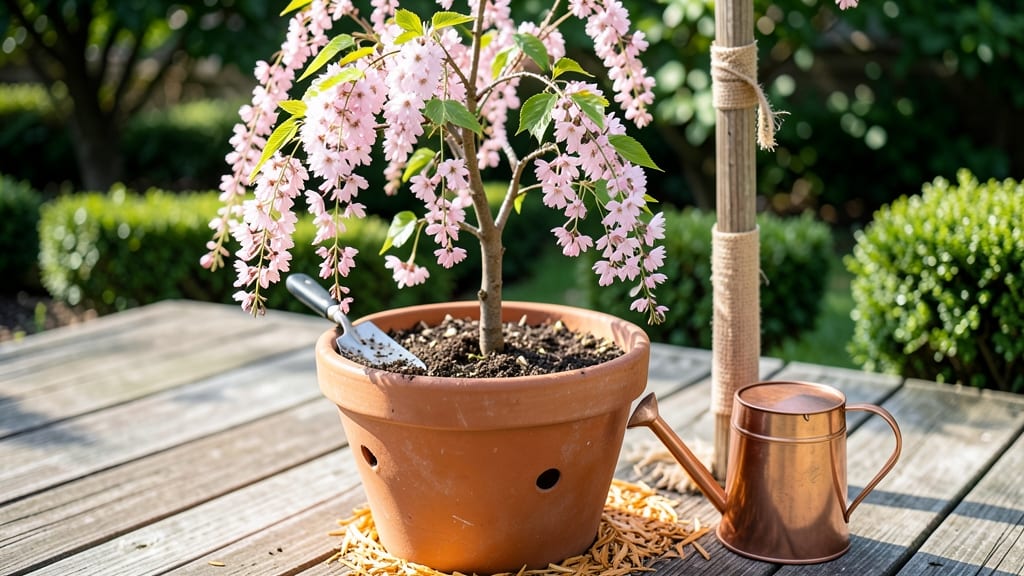
You can grow a cherry blossom tree in a pot using dwarf varieties like ‘Okame’ or ‘Royal Anniversary,’ but you'll need containers at least 15 gallons in size, well-draining soil, and consistent pruning to manage root growth. These trees also thrive best in full sun and require winter protection in colder regions.
Cherry blossom trees typically grow quite large—some species can reach 30 feet tall—but their dwarf counterparts stay compact, making them perfect for container gardening. 🌸 The key is selecting the right variety; ‘Okame’ stays under 10 feet tall, while ‘Royal Anniversary’ grows to about 12 feet but remains manageable in large pots.
These smaller trees still produce stunning spring blooms, though their lifespan in containers is shorter than in-ground plantings.
Beyond variety selection, proper container size and soil quality are critical. Cherry blossoms have extensive root systems that need room to spread, which is why 15+ gallon pots are essential. I recommend using a mix of potting soil, perlite, and compost to ensure good drainage while retaining moisture.
Regular pruning every 6-12 months helps maintain shape and prevents the tree from becoming root-bound, which can stunt growth and reduce flowering.
💡 In This Article
- Best Cherry Blossom Varieties for Container Gardening
- Container Size and Soil Requirements for Potted Cherry Blossoms
Best cherry blossom varieties for container gardening
Cherry blossom trees thrive in pots when you choose varieties specifically bred for small spaces. The ‘Okame’ stands out for its compact size—typically reaching just 8-10 feet tall—while still producing abundant pink blooms in early spring.
This variety's shallow root system makes it ideal for container life, as it doesn't require the same depth as larger species. 🌸 What makes it unique is its ability to bloom even in USDA Zones 6-9, adapting well to both cooler and warmer climates.
The ‘Royal Anniversary’ offers a slightly taller option at 12-15 feet, but its spreading habit works beautifully in large containers. This variety produces stunning white flowers that resemble traditional Japanese cherry blossoms, though it requires more frequent pruning to maintain its shape.
For those in colder regions, the ‘Shirotae’ is another excellent choice—it stays under 10 feet tall and handles temperatures down to -15°F, making it perfect for Zone 5 gardeners.
What most people overlook is the growth rate difference between these varieties. ‘Okame’ grows about 12-18 inches per year, while ‘Royal Anniversary’ can add 18-24 inches annually. This means your container will need regular monitoring to prevent root crowding.
The key is selecting a variety that matches both your space and climate—smaller pots work for ‘Okame’, while larger containers (20+ gallons) are better for ‘Royal Anniversary’.
Flowering habits also vary significantly. ‘Okame’ blooms profusely for 2-3 weeks in early spring, while ‘Royal Anniversary’ has a slightly longer bloom period but may produce fewer flowers per branch. The trade-off is worth it for those who want the classic cherry blossom look in a patio-friendly size.
Just remember: container-grown blossoms typically have a shorter lifespan (15-20 years) compared to in-ground trees (50+ years).
For urban gardeners, the ‘Temari’ variety is a standout—it grows in a rounded, bush-like shape perfect for small balconies. Its flowers are a delicate pink, and it thrives in 15-gallon containers with minimal pruning.
The secret to its success is its naturally dense branching, which creates a fuller appearance without requiring extensive maintenance. This makes it ideal for those who want beauty without the upkeep of larger varieties.
When selecting your tree, consider both the mature height and spread. A ‘Royal Anniversary’ might reach 12 feet tall but 8 feet wide, while ‘Okame’ stays more upright. This width is crucial for container stability—wider trees need wider pots to prevent tipping, especially in windy conditions.
Always check the nursery's growth projections to avoid surprises as your tree matures.