
Container Gardens
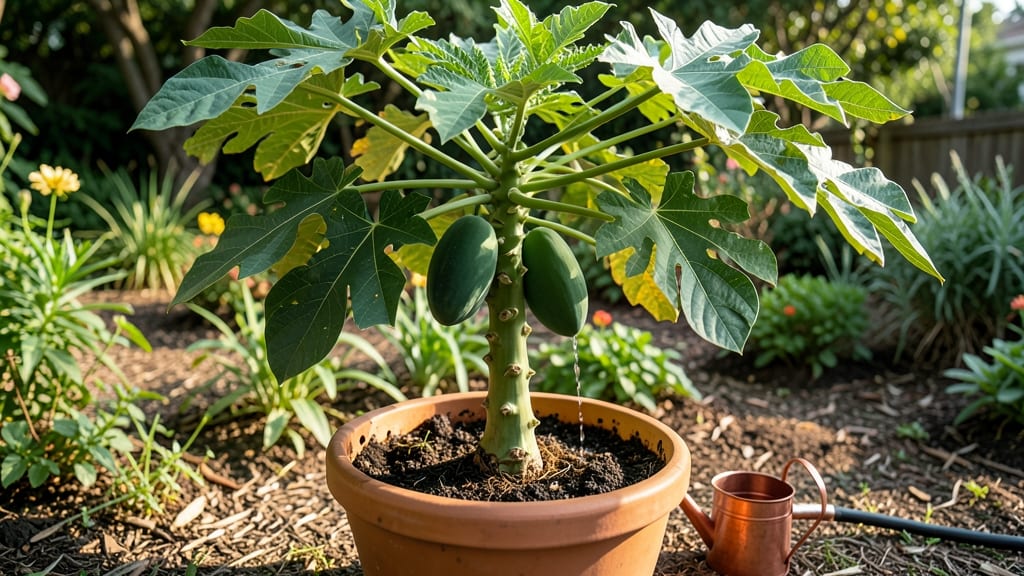
Yes, you can grow a papaya tree in pots with the right setup: use a minimum 15-gallon container with drainage holes, provide bright indirect sunlight, and maintain well-draining soil while watering consistently but avoiding soggy conditions. Dwarf varieties adapt best to container life.
Papaya trees thrive in containers when given enough space for their roots to spread—15 gallons is the absolute minimum, but larger pots (20+ gallons) give them room to grow for years. 🌱 The key is mimicking their tropical habitat: moist but never waterlogged soil, warm temperatures above 60°F, and protection from harsh afternoon sun.
I’ve found that dwarf varieties like 'SunUp' or 'Tainong No. 1' are perfect for pots, producing fruit in as little as 12 months with proper care. Just remember: these trees need frequent feeding during their growing season!
For best results, position your container where it gets 6-8 hours of bright, indirect light daily—think east-facing windows or a shaded patio.
If you notice yellowing leaves, it’s often a sign of overwatering or poor drainage, so always use a pot with holes and a mix of perlite or sand in your potting soil.
Pruning spent flowers encourages more fruit production, and repotting every 2-3 years keeps roots healthy as your tree grows.
💡 In This Article
- Optimal Pot Size and Soil for Papaya Trees
- Step-by-Step Papaya Tree Container Care Guide
Optimal pot size and soil for papaya trees
Papaya trees need ample root space to support their tropical growth, and pot size directly impacts their health and fruit production.
A 15-gallon container is the absolute minimum for young trees, but mature specimens can require 20-30 gallons—think of it as giving their roots room to breathe like they would in the ground. 🌿 The wider the pot, the better, as papaya roots spread horizontally to anchor the tree and absorb nutrients efficiently.
Without enough space, roots become root-bound, leading to stunted growth and poor fruit development.
The soil mix is just as critical as the pot size. Papayas thrive in well-draining, slightly acidic soil with a pH between 6.0 and 6.5. A blend of 60% potting mix, 20% perlite or pumice, and 20% coconut coir or compost creates the ideal aerated, moisture-retentive environment.
This combination prevents waterlogging while retaining enough moisture for the tree’s tropical needs. Dwarf varieties like 'SunUp' tolerate smaller pots better than standard types, but even they benefit from a 20-gallon pot to prevent stress.
Drainage is non-negotiable—papaya roots rot quickly in soggy conditions. Always use containers with drainage holes at the bottom and elevate them slightly off the ground to prevent water from pooling.
I’ve seen many container-grown papayas fail because their owners ignored this basic rule. 💧 The soil should feel like a damp sponge: water should drain freely within 30-60 minutes of watering, but the top inch should stay slightly moist between sessions.
This balance is crucial for preventing both root rot and dehydration.
Container material also plays a subtle but important role. Terracotta pots dry out faster and provide better airflow to roots, while plastic retains moisture longer and insulates better against temperature swings. For urban growers, plastic containers are often more practical, but terracotta is ideal in hot, dry climates.
Whichever you choose, ensure it’s at least 12 inches deep to accommodate the tree’s taproot system, which can grow surprisingly long even in containers.
One common mistake is using garden soil directly in pots. Unlike native soil, potting mixes are sterile and designed to prevent compaction, which is essential for papayas. The addition of worm castings or fish emulsion (1-2 tablespoons per gallon of soil) can further boost nutrient availability.
These amendments mimic the rich, organic matter papayas would find in their natural habitat, reducing the need for frequent fertilization.
For those growing papayas in pots indoors or in cooler climates, consider adding a 4-inch layer of gravel or expanded clay pebbles at the bottom of the pot.
This creates an air pocket that improves drainage and insulates roots from temperature fluctuations. 🌡️ In winter, if temperatures drop below 55°F, move your container to a warmer location or use a space heater to maintain consistent warmth—papayas are tropical and sensitive to cold drafts.