
How To
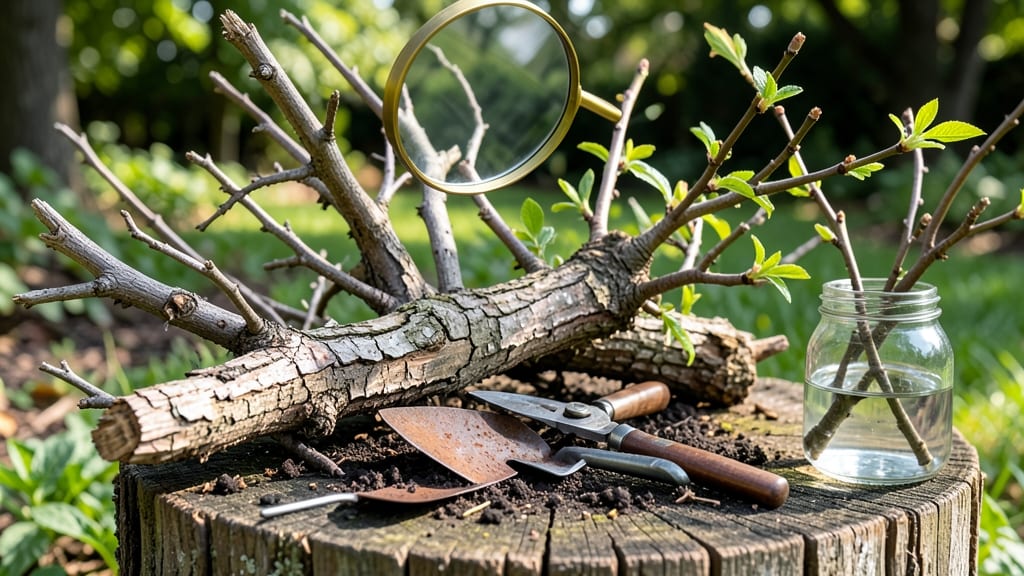
Dead tree branches can't come back to life if completely desiccated, but partially damaged branches may recover when the tree's core stays alive and environmental conditions improve. Always prune dead wood immediately to stop disease spread and watch for new growth signals like buds or sap.
Once a branch turns brown and brittle, its cells have lost the ability to transport water and nutrients, making revival impossible. 🌿 However, branches that appear dead but still show green bark underneath or produce sap when scratched may have a chance.
The key is acting fast—removing dead sections prevents fungal infections from spreading to healthy parts of the tree. I've seen oak and willow branches bounce back after severe winters if their root systems stayed intact and spring rains arrived on time.
Even if a branch looks hopeless, don't rush to cut it—wait until late winter when buds should appear if the tree is still alive. Proper pruning techniques (using clean, sharp tools and making cuts at the branch collar) create better healing conditions than aggressive trimming.
For trees with partial damage, I recommend testing bark flexibility—if it snaps like a dry twig, it's dead; if it bends slightly, there's still hope.
💡 In This Article
- How to Identify If Tree Branches Are Truly Dead vs Dormant
- Step-by-Step Guide to Reviving Partially Damaged Tree Branches
How to identify if tree branches are truly dead vs dormant
Tree branches enter three distinct states: dead, dormant, or stressed—each with unique biological markers. Dead branches lack vascular activity, meaning their xylem (water-conducting tissue) is collapsed and unable to transport nutrients or water.
You’ll notice a complete absence of green tissue beneath the bark and a hollow, brittle interior when cut open. Dormant branches, however, still contain living cells that remain metabolically active but inactive during cold seasons, often showing green bark when scratched.
The key test is the bark scratch method: scrape a small section of bark with a knife. If green tissue appears beneath, the branch is alive but dormant. If the wood is brown and dry, it’s dead.
Another telltale sign is bud viability—healthy buds swell in late winter, while dead branches show no signs of bud break. Seasonal timing matters too: branches that appear dead in winter may still recover once spring temperatures rise above 50°F and trigger sap flow.
Stressed branches exhibit a third state—partially alive but struggling. These often show partial browning with some green areas, or bark that peels away in patches. The wood may feel slightly moist when cut, indicating residual moisture transport.
For example, a maple branch with 50% brown bark might still recover if its root system stays healthy, while a fully brown branch with no moisture is beyond revival. 🌱
Environmental factors like drought stress or root damage can mimic death. If a branch looks dead but the tree’s trunk still produces sap when scratched, the root system likely remains alive. In these cases, proper watering and soil aeration can revive the branch.
I’ve seen this happen with oak and birch trees after severe droughts—once roots regain access to moisture, branches can regrow from dormant buds.
One advanced test is the branch snap test: bend a small twig. Dead branches snap cleanly with no flexibility, while live branches bend slightly before breaking. This works best in late winter when branches are at their driest.
For fruit trees like apple or cherry, also check for fruit spurs—small growths along branches that produce flowers. If these remain brown and shriveled, the branch is dead; if they’re green or plump, there’s hope.
Finally, consider the tree’s overall health. A branch that’s dead but attached to a thriving tree may still serve as a scaffold for new growth, while a branch on a dying tree has little chance of revival.
Pay attention to leaf color in spring—new leaves on old branches signal recovery. 🌿