
Orchid Care
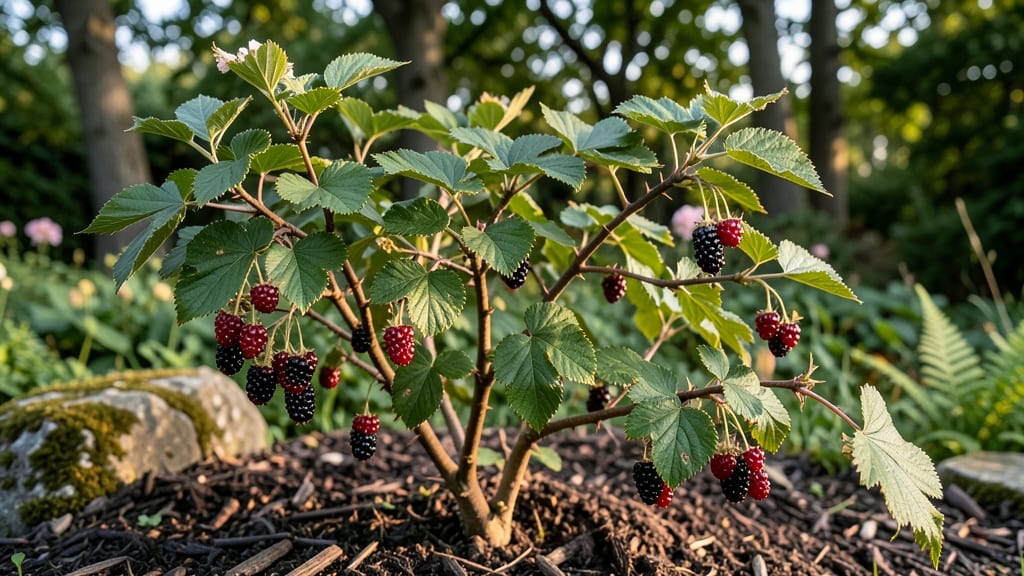
Boysenberry plants are vigorous bushes, not trees, typically growing 6 to 10 feet tall with sprawling canes that need sturdy support. Dwarf varieties remain under 4 feet, perfect for small gardens or container growing.
These berry plants thrive as multi-stemmed shrubs rather than solitary trees, with canes that spread aggressively if left unchecked. 🌿 The key difference from tree fruits lies in their horizontal growth habit—boysenberry canes sprawl outward, creating a dense, bushy structure that requires regular pruning to maintain shape and productivity.
Dwarf varieties like 'Black Diamond' are specifically bred to stay compact, making them ideal for urban gardens or balcony containers where space is limited.
What sets boysenberries apart from other brambles is their robust root system, which allows them to establish quickly but also makes them more sensitive to soil conditions.
Unlike tree fruits that grow vertically, boysenberry bushes benefit from vertical support structures like trellises or wire cages to keep canes organized and maximize fruit exposure to sunlight.
💡 In This Article
- How Boysenberry Bush Growth Differs from Other Berry Plants
- Best Boysenberry Varieties for Compact Gardens vs Large Yields
How boysenberry bush growth differs from other berry plants
Boysenberries grow as multi-stemmed shrubs rather than vertical trees, with canes that spread horizontally rather than upward. Unlike raspberries or blackberries—which typically grow as individual canes—boysenberry bushes develop multiple canes from a single root system, creating a dense, sprawling structure.
These canes can reach 6-10 feet in length, but they grow outward rather than upward, which is why they need strong trellising to prevent them from flopping to the ground. 🌿
The root system of boysenberries is another key difference. While tree fruits have deep taproots, boysenberries develop a fibrous root network that spreads 2-3 feet wide but stays relatively shallow (typically 12-18 inches deep).
This makes them more adaptable to different soil types but also more sensitive to drought or heavy clay. Unlike raspberries, which produce fruit on second-year canes, boysenberries fruit on both first- and second-year canes, requiring careful pruning to balance yield and plant health.
Pruning is critical for controlling size and maximizing fruit production. Boysenberry bushes left unpruned can become unmanageable, with canes growing 15-20 feet in extreme cases, while proper pruning keeps them within 6-8 feet.
The best approach is to remove old canes after harvest and thin out crowded growth to improve airflow, which reduces disease risk. Unlike tree fruits, boysenberries don’t need heavy structural pruning—they respond well to selective thinning to encourage new, productive canes. ✨
Another distinction is their growth habit compared to blackberries. Boysenberries have thorns (unless you choose thornless varieties), which makes them more challenging to manage without support. Their canes are also more flexible, meaning they require sturdy trellises or wire cages to prevent breakage during heavy fruit production.
Without support, the canes can bend under the weight of berries, leading to poor fruit quality and increased disease risk from wet conditions.
For gardeners comparing boysenberries to other brambles, the key takeaway is their horizontal sprawl versus the vertical growth of raspberries. Boysenberries also produce larger, sweeter berries than most blackberries, but their vigorous growth means they need more space and maintenance.
The right trellis system—like a T-bar or kniffin trellis—can transform a sprawling bush into a neat, productive plant that maximizes sunlight exposure and air circulation. 💫