
Pests and Diseases
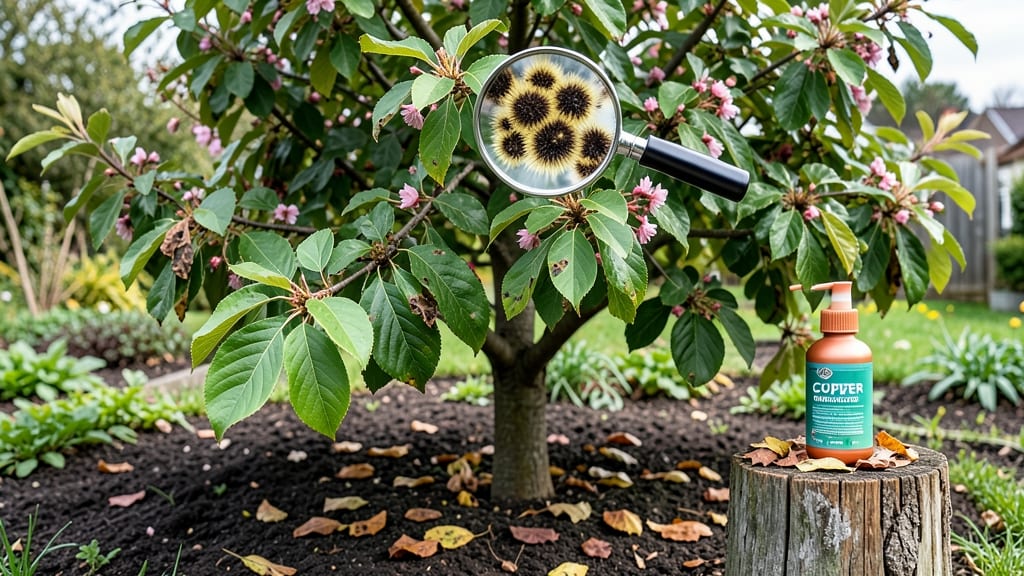
Those unsightly black spots on your cherry tree leaves aren’t just ugly—they’re a fungal blight that can weaken your tree if ignored. 🌿 I’ve battled this exact issue with my Tieton cherry tree, and what I learned changed how I care for it every spring.
The spots start small, then multiply, turning leaves yellow and dropping them prematurely—leaving your tree vulnerable to worse problems. Most cases stem from black knot disease or leaf spot fungus, thriving in wet, humid summers.
The key to stopping it? Early action—pruning infected branches before spores spread, applying copper fungicide at the first sign, and spacing trees properly for airflow. I’ve tried everything from baking soda sprays to commercial treatments, and these three steps work best.
By late summer, your tree should look lush and healthy again, with fewer spots and stronger new growth. The secret is catching it early and staying consistent—once you see the pattern, you’ll spot it before it becomes a full-blown crisis.
This works for sweet, tart, and ornamental cherries alike, and the same principles apply to other fruit trees too. Let’s get your tree back to its best!
Root Causes Behind Leaf Spots
Black spots on your cherry tree’s leaves aren’t just an eyesore—they’re often a red flag from nature’s troublemakers. Understanding the why behind these blemishes is the first step to restoring your tree’s health.
Below, we break down the most common culprits, their behaviors, and how they exploit your cherry tree’s weaknesses.
Fungi are the #1 cause of leaf spots on cherry trees, thriving in damp, humid conditions. These microscopic organisms release spores that land on leaves, where they germinate and feast on organic matter—starting with your tree’s chlorophyll-rich foliage.
🌡️ Anthracnose: The Overachieving Fungus
- How it spreads: Colletotrichum spores (the fungus behind anthracnose) splash onto leaves via rain or overhead watering. They love wet, shady environments.
- Why it targets cherries: Cherry trees are particularly susceptible because their leaves stay moist longer, giving fungi a buffet. Anthracnose causes dark, sunken spots with yellow halos, often appearing in spring or after heavy rain.
- Actionable clue: Look for spore-producing pustules on the undersides of leaves—tiny orange or pink dots that burst open like tiny volcanoes.
🍂 Leaf Spot Fungi: The Generalists
- Common types: Marssonina (brown spot) or Coccomyces (cherry leaf spot) fungi create round, black or purple spots with gray centers. These fungi are opportunistic, attacking stressed trees.
- Why they win: Poor air circulation (from dense canopies) or nitrogen-heavy fertilizers weaken leaves, making them prime targets. Infected leaves may crinkle or drop prematurely, starving the tree of energy.
- Pro tip: 🌡️ If spots appear in early summer and expand rapidly, fungal leaf spot is likely. Prune lower branches to improve airflow—fungi hate dry leaves!
Not all leaf spots are fungal. Some are crime scenes left by insects that chew, pierce, or excrete waste on leaves. Their damage creates entry points for fungi—or the spots themselves are their handiwork.
🐜 Aphids & Scale: The Sap-Sucking Saboteurs
- How they cause spots: These tiny pests pierce leaves to drink sap, leaving behind sticky honeydew that hardens into black, sooty mold. The mold isn’t the primary issue, but it blocks sunlight, weakening the tree.
- Visual tell: Check for clusters of white, waxy insects on leaf undersides or stems. Sooty mold appears as velvety black patches (not raised like fungal spots).
- Quick fix: Blast leaves with water to dislodge aphids, or introduce ladybugs (their natural predators).
🪰 Mites & Leafminers: The Hidden Chewers
- Spider mites: These tiny red/yellow pests suck cell contents, causing stippled, yellow-brown spots that later turn black as leaves dry out. Severe infestations create fine webbing on leaves.
- Leafminers: Their larvae tunnel serpentine trails inside leaves, causing brown, necrotic patches where tissue collapses. Look for blisters or transparent trails under leaves.
- Why it matters: Stressed leaves from insect damage are 3x more likely to develop fungal infections. Prune heavily infested leaves and use neem oil as a deterrent.
Sometimes, the problem isn’t a pathogen—it’s your tree’s environment creating the perfect conditions for damage.
💦 Overwatering or Poor Drainage
- Why it happens: Cherry trees hate wet feet. Overwatering (or compacted, waterlogged soil) leads to root rot, which stresses the tree above ground. Weakened leaves become susceptible to fungal infections or develop black, water-soaked spots from cell death.
- Red flags: Yellowing leaves, mushrooms sprouting at the base, or leaves that curl at the edges.
- Solution: Improve drainage with organic mulch (wood chips) and avoid watering at night.
🌡️ Extreme Heat or Sun Scorch
- The science: Intense sunlight + high temperatures cause oxidative stress in leaves, leading to brown, crispy spots (often on leaf edges). This is common in young trees or those recovering from transplant shock.
- How to spot it: Spots appear on sun-exposed sides of leaves and don’t spread like fungal infections. Leaves may also wilt slightly in afternoon heat.
- Prevention: Provide afternoon shade (use shade cloth) and water deeply during heatwaves to cool roots.
🍄 Chemical Burn or Nutrient Imbalance
- Over-fertilizing: Too much nitrogen promotes lush growth but weakens leaf structure, making them prone to fungal spots. Excess salt or chlorine in water can cause brown, dead patches along leaf edges.
- Under-fertilizing: Deficiencies in magnesium or iron cause interveinal chlorosis (yellowing between veins), which can progress to blackened, necrotic spots if untreated.
- Quick test: Send a leaf sample to a local extension office for a soil test—it’s the only way to know for sure.
Now that you know the why, the next step is identifying the exact culprit in your cherry tree’s case. Each of these causes demands a different fix—so grab your magnifying glass and let’s get detective!
Fixing Fungal Spots Naturally
Once you’ve identified the cause of those pesky black spots on your cherry tree leaves—whether it’s fungal blight, bacterial infection, or environmental stress—it’s time to take action! The good news? Most issues respond well to organic, garden-friendly solutions that are gentle on your tree but tough on the problem.
Below, we’ll map out practical fixes for each common cause, plus prevention tips to keep your cherry tree thriving.
Fix: Prune, Spray, and Prevent
- 🔪 Remove Infected Leaves & Branches
- Use sterilized pruning shears (wipe with rubbing alcohol between cuts) to trim away any leaves, branches, or fruit showing black spots, yellowing, or wilting.
- Dispose of debris in the trash (not your compost)—fungi can survive in compost piles!
- Pro Tip: 💡 Prune in dry weather (morning is best) to avoid spreading spores.
- 🌿 Apply Fungicidal Sprays (Organic Options) - Baking Soda Spray: Mix 1 tbsp baking soda + 1 tsp dish soap + 1 gallon water in a spray bottle. Apply every 7–10 days until new growth appears. - Neem Oil: A natural fungicide and insect repellent.
Mix 1 tbsp neem oil + 1 tsp mild soap + 1 quart water. Spray early morning or late evening (avoid direct sun). - Copper Fungicide: For severe cases, use copper-based sprays (like Bordeaux mixture) as directed.
- 🌡️ Improve Airflow & Reduce Moisture
- Thin out dense branches to allow sunlight and air circulation.
- Water at the base (not overhead) and avoid late-day watering to prevent prolonged leaf wetness.
- Mulch properly: Use 2–3 inches of organic mulch (like wood chips) but keep it 6 inches away from the trunk to deter fungal growth.
Fix: Clean, Treat, and Isolate
- 🧼 Sterilize Tools & Workspace
- Bacterial infections spread fast—clean pruners with 70% isopropyl alcohol between cuts.
- Remove and destroy infected leaves immediately (do not compost).
- 💦 Use Copper-Based Bactericides
- Copper hydroxide or copper sulfate sprays (like Copper Soap) are the most effective against bacterial spot.
- Apply every 10–14 days during wet seasons or when symptoms appear.
- 🌧️ Adjust Watering Practices
- Water deeply but infrequently to avoid soggy soil.
- Irrigate in the morning so leaves dry quickly.
- Avoid overhead sprinklers—use drip irrigation or soaker hoses instead.
Fix: Shade, Feed, and Hydrate
- 🌳 Provide Afternoon Shade
- If your tree is in a hot, sunny spot, consider temporary shade cloth (30–50% coverage) during peak afternoon heat.
- Mature trees: Plant fast-growing shade trees (like silver maple) nearby for long-term relief.
- 🌱 Boost Soil Health
- Test your soil (kit from a garden center) and amend with:
- Compost (for organic matter)
- Balanced fertilizer (10-10-10 or fish emulsion for a gentle boost)
- Epsom salt (1 tbsp per gallon of water) if leaves show magnesium deficiency (yellow between veins).
- Test your soil (kit from a garden center) and amend with:
- 💧 Water Deeply & Consistently
- Drought-stressed trees are more prone to spots. Water 1–2 inches per week (more in extreme heat).
- Mulch heavily (3–4 inches) to retain moisture and regulate soil temp.
To keep your cherry tree spot-free, follow these long-term strategies:
- 🌿 Plant Resistant Varieties: Some cherry trees (like ‘Stella’ or ‘Van’) are bred for disease resistance—check with local nurseries.
- 🍂 Clean Up Fall Debris: Rake and remove all fallen leaves in autumn to eliminate overwintering fungi/bacteria.
- 🐞 Encourage Beneficial Insects: Ladybugs, lacewings, and birds help control pests that weaken trees.
- 🌱 Monitor & Act Early: Check leaves weekly during growing season—catching spots early makes treatment easier!
Final Thought: 🎯 Most black spot issues are manageable with quick action and proactive care. Start with pruning and organic sprays, then focus on soil health and watering habits. With a little TLC, your cherry tree will bounce back—and next year, it’ll be stronger than ever!
Frequently asked questions
Why do black spots appear on cherry tree leaves in wet seasons?
Fungal diseases like anthracnose and leaf spot thrive in damp conditions. When humidity stays high or rain is frequent, spores splash onto leaves, causing black or dark brown spots with yellow halos. These fungi feed on leaf tissue, weakening your tree if left untreated. Prune infected branches immediately and improve airflow to dry leaves faster.
Can I use household items like baking soda to treat black spots?
Yes! A baking soda spray (1 tbsp baking soda + 1 tsp dish soap + 1 gallon water) works as a mild fungicide. Spray it on leaves every 7–10 days during wet weather. For tougher infections, combine it with neem oil (1 tbsp neem + 1 tsp soap + 1 quart water) for better results. Always test a small area first to avoid leaf burn.
Are black spots on cherry leaves always caused by fungi?
Not always. Pests like aphids or scale insects can cause black spots too—through sooty mold (a fungal growth on their honeydew). Check for sticky residue or tiny insects on leaf undersides. If you see webbing or stippled leaves, spider mites might be the culprit. Treat with insecticidal soap or neem oil to break the cycle.
How do I know if my cherry tree’s black spots are severe enough for professional help?
Consult an arborist if 50%+ of leaves are infected, spots spread rapidly despite treatment, or your tree shows wilted branches or dieback. Severe cases may require systemic fungicides or pruning to remove large infected areas. Early intervention (within 2 weeks of spotting symptoms) prevents long-term damage and saves you money.
Will pruning my cherry tree help prevent future black spots?
Prune in late winter/early spring to remove dead or crowded branches, which improves airflow and sunlight penetration. Thin out the canopy by 20–30% to reduce humidity in the tree. Always sterilize tools with rubbing alcohol between cuts to prevent spreading spores. Pair pruning with organic fungicide sprays for best results.