
Pests and Diseases
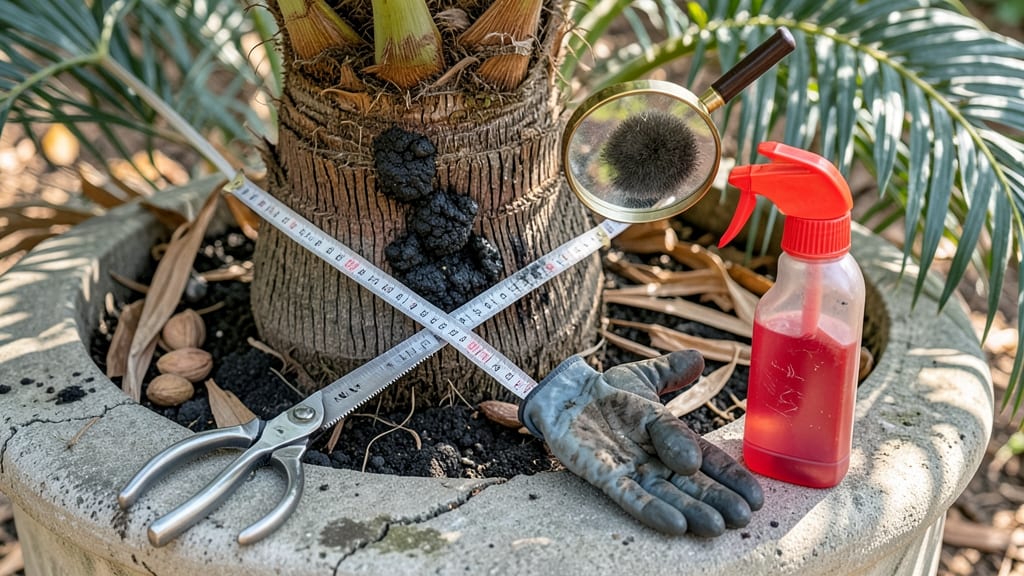
That velvety black fungus on the palm tree trunk creeping up your palm isn’t just dirt—it’s sooty mold, and it’s a sign your tree’s under siege. 🌿 I've battled this exact problem with my Canary Island date palm, and I'll walk you through how to diagnose it, why it shows up, and the step-by-step cure that actually works.
The black stuff isn’t the real villain—it's the sap-sucking insects (like scale or aphids) feeding on your tree's sap. Those pests leave behind sticky honeydew, which then feeds the sooty mold. Without treating the root cause, any fungicide you spray will just wash away in a week. The good news?
This is 100% fixable with the right approach. You'll start by pruning out heavily infested fronds, then applying a contact insecticide to break the pest cycle. After that, a copper-based fungicide (or organic neem oil spray) will clear the black film in about 2-3 weeks.
The key is persistence—one treatment won’t do it, but you'll see fresh green fronds pushing out within a month. Works for all palm varieties, from dwarf palms to towering Mediterranean species. Here's exactly how to do it without damaging your tree.
Why it happens
When your palm tree’s trunk starts developing black, sooty patches or fungal growth, it’s rarely a random event—it’s a symptom of underlying stress or environmental imbalances. Understanding the why behind this issue is the first step toward effective treatment.
Below, we break down the most common triggers, backed by science, so you can address the problem at its source.
🌧️ Excess Moisture And Poor Drainage
Palm trees thrive in well-draining soil, but when they sit in soggy conditions—whether from overwatering, heavy rainfall, or compacted soil—they become prime targets for fungal infections. Here’s how it works:
- Waterlogged roots weaken the tree’s natural defenses, making it easier for fungal spores (like Phytophthora or Fusarium) to latch onto the trunk.
- High humidity near the trunk creates the perfect breeding ground for sooty mold, a black, powdery fungus that thrives on sugary honeydew excreted by sap-sucking pests (more on that below).
- Stagnant water in palm fronds or at the base of the trunk can drip down, carrying fungal spores directly to the bark.
Actionable fix: Improve drainage by amending soil with perlite or sand, and avoid watering at night to reduce humidity around the trunk.
🐜 Pest Infestations Creating Fungal Hotspots
Black fungus on a palm trunk is often a secondary invader, hitching a ride on the damage caused by pests. Here’s the chain reaction:
- Sap-sucking insects (e.g., mealybugs, scale insects, or aphids) pierce the bark to feed on plant sap, leaving behind sticky honeydew.
- This honeydew attracts sooty mold spores, which germinate and form the black, velvety coating you see.
- Over time, the mold blocks sunlight from reaching the trunk, further stressing the tree and creating a vicious cycle.
Actionable fix: Treat pest infestations first with neem oil or insecticidal soap, then scrub the trunk with a 10% bleach solution (1 part bleach to 9 parts water) to remove mold and honeydew residue.
🌡️ Environmental Stress And Weakened Immunity
Palm trees under stress—whether from nutrient deficiencies, extreme temperatures, or physical damage—are far more susceptible to fungal infections. Key stress factors include:
- Nitrogen or potassium deficiency: Weakens the tree’s bark, making it easier for fungi to penetrate. Look for yellowing fronds or stunted growth as red flags.
- Sun scorch or frost damage: Damaged bark provides entry points for fungal spores, especially in cold-sensitive palm species like Canary Island date palms.
- Physical wounds: Pruning cuts, storm damage, or even lawnmower trauma near the trunk can create open gates for infection.
Actionable fix: Fertilize with a balanced palm-specific fertilizer (high in potassium), protect trees from frost with burlap wraps, and seal pruning wounds with pruning paint to prevent fungal entry.
🌿 Improper Pruning Or Physical Trauma
Every cut or scrape on a palm trunk is a potential infection site. If pruning tools aren’t sterilized or cuts aren’t properly healed, fungi can colonize the wound rapidly. Even rubbing against the trunk (e.g., from pets, tools, or leaning structures) can create micro-tears that invite fungal growth.
Actionable fix:
- ✂️ Sterilize tools with rubbing alcohol before and after pruning.
- 🎨 Seal wounds immediately with pruning sealant or copper-based fungicide.
- 🚫 Avoid leaning ladders or structures against the trunk to prevent abrasions.
How to Treat and Prevent Fungal Issues
Fungal infections on palm tree trunks—like black fungus—can be frustrating, but the good news is that most cases respond well to targeted treatments if caught early.
Below, we’ll break down practical solutions based on the root causes (overwatering, poor drainage, wounds, or pests) and share prevention tips to keep your palms healthy long-term.
If your palm trunk is blackened due to excess moisture, the first step is to improve airflow and drainage.
💧 Adjust Watering Habits
- Water deeply but less frequently—palms hate soggy roots. Wait until the top 2–3 inches of soil are dry before watering again.
- Use a moisture meter (or the finger test) to check soil dampness.
If it’s still wet after 48 hours, hold off. - Water at the base, not over the fronds, to prevent fungal spores from splashing onto the trunk.
🏗️ Improve Soil and Drainage
- Amend heavy clay soil with sand, perlite, or compost to enhance drainage.
A mix of 60% native soil, 30% sand, and 10% compost works well. - Raise the planting area slightly (or use a palm planting mound) if your yard floods easily. - Avoid mulching too close to the trunk—keep mulch 6–12 inches away to prevent moisture buildup.
🌡️ Boost Air Circulation
- Prune nearby plants that block airflow around the palm.
- Space palms 10–15 feet apart to reduce humidity in the canopy.
- Use a fan (on low) near the palm in humid climates to dry out the trunk faster.
If physical damage (like cuts from pruning or storms) is letting fungus in, sterilize and protect the trunk.
🧼 Sterilize Injuries Immediately
- Disinfect tools with 70% isopropyl alcohol or a 10% bleach solution before and after pruning.
- Trim away blackened or dying tissue with clean, sharp pruners, cutting back to healthy green tissue.
- Do not prune during wet weather—wait for dry, sunny days to reduce infection risk.
🛡️ Apply a Fungicide Sealant
- Spray with a copper-based fungicide (like copper sulfate or copper hydroxide) to kill existing spores.
- Use a palm-safe sealant (like thinned white latex paint or a fungicide-containing tree wound dressing) to coat the trunk after cleaning.
- Reapply every 6–12 months or after heavy rain.
If insects (like palm weevils or scale) are weakening the tree, eliminate them first before treating fungus.
🐜 Identify and Remove Pests
- Look for signs of weevils: Frass (sawdust-like debris), holes in the trunk, or wilting fronds.
- Use systemic insecticides (like imidacloprid) only if weevils are confirmed—follow label instructions carefully.
- Introduce natural predators (like parasitic wasps) if dealing with soft scale insects.
🔪 Prune Infested Fronds
- Bag and dispose of heavily infested fronds in sealed trash to prevent spread.
- Soak pruners in rubbing alcohol between cuts if dealing with weevils.
Once your palm is healthy, keep it that way with these long-term strategies:
💡 Proactive Care Tips
- Inspect palms monthly for early signs of fungus (black streaks, oozing sap, or soft spots).
- Avoid overhead irrigation—use drip systems instead to keep fronds dry.
- Test your soil annually to check pH (ideal: 5.5–7.0) and nutrient levels.
🌿 Strengthen the Palm’s Defense
- Fertilize in early spring with a balanced palm fertilizer (high in potassium and magnesium).
- Apply a preventative fungicide (like neem oil or potassium bicarbonate spray) every 3–4 months in humid climates.
- Plant resistant varieties (like Mediterranean fan palms or Pygmy date palms) if fungus is recurrent in your area.
If the black fungus spreads rapidly, the trunk feels mushy, or the palm wilts despite treatment, it may be too far gone.
In such cases: - Consult an arborist for deep trunk injections or structural support. - Remove severely infected palms to prevent spreading to other plants.
Remember: Most palm fungal issues are preventable with proper care. By controlling moisture, sealing wounds, and monitoring pests, you can keep your palms lush and disease-free for years! 🌴✨
Frequently asked questions about black fungus on palm tree trunks
Is black fungus on palm trunks always harmful?
Not necessarily! The black sooty mold itself is harmless, but it’s a symptom of underlying issues like sap-sucking insects or excess moisture. If your palm looks otherwise healthy, the mold may just be cosmetic. However, if the trunk feels soft or fronds are wilting, you’re likely dealing with a more serious fungal infection that needs treatment.
How do I know if my palm has sooty mold vs. a serious fungal disease?
Sooty mold is powdery and black, often found on the trunk and fronds, while serious fungal diseases like Phytophthora cause dark, sunken lesions or oozing sap. Check for pest activity (like sticky honeydew) or soft, mushy trunk tissue—these indicate deeper problems requiring fungicides, not just scrubbing.
Can I use household vinegar to treat black fungus?
Yes, but dilute it properly! Mix 1 part white vinegar with 3 parts water and spray on the trunk (avoid fronds). The acidity helps kill mold spores, but it won’t address the root cause like pests or poor drainage. Never use undiluted vinegar—it can burn the bark. Reapply every 7–10 days until the black film disappears.
Will pruning help remove black fungus?
Pruning alone won’t eliminate the fungus, but it’s a critical step! Remove heavily infested fronds and trim away blackened bark to reduce spore spread. After pruning, sterilize tools with rubbing alcohol and apply a copper-based fungicide to prevent regrowth. Focus on improving airflow and treating pests first.
How long does it take to see results after treatment?
With consistent care, you’ll see improvement in 2–3 weeks, but full recovery can take 4–6 weeks. New growth should emerge within a month if you’ve addressed the root cause (pests, moisture, or wounds). If the fungus keeps returning, check your palm’s overall health—it may need fertilization or better drainage.