
Pruning
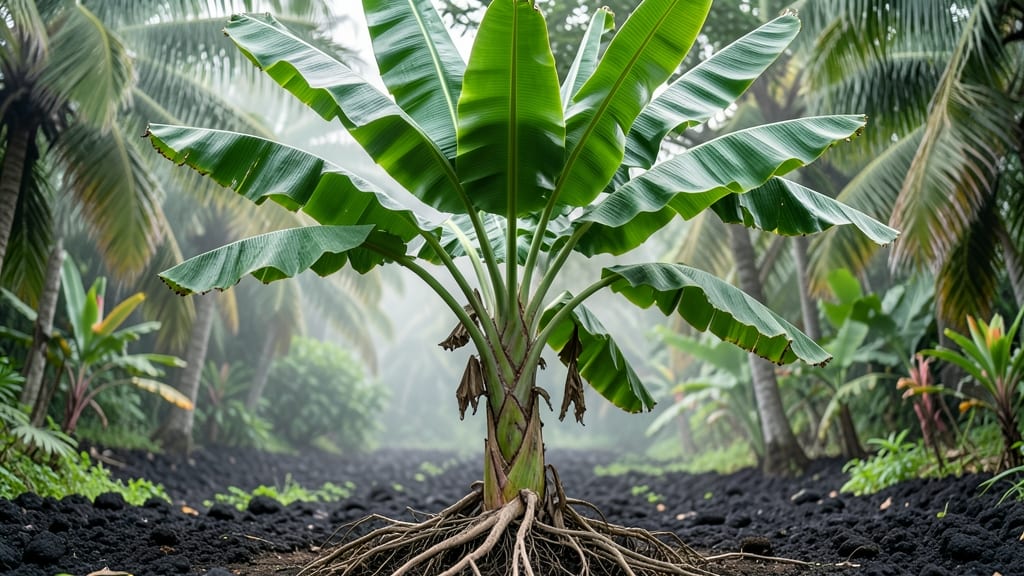
Banana tree adaptations make them shockingly resilient—if you understand their secrets. 🌿 Their massive leaves act like solar panels, while the pseudostem stores water like a built-in reservoir. That's why they thrive in tropical climates but struggle when we ignore their natural needs.
Pruning isn't just about shape control—it's about mimicking their natural growth cycles. Dwarf varieties adapt beautifully to containers, while tropical types need winter protection. The key is timing: prune after harvest to redirect energy, but never remove more than 1/3 of the leaves at once.
You'll end up with a banana plant that stays compact, produces more fruit, and survives winters. The leaves stay vibrant, the pseudostem remains sturdy, and you avoid the common mistake of over-pruning that weakens the plant.
Works for both backyard gardens and patio containers—just adjust your approach based on variety and climate. Here's how to do it right the first time.
📚 In This Guide
- What you need
- Instructions
- Tips and common mistakes
- Wrapping up and next steps
What you need
- ● Pruning shears or loppers: Choose bypass pruners (for clean cuts) or loppers (for thicker stems, up to 2 inches in diameter). Sterilize with rubbing alcohol before use! 🧴
- ● Gloves: Heavy-duty, cut-resistant gloves (e.g., 12–14 gauge) to protect against sharp edges and sap.
- ● Disinfectant: 70% isopropyl alcohol or a 10% bleach solution (1 part bleach to 9 parts water) to prevent disease spread.
- ○ Sharpie or marker: Permanent marker for labeling pruned sections (optional but helpful for tracking growth).
- ● Buckets or bags: 2–3 heavy-duty plastic bags or 5-gallon buckets to collect pruned pseudostems and debris.
- ● Pruning saw: Curved-tooth pruning saw for cutting through thick, woody pseudostems (if needed).
- ● Hose or water sprayer: For rinsing tools and cleaning sap off leaves post-pruning.
- ● Compost bin: To repurpose pruned pseudostems as nutrient-rich mulch.
- ● Sunscreen and hat: Banana trees thrive in full sun—protect yourself from those rays! ☀️
- ● Pruning guide or ruler: A measuring tape or pruning gauge to ensure cuts are made at the correct height (e.g., 12–18 inches from the ground for suckers).
Instructions for pruning your banana tree for year-round vitality
Here’s how to maintain a thriving banana tree through strategic pruning—keeping it productive, pest-resistant, and visually balanced.
✂️ Step 1: Identify and Remove Dead or Diseased Pseudostems
Banana trees grow in layers called pseudostems, and each one produces just one harvest before dying back. Start by examining the trunk for any pseudostems that appear brown, mushy, or hollow—these are dead or infected. Use clean, sharp pruners to cut these at the base, leaving no stubs. The reason we remove these immediately is that decay spreads quickly, and a rotting pseudostem can infect the entire plant.
Watch for weeping sap or blackened tissue at the cut—this signals disease. If you see it, disinfect your pruners with rubbing alcohol between cuts. Healthy pseudostems should feel firm and green when split open. I always prune dead ones first, even if it means removing 30-50% of the plant. Trust me, the new growth will compensate.
🌱 Step 2: Prune Suckers for Controlled Growth and Harvest Timing
Suckers are the small shoots that sprout from the base of your banana tree, each capable of growing into a new plant. For year-round harvests, you’ll want to keep only the strongest 2-3 suckers per tree. Use your pruners to cut the others at the base, leaving about ½ inch of stem. This prevents energy drain while maintaining your tree’s vigor.
Here’s the thing—timing matters. Prune suckers when they’re 6-12 inches tall, not when they’re tiny or fully mature. You’ll see new suckers emerge within 4-6 weeks of pruning, signaling the tree is redirecting energy. If you wait too long, the suckers may already be too large to train effectively.
☀️ Step 3: Thin Leaves for Better Airflow and Sunlight Penetration
Banana trees love light, and thick foliage can block it from reaching the center of the plant. Use your pruners to remove 10-20% of the oldest, yellowing leaves from the outer edges. Focus on leaves that are brown at the tips or partially torn—these aren’t photosynthesizing efficiently anyway. Cut them back to the next healthy leaf joint to encourage new growth.
You’ll notice a difference immediately: more sunlight reaches the center, and airflow improves, reducing humidity-related fungal issues like sigatoka disease. I prune leaves in stages over 2-3 weeks to avoid shocking the plant. Watch for new leaves unfurling in the center—that’s your signal the tree is thriving.
⏰ Step 4: Prune Flower Stems for Extended Fruit Production
If you’re growing bananas for fruit, you’ll want to prune the flower stem (called a "bunch") once the fruit is harvested. Cut the entire stem back to the main trunk using your pruners. This redirects the tree’s energy toward producing new suckers instead of another fruit bunch, which can exhaust the plant.
For ornamental banana trees (like Musa ornata), you can leave the flowers if you enjoy the decorative blooms. Just be prepared for the tree to produce fruit—even if you don’t want it. The key is to prune the flower stem within 2 weeks of harvest to keep the tree productive. You’ll see new growth sprout from the base within 3-4 weeks.
🌿 Step 5: Clean Up and Apply Mulch After Pruning
Once you’ve finished pruning, gather all the cuttings and dispose of them in the trash or burn them—never compost diseased material. Use your 2-3 inches of mulch (like wood chips or straw) to cover the base of the tree, keeping it 6 inches away from the trunk. Mulch helps retain moisture, suppresses weeds, and prevents soil-borne diseases from splashing onto the pseudostems.
Water the tree deeply after pruning to help it recover. You’ll know it’s happy if new leaves emerge within 2-3 weeks. Avoid heavy fertilizing right after pruning—wait until new growth appears before adding nutrients. This gives the tree time to redirect its energy without stress.
Tips & tricks for pruning your banana tree
These targeted strategies will help you maintain a productive banana tree while avoiding common pruning pitfalls.
Disease Prevention: In Step 1, when removing dead pseudostems, always sterilize your pruners between cuts with rubbing alcohol. I learned this the hard way after seeing fungal spores spread across my tree. Healthy pseudostems should feel firm and green when split open—any mushy or discolored tissue signals decay that needs immediate removal. The 30-50% pruning threshold might seem drastic, but it's the only way to prevent systemic infection.
Sucker Selection Strategy: For Step 2, focus on suckers that are growing upright rather than sprawling outward. These vertical suckers have the best chance of becoming productive plants. When pruning, leave about ½ inch of stem—this small stub helps prevent water from pooling at the base, which can cause rot. The 6-12 inch height range is ideal because smaller suckers haven't yet established their root systems, while larger ones are harder to train.
Leaf Pruning Technique: In Step 3, prioritize removing leaves with brown tips or yellowing edges first. These leaves are no longer contributing to photosynthesis and may even be harboring pests. When thinning, cut back to the next healthy leaf joint rather than making random cuts. This encourages new growth from established nodes rather than creating weak growth points. The 2-3 week staggered approach prevents shock while still improving airflow.
Post-Pruning Care: After completing all pruning steps, water deeply to help the tree recover. The 2-3 week window for new leaf emergence is your best indicator of success—if you don't see new growth within this time, consider adjusting your care routine. Avoid fertilizing immediately as the tree needs time to redirect its energy. Instead, focus on maintaining consistent moisture and providing partial shade during the first week of recovery.
Pro Tips for Banana Tree Adaptations
- These targeted strategies will help you maintain a productive banana tree while avoiding common pruning pitfalls.
- Disease Prevention: In Step 1, when removing dead pseudostems, always sterilize your pruners between cuts with rubbing alcohol.
- Sucker Selection Strategy: For Step 2, focus on suckers that are growing upright rather than sprawling outward.
Frequently asked questions
Got questions about keeping your banana tree thriving with the right adaptations and pruning?
Here are some of the most common ones—plus quick answers to help you grow like a pro!
How often should I prune my banana tree for optimal shape and health?
Prune your banana tree after it flowers and fruits—typically once a year—but remove dead or damaged leaves year-round. For tropical climates, light trimming every 3–6 months keeps it manageable. Pro tip: Wait until new growth appears to avoid stressing the plant!
Can I prune a banana tree in cold weather, or should I wait until spring?
Never prune during frost or cold snaps—banana trees are tropical and sensitive to chilly temps. Wait until spring (when temps stay above 50°F/10°C) to avoid shock. If you’re in a frost-prone zone, mulch heavily first to protect roots!
What’s the best way to prune a banana tree without killing it?
Use clean, sharp pruners to cut at a 45° angle, 1 inch above a leaf node. Avoid cutting into the pseudostem (the "trunk")—focus on leaves and suckers. Disinfect tools with rubbing alcohol between cuts to prevent disease. Bonus: Wearing gloves helps—banana sap can irritate skin!
Should I remove all the suckers around my banana tree, or leave some?
Remove all but 1–2 healthy suckers per plant to avoid overcrowding. The strongest sucker (closest to the main stem) becomes your next harvest tree. Weak or diseased suckers? Pull them out at the base—don’t leave stubs! Pro move: Save suckers for propagation if you want more trees.
My banana tree’s leaves are yellowing—is this normal, or do I need to prune?
Yellowing leaves can mean overwatering, pests, or nutrient deficiency—not just aging. Prune only the brown/yellow leaves (cut to green tissue). Check for fungus or pests first. If roots are soggy, improve drainage before pruning. Health check: Crispy edges? Likely underwatered!
Can I grow a banana tree in a pot, and how does pruning differ?
Yes! Potted banana trees need more frequent pruning (every 2–3 months) due to limited space. Use well-draining soil and a large container (15+ gallons). Trim aggressively to encourage bushier growth, but leave enough leaves for photosynthesis. Winter tip: Move pots indoors if temps drop below 50°F!
Wrapping up and next steps
From understanding the ideal timing for pruning to mastering the right techniques, banana trees reward your efforts with lush foliage and bountiful harvests year-round. 🌱 Their adaptations—like pseudostems and rhizomes—make them resilient, but your care ensures they thrive even more.
Whether you're a seasoned gardener or just starting, these insights empower you to shape your banana tree with confidence.
Ready to put your new skills to work? Grab your pruners, pick a sunny day, and give your banana tree the TLC it deserves! 🌿